
You spot it at the store between the almond flour and the arrowroot, labeled sometimes as manioc flour or farinha de mandioca, and it's easy to assume it's just another starch swap.
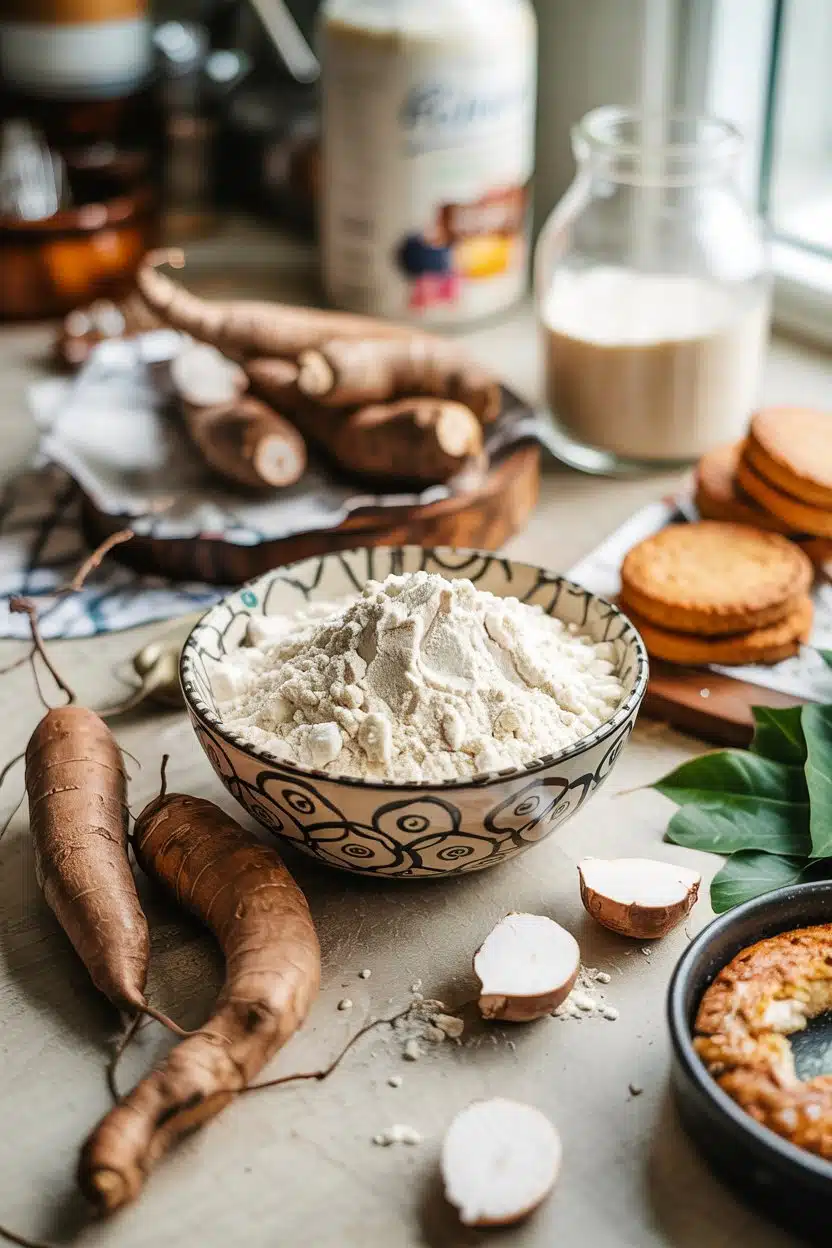
It isn't. Cassava flour is made from the whole dried root - fiber, proteins, and all - which makes it behave closer to a conventional flour than any single-starch powder can.
That distinction matters the moment you start mixing dough.
Cassava flour is a pale, fine, gluten-free powder ground from the whole yuca root. It has a mild, slightly nutty flavor and works in flatbreads, baked goods, and frying batters. Shelf life runs 6-18 months depending on storage.
What Is Cassava Flour?
Cassava flour comes from the yuca root - a starchy tuber native to the Amazon basin and cultivated widely across West Africa and the Caribbean for centuries.
Remember it later
Planning to try this recipe soon? Save it for a quick find later!
Whole roots are peeled, dried, and ground into a fine, pale powder. Nothing is removed in the process, which means it retains the root's fiber and trace proteins, unlike tapioca starch (also called polvilho), which is a purified starch extracted by washing and settling.
It goes by several names depending on where you are. In Brazil it's farinha de mandioca; in the Caribbean it's cassava meal; in parts of West Africa it's simply manioc flour.
All refer to the same whole-root product.
Flavor
Texture
Aroma
Mild
What Does Cassava Flour Taste Like?
Raw from the bag, cassava flour tastes like a quieter, rounder version of all-purpose flour - starch-forward with a faint earthiness and almost no bitterness. It's less neutral than pure tapioca starch, which has virtually no flavor at all.
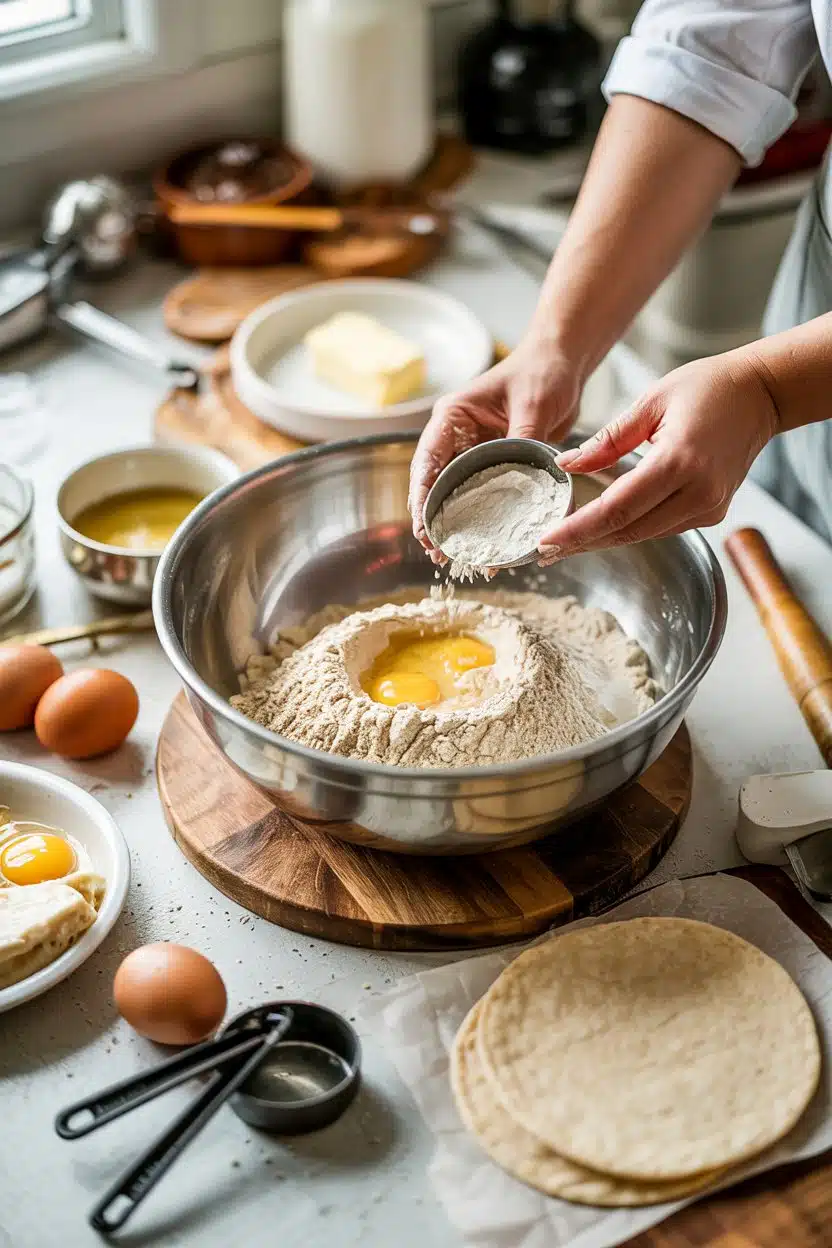
Heat changes it noticeably. Toasted dry in a pan or baked until golden, it picks up a lightly nutty quality that's somewhere between toasted white flour and popped corn. In hydrated doughs - flatbreads, arepas, gnocchi - the flavor recedes further, letting whatever fat, salt, or seasoning you add take the lead.
The slight sweetness is most apparent in simple preparations. Mix it with water and griddle it plain, and you'll catch that faint natural sweetness from the yuca root itself.
Add cheese or garlic and it disappears into the background, which is exactly what a good neutral flour should do.
How to Use Cassava Flour
Cassava flour handles a wide range of cooking methods.
It gelatinizes when mixed with hot water, which is what makes it ideal for flatbreads and formed doughs without any egg or fat - just heat activates the starch.
In baking, it needs slightly more moisture than wheat flour and benefits from fat and egg to bind, since there's no gluten network holding things together.
For swapping out cassava flour in a recipe, the ratio and liquid levels almost always need adjusting.
| Method | Best For | Tip |
|---|---|---|
| 🥗 Mixed with Hot Water | Flatbreads, arepas, Caribbean bammy | Use just-boiled water to fully gelatinize the starch |
| 🍞 Baked | Cookies, quick breads, pão de queijo | Add extra fat and egg; bake at 325-375°F for even browning |
| 🍳 Pan-Fried / Griddled | Formed dough cakes, thin flatbreads | Medium heat; no oil needed if dough has fat |
| 🍲 Simmered as Slurry | Stew and sauce thickening | Whisk into cold liquid first; simmer until translucent |
| 🍗 Frying Batter | Crispy coatings on chicken, fish, vegetables | Mix with cold water for maximum crunch; fry at 350°F+ |
🌍 West African
🇯🇲 Caribbean
🌾 Gluten-Free Baking
lime
garlic
queso fresco
beans
pork
How to Buy and Store Cassava Flour
At the store, look for a pale, uniform powder in a sealed bag with no dark specks and no musty smell - both signal old or damp root material.
Read the label carefully: "cassava flour" or "farinha de mandioca" means whole-root product. "Tapioca flour" or "tapioca starch" is a different thing entirely, and the two don't swap evenly in recipes.
At home, store it in an airtight, opaque container away from heat and light. Cassava flour's shelf life runs 12-18 months unopened and 6-9 months once open in the pantry - similar to the general rules for storing flour correctly in any form.
Start Here With Cassava Flour
If you're new to this flour, mix it with warm salted water, form flat rounds, and griddle them.
That single test tells you how it hydrates, how it browns, and what its base flavor actually is.
From there, baked goods and frying batters are straightforward next steps.
It won't replace wheat flour one-for-one, but in the right recipes - Brazilian cheese bread, West African flatbreads, crispy fried coatings - nothing else comes close to the result it gives you.
Frequently Asked Questions
No - they come from the same root but are processed very differently. Cassava flour is made from the whole dried root, so it keeps its fiber and a small amount of protein. Tapioca starch is a purified starch extracted by washing, leaving behind essentially everything except carbohydrate. They behave differently in recipes: tapioca starch thickens more aggressively and produces a clearer, chewier gel, while cassava flour acts more like a whole-grain flour.
In many simple recipes - flatbreads, cookies, quick breads - a 1:1 swap works reasonably well, though you'll typically need slightly more liquid and added fat or egg to compensate for the missing gluten. For anything that depends on gluten structure, like bread with a chewy crumb or layered pastry, it won't replicate the result. Start by replacing no more than 50-75% in untested recipes and adjust from there.
Raw cassava root contains naturally occurring cyanogenic glycosides, which can release hydrogen cyanide. Commercial cassava flour is processed - dried, sometimes fermented, and milled - in ways that reduce these compounds to safe levels. Reputable packaged cassava flour sold in the US, UK, and EU is tested and considered safe for regular consumption.
A common starting ratio is about ¾ cup of just-boiled water per 1 cup of cassava flour, plus a pinch of salt. The dough should be soft and pliable without sticking to your hands - if it cracks when pressed, add water a tablespoon at a time. Humidity and the specific brand of flour both affect absorption, so the first batch is always a calibration run.
Yes - cassava flour is naturally grain-free and gluten-free, which is why it became popular in paleo baking circles. However, it's high in carbohydrates and low in protein, so it doesn't fit low-carb or ketogenic eating patterns. It's a starchy root flour, not a low-calorie or high-fiber alternative.



