
Many cooks assume sazon seasoning is just a salty shortcut - a packaged cheat used to stretch a recipe.
That's not quite right. Sazón is a calibrated blend, built around the earthy fat-soluble pigment in annatto (achiote), that does two jobs at once: it seasons and it stains, giving rice, stews, and braises that signature rusty-orange glow without any chili heat.
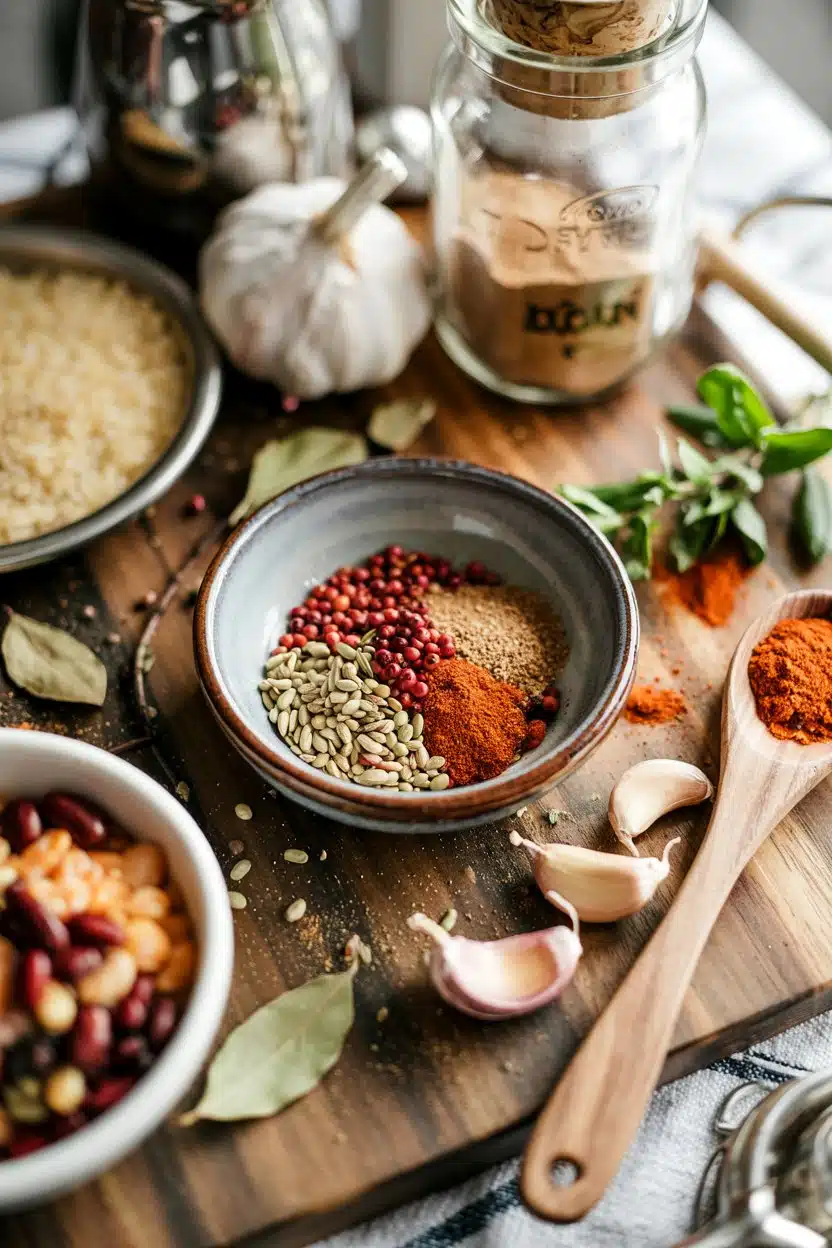
Sazón is a dry Latin spice blend built on annatto, garlic, cumin, and coriander. It adds a warm, savory, mildly earthy flavor and a characteristic orange-red color to rice, beans, stews, and meats. Moderate intensity; store away from heat.
What Is Sazon Seasoning?
Sazon (also spelled *sazón*) is a pre-blended dry spice mix originating from Puerto Rico, the Dominican Republic, Cuba, and broader Caribbean and Central American home cooking.
Remember it later
Planning to try this recipe soon? Save it for a quick find later!
It sits in the same category as adobo - a dry foundational blend - however, it's distinguished by its lead ingredient: achiote seeds, which release annatto, a fat-soluble red-orange pigment that colors food on contact.
Most commercial formulas list annatto or achiote, garlic powder, cumin, coriander, and salt as their base. Some brands add culantro (*sazon con culantro*) or MSG for depth.
Packets are the most common retail format, with each packet typically measuring about one teaspoon.
Flavor
Texture
Aroma
Moderate
What Does Sazon Seasoning Taste Like?
Think of a milder, more aromatic version of a taco seasoning base - but with less chili and more color-forward earthiness. The annatto brings a faintly peppery, almost nutty warmth that registers as depth rather than spice.
Coriander pushes a slight citrus-green note underneath it.
Garlic powder and cumin form the savory backbone, making the blend taste more complete than any single spice would. Straight off the spoon, the salt reads first. Cooked into fat or liquid, the annatto opens up and the cumin-coriander duo rounds out.
At higher concentrations - say, two packets in a small pot - a mild bitterness from achiote can surface. That's the same quality you'd find in annatto-heavy achiote paste stand-ins when they're used in excess.
Keep the ratio in check and the blend stays firmly savory, never sharp.
How to Use Sazon Seasoning
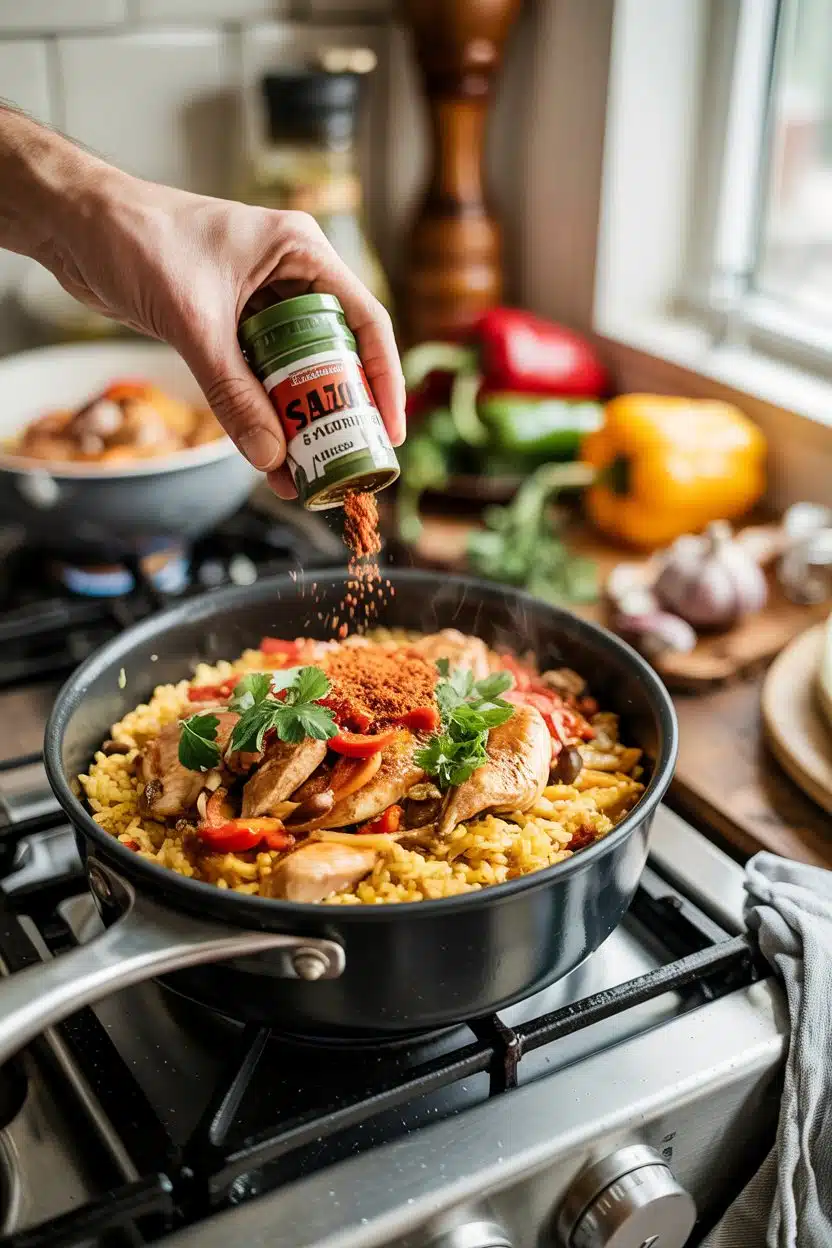
Sazon works across a wide range of techniques. Its powder form means it dissolves into liquids, adheres to oiled proteins, and disperses through dry rubs without clumping - useful at nearly every stage of cooking.
| Method | Best For | Tip |
|---|---|---|
| 🍚 Stir into liquid | Rice, soups, bean pots | 1 teaspoon per cup of rice or 2 cups of broth |
| 🧴 Wet rub | Chicken, pork shoulder, chops | Mix with oil; rub and rest 30-90 minutes before cooking |
| 🫕 Bloom in oil | Sofrito-based braises, stews | Add to hot oil for 30-60 seconds before adding aromatics |
| 🍌 Dust after frying | Plantains, yuca, tostones | Apply immediately after frying while still hot |
| 🥩 Marinade base | Quick citrus marinades | Combine with lime or sour orange, oil, and vinegar |
Blooming sazon briefly in oil before adding sofrito is standard practice in Puerto Rican and Dominican kitchens - it pulls the annatto's color into the fat, which then carries it evenly through the whole dish.
If you're swapping out sazon seasoning, replicating that color step with loose annatto or paprika matters more than people expect.
🇩🇴 Dominican
🇨🇺 Cuban
🇨🇴 Colombian
🌎 Central American
lime or sour orange
garlic and onion
olive oil
cilantro and parsley
plantains and yuca
chicken and pork
How to Buy and Store Sazon Seasoning
Look for packages labeled *sazón* or *sazón con achiote*. On the ingredient list, annatto or achiote should appear early - if salt is listed first and achiote is near the bottom, the color and earthy depth will be thin.
Avoid packages with visible clumping or a dull, faded orange color; both signal old stock.
Opened jars should be transferred to a glass spice jar with a tight lid and kept away from the stove and direct light.
For full details on storing sazon seasoning correctly and spotting when a batch has gone stale, check our dedicated guide.
Sealed commercial packets stay potent for 12-18 months; an opened jar is best used within six to twelve months.
When to Reach for Sazon
Sazon earns its place in two situations: when a dish needs a savory base built fast, and when orange-red color is part of the expected result - think arroz con pollo or red beans.
It's not a finishing seasoning and it won't replace fresh aromatics.
If a recipe already uses sofrito or recaito as its flavor foundation, sazon layers in color and spice body without competing. Start with one teaspoon or one packet, taste, and build from there.
Frequently Asked Questions
No - they're related but distinct blends. Dry adobo typically combines salt, garlic, oregano, and black pepper, with no annatto, so it seasons without adding color. Sazon's annatto base is what sets it apart; it simultaneously colors the dish orange-red while seasoning it, which dry adobo won't do.
Some commercial brands do, some don't - it depends on the manufacturer. Goya's standard sazon packets, for example, have historically included MSG, while specialty or store-brand versions may omit it. Always read the ingredient list if MSG is a concern, and note that homemade sazon blends contain none by default.
Combine 1 tablespoon ground annatto (achiote), 1 teaspoon each of garlic powder, ground cumin, and ground coriander, and ½ teaspoon salt - that's a basic one-packet equivalent per teaspoon of the mix. Adjust salt to your preference, and add dried culantro or oregano if your recipe calls for the con culantro variety.
In rice, sazon reads mostly as a savory, lightly garlicky warmth with a subtle earthy undertone - the individual spices meld during cooking and don't stand out separately. The more noticeable effect in rice is visual: the grains turn an even orange-gold, which is the annatto doing its job.
Sazon works on firm fish like mahi-mahi or cod used in braises, but it's a poor match for delicate fillets - the annatto stains aggressively and the garlic-cumin weight overpowers mild flesh. For most fish dishes, a lighter hand with individual spices gives you more control over both flavor and color.



