
Most people assume pickling spice is just a dusty jar of generic "pickle flavor" - something pre-made and interchangeable.
It isn't. Pickling spice is a deliberately constructed blend of whole aromatic seeds, bark, and dried peel, and the balance between its warm, sharp, and citrusy components is what gives brined cucumbers, beets, and corned beef their signature depth.
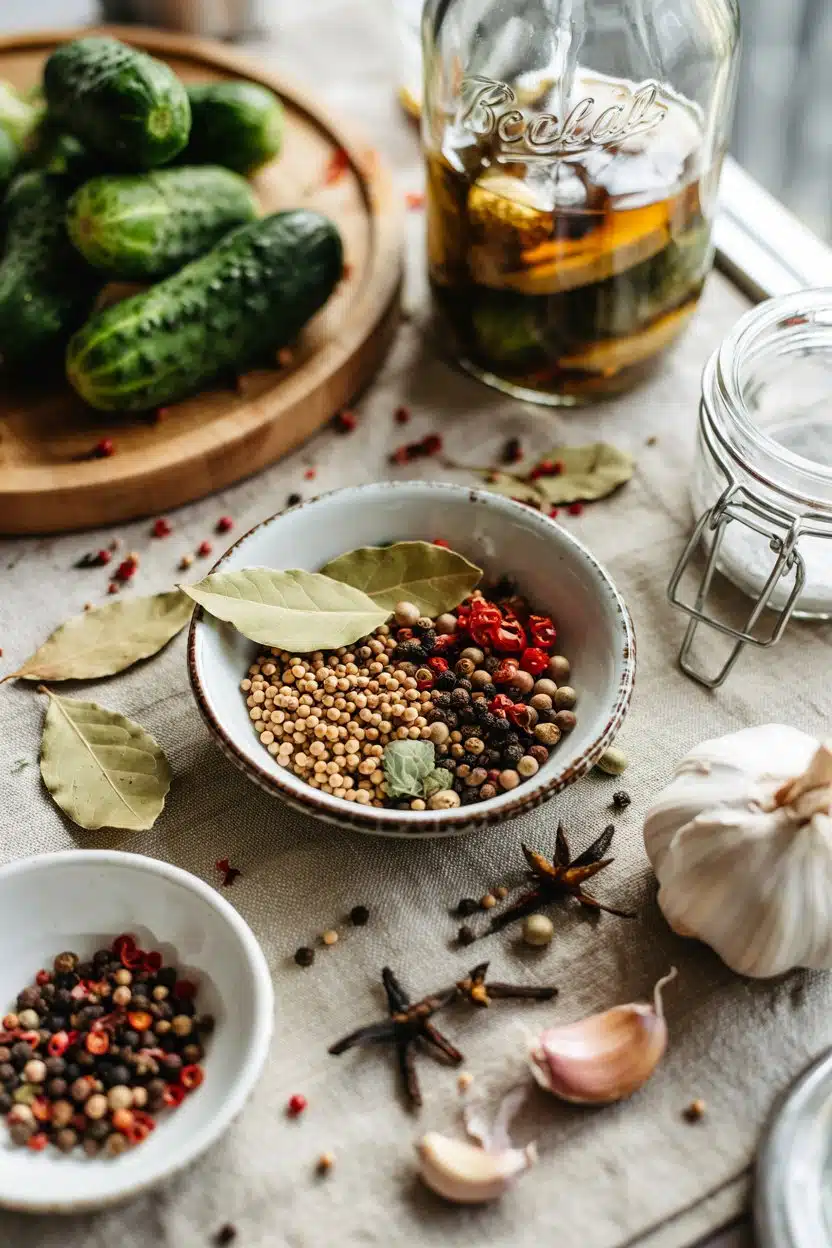
Understanding what's inside the blend - and how to use it - changes how you approach anything you preserve.
Pickling spice is a coarse whole-spice blend of mustard seed, allspice, coriander, bay leaf, cinnamon, cloves, and citrus peel. It's steeped or simmered in brine - never eaten directly - and delivers warm, mustardy, and citrusy notes to pickles, brines, and preserved meats.
What Is Pickling Spice?
Pickling spice originated in Central and Eastern European preservation traditions, where long winters made shelf-stable vegetables essential.
Remember it later
Planning to try this recipe soon? Save it for a quick find later!
It's a loose spice blend - not a single ingredient - sold either in bulk jars or pre-measured sachets.
The blend varies by brand and region, however the core components stay consistent: mustard seed, coriander seed, black peppercorns, allspice, bay leaf, cinnamon stick pieces, cloves, and dried orange or lemon peel.
You'll see it sold under names like pickling mix, pickler's spice, or pickle spice blend.
Unlike curry powder or five-spice, pickling spice is always left in whole or coarsely broken form - never ground - because it's designed to steep and be removed, not eaten.
Flavor
Texture
Aroma
Strong
What Does Pickling Spice Taste Like?
Think of it as a concentrated, savory chai crossed with a citrusy herbed tea - but sharper. The black peppercorns and mustard seed drive an upfront heat, while allspice and cinnamon add a warm, woody sweetness underneath.
Dried citrus peel cuts through with a bitter edge that keeps the whole blend from reading as sweet.
Steeping changes everything. A short simmer of 5-10 minutes pulls the brighter, more volatile notes - citrus, mustard - into the brine first.
Longer steeping draws out the deeper resinous tones from clove and allspice, making the result more complex and rounded.
The blend never tastes one-dimensional. Bite a whole peppercorn or a piece of cinnamon from the jar, though, and it's harsh and unpleasant - proof that this spice is built for infusion, not direct consumption.
How to Use Pickling Spice
Pickling spice belongs in liquid.
The standard method is to simmer it directly in a hot vinegar brine for 5-20 minutes, then strain before adding your vegetables.
For delicate ingredients like pickled eggs or herring, a cold steep in the finished brine over 12-48 hours extracts flavor more gently.
When canning, tie the blend in a cheesecloth sachet so it's easy to remove and doesn't leave grit in your jars.
Beyond pickling, it works in the boiling liquid for corned beef or brisket - a full simmer over several hours lets the spices fully release into the meat.
Infusing it into apple cider or white vinegar for 1-2 weeks produces a spiced vinegar that works well in dressings and marinades.
If you need replacements for pickling spice in a recipe, building a rough approximation from individual components is possible, though the balance takes trial.
| Method | Best For | Tip |
|---|---|---|
| 🔥 Hot Simmer | Cucumber pickles, beets, pickled onions | Simmer 5-20 min, then strain before adding veg |
| ❄️ Cold Steep | Pickled eggs, herring, quick-pickled vegetables | Steep 12-48 hours in finished brine; remove sachet |
| 🧆 Sachet Boil | Corned beef, braised brisket, sauerkraut brine | Tie in cheesecloth; discard after cooking |
| 🫙 Vinegar Infusion | Spiced vinegars for dressings and marinades | Infuse 1-2 weeks; shake jar every few days |
🇵🇱 Eastern European
🇸🇪 Scandinavian
🇺🇸 American (Southern & New England)
apple cider vinegar
herring and salmon
corned beef and brisket
beets and red onion
cabbage and sauerkraut
mustard and horseradish
How to Buy and Store Pickling Spice
Look for jars where you can see distinct whole components - mustard seed, coriander seed, bark fragments, peel pieces. Avoid any blend that looks dusty or powdery; that's a sign the volatile oils have already degraded or the spices were partially ground, which makes straining messier and flavor delivery uneven.
The ingredient list should include at minimum mustard seed, allspice, bay leaf, cinnamon, and citrus peel.
Storing pickling spice correctly - cool, dark pantry, airtight glass - keeps it at peak aroma for up to two years. After that, the clove and citrus peel lose their punch first.
If the blend smells flat when you open the jar, replace it.
Start Here If You're New to Pickling Spice
Use a sachet. That single step removes every frustration beginners have with this blend - no grit in your jars, no fishing out bark pieces, no cloudy brine.
Add 2 tablespoons to a small square of cheesecloth, tie it off, drop it into your hot brine, and pull it when you're done.
Once you're comfortable, try allspice swaps that work if a component of your blend runs out mid-batch. The blend is forgiving that way - most jars already vary in their ratios, and small adjustments rarely derail a brine.
Frequently Asked Questions
Technically yes, but it's not meant to be eaten directly. Whole cloves, peppercorns, and cinnamon bark are unpleasant and potentially harsh to bite into. The blend is designed to steep in liquid and be removed before serving.
For a hot brine, 5-20 minutes of simmering is the standard range - shorter for a lighter flavor, longer for something more pronounced. Cold steeping in finished brine takes 12-48 hours, depending on how strong you want the result.
You can, however the result won't be the same. Ground spices dissolve into the brine and can't be strained out, leaving a murky liquid and a gritty texture in your pickles. If you go this route, use roughly half the quantity and plan to strain the brine through a fine-mesh sieve or cheesecloth before using it.
No - they serve completely different purposes. Mixed spice is a British baking blend that includes sweet spices like nutmeg, mace, and ginger in ground form, designed for cakes and puddings. Pickling spice is a whole-seed, savory-forward blend meant for brines, not baked goods.
Yes, and it's well suited to fermentation. Add a sachet to the fermentation jar with your sauerkraut or kimchi-style brine at the start; the spices infuse slowly over the fermentation period. Always use a sachet so you can remove it cleanly - loose spices are harder to manage in a long ferment.



