
You spot a bottle of agave nectar at the grocery store-maybe next to the honey, maybe in the natural foods aisle-and you wonder whether it's worth reaching for.
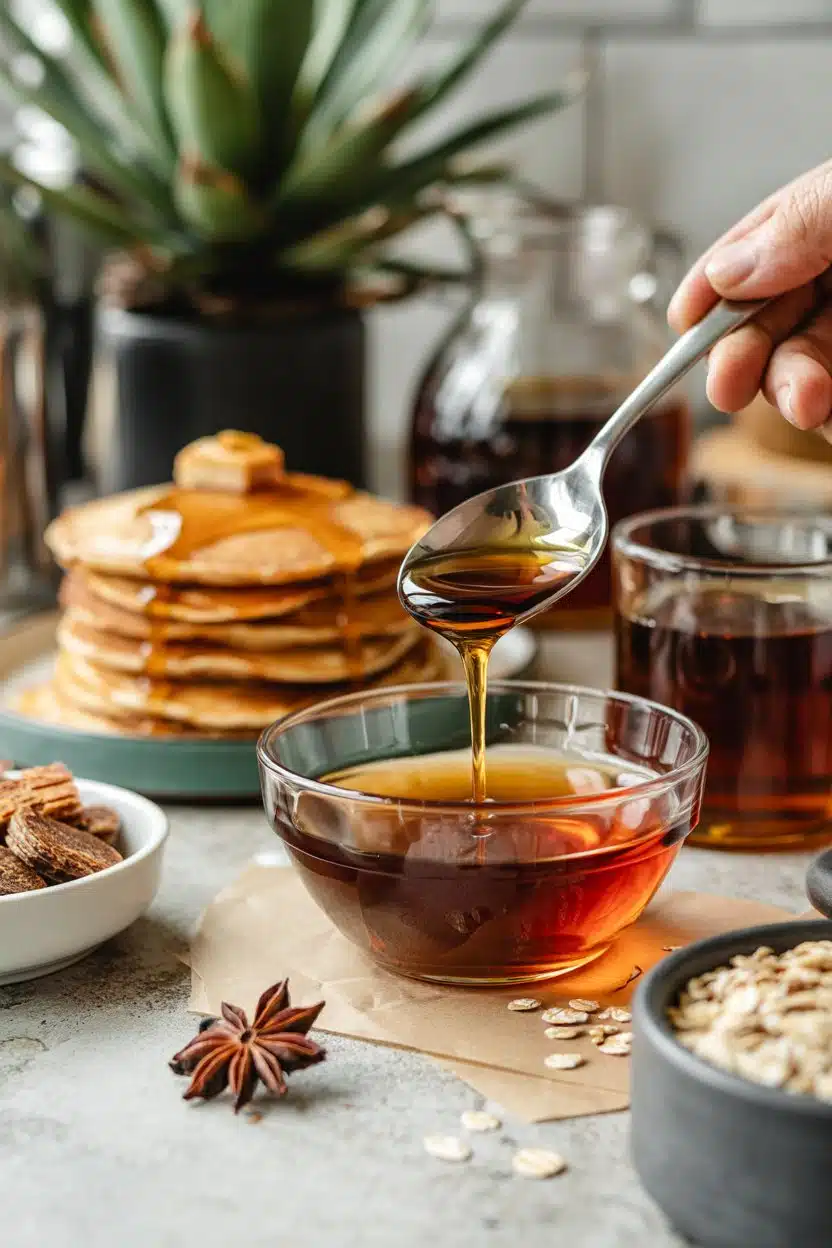
It pours differently than honey, costs a little more, and carries claims you're not sure how to parse.
This article breaks down exactly what it is, how it tastes, and where it actually earns its place in the kitchen.
Agave nectar is a plant-based liquid sweetener made from blue agave sap. It has a clean, mildly caramel-like sweetness-thinner than honey and dissolves readily in cold liquids. Best used in beverages, dressings, and glazes. Vegan and gluten-free, but high in fructose.
What Is Agave Nectar?
Agave nectar-also sold as agave syrup, aguamiel, or nectar de agave-comes from the sap of agave plants, most commonly blue agave grown in Mexico's Jalisco region.
Remember it later
Planning to try this recipe soon? Save it for a quick find later!
Producers extract the sap from the plant's core, then filter and heat-reduce it into a smooth, pourable syrup.
It falls into two main grades: light agave, which is mildly filtered and pale gold, and amber agave, which undergoes less filtration and carries a slightly deeper flavor.
Both are runny at room temperature-noticeably thinner than honey-with a neutral amber color that won't darken light-colored dishes.
Flavor
Texture
Aroma
Moderate
What Does Agave Nectar Taste Like?
Think light honey with some of the floral complexity removed. Agave nectar is sweet up front, followed by a faint caramel warmth and a barely detectable vegetal undercurrent-something vaguely green and clean, not grassy or sharp.
Compared to honey, it's less assertive. It won't compete with delicate flavors the way a bold wildflower honey can.
Corn syrup is a fair reference point for texture, however agave's sweetness reads as cleaner and slightly more complex.
Heat amplifies the caramel edge. Brush it on salmon or roasted carrots and you'll notice a mild, glossy caramelization that granulated sugar alone doesn't replicate as smoothly.
In cold applications like iced tea or a margarita, the sweetness stays neutral and dissolves without any residual graininess.
How to Use Agave Nectar
Agave nectar's low viscosity is its biggest practical advantage. It stirs into cold liquids instantly, which granulated sugar and even some honey won't do.
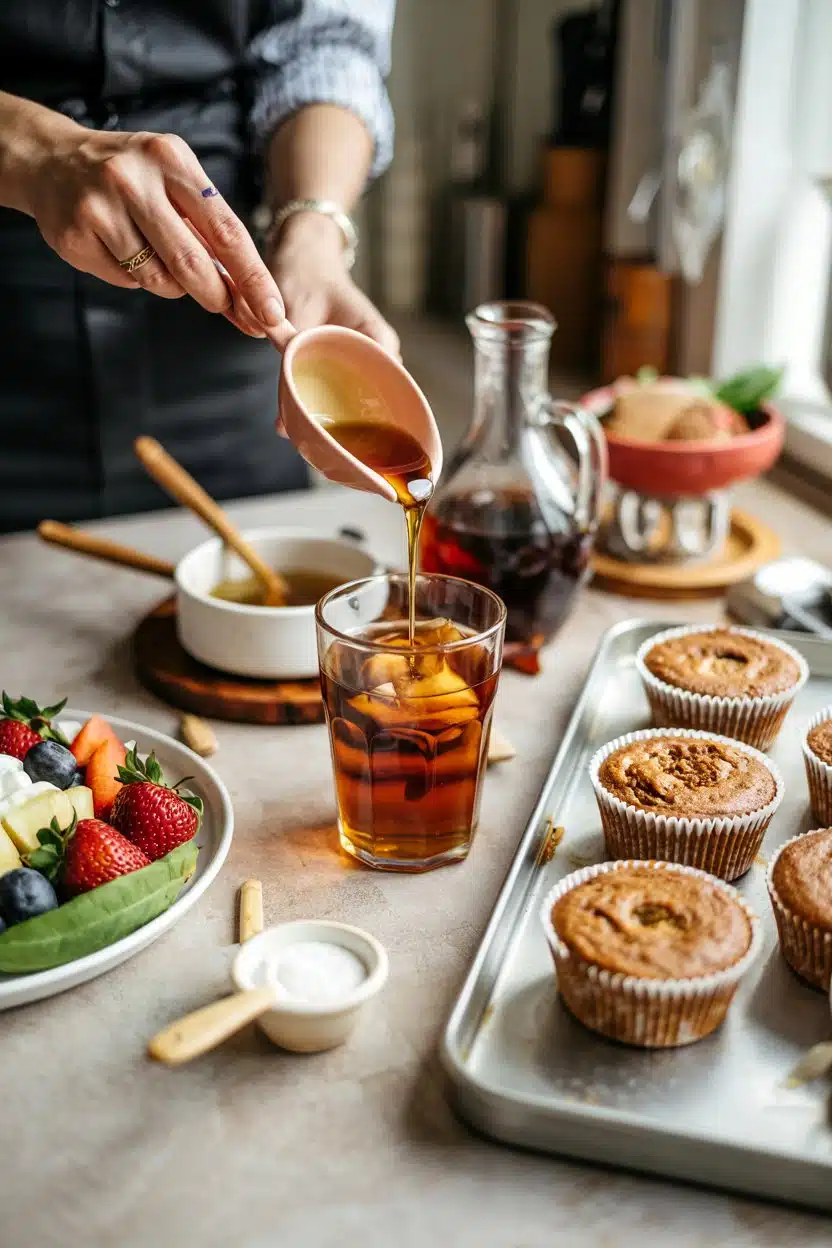
That makes it a reliable choice anywhere texture or dissolve time matters.
| Method | Best For | Tip |
|---|---|---|
| 🥗 Stir In | Iced tea, smoothies, lemonade, cocktails | No heat needed - dissolves at room temperature |
| 🍳 Glaze | Roasted vegetables, salmon, broiled fruit | Brush on in the last 5 minutes to prevent burning |
| 🧁 Bake | Quick breads, muffins, granola bars | Reduce other liquids in the recipe by about 25% |
| 🥣 Mix | Salad dressings, yogurt, oatmeal, energy bites | Combine with nut butter to bind no-bake bars |
It works especially well in cocktails. Agave nectar dissolves in cold liquids where simple syrup requires advance prep, and its faint vegetal note pairs naturally with tequila and mezcal.
Try it when making paloma tequila grapefruit at home - it ties the sweet and tart notes cleanly.
🇺🇸 American
🌍 Global Fusion
tequila and mezcal
ginger and soy
yogurt and berries
oats and nuts
chipotle and chili flakes
cinnamon and warm spices
Avoid using agave nectar in recipes that depend on sugar's crystalline structure-meringues and certain hard candies won't set correctly. High-heat deep frying is also a problem; it thins out fast and scorches before food is done.
For those recipes, look at alternatives to agave nectar that behave differently under heat.
How to Buy and Store agave nectar
Always buy in a clear bottle. You want to see the color and check that there's no cloudiness or sediment floating at the bottom-both signal poor filtration or early spoilage.
Labels should read "100% agave nectar"; avoid blended products that pad the syrup with added sugars.
Store the bottle upright in a cool pantry, away from heat sources.
Keep the cap fully sealed between uses to prevent moisture from getting in, which can trigger fermentation. Agave nectar's shelf life runs 12-24 months unopened and about 12 months once you've cracked the seal.
Start Here if You're New to It
Agave nectar earns its place in two clear situations: you need a sweetener that dissolves in cold liquids, or you want a honey-like glaze with a milder flavor profile.
If neither of those applies, granulated sugar or alternatives to maple syrup may serve you just as well at a lower cost.
Pick up light agave first. It's the most neutral starting point and works across beverages, dressings, and quick bakes without announcing itself.
Frequently Asked Questions
You can in most cases, however agave is sweeter by volume than many honeys, so start with about 75% of the amount called for and adjust to taste. The texture is also thinner, which matters in baked goods-reduce other liquids slightly to compensate. In cold beverages and dressings, a straight swap works fine.
Not in a meaningful way for most people. Agave nectar is very high in fructose-often 55-90% depending on processing-which the liver metabolizes differently than glucose and can contribute to metabolic issues in large amounts. It has a lower glycemic index than table sugar, however that doesn't make it a low-calorie or medically superior option.
It raises blood sugar less sharply than sucrose because its high fructose content has a lower glycemic index. However, fructose still affects blood glucose and insulin over time, and the effect varies by individual and serving size. People managing diabetes should treat agave nectar with the same caution as any concentrated sweetener.
Use agave as a partial substitute for sugar in quick breads and muffins, replacing up to half the sugar. Because it adds liquid to the batter, reduce other liquid ingredients by about 25% per cup of agave used. It doesn't provide the same structure as crystalline sugar, so it works better in moist, dense bakes than in cakes that need lift.
Light agave is more heavily filtered and has a milder, cleaner sweetness suited to cocktails, light dressings, and anything where you don't want the sweetener to show. Amber agave has less filtration, retaining more of the plant's natural compounds, which produces a slightly richer, more caramel-forward flavor. Both come from the same blue agave sap-the difference is processing depth, not source.



