
Trout fills a role in the kitchen that few other fish can match: it's mild enough to let simple technique shine, but structured enough to hold up to searing heat, open flame, or a slow cure.
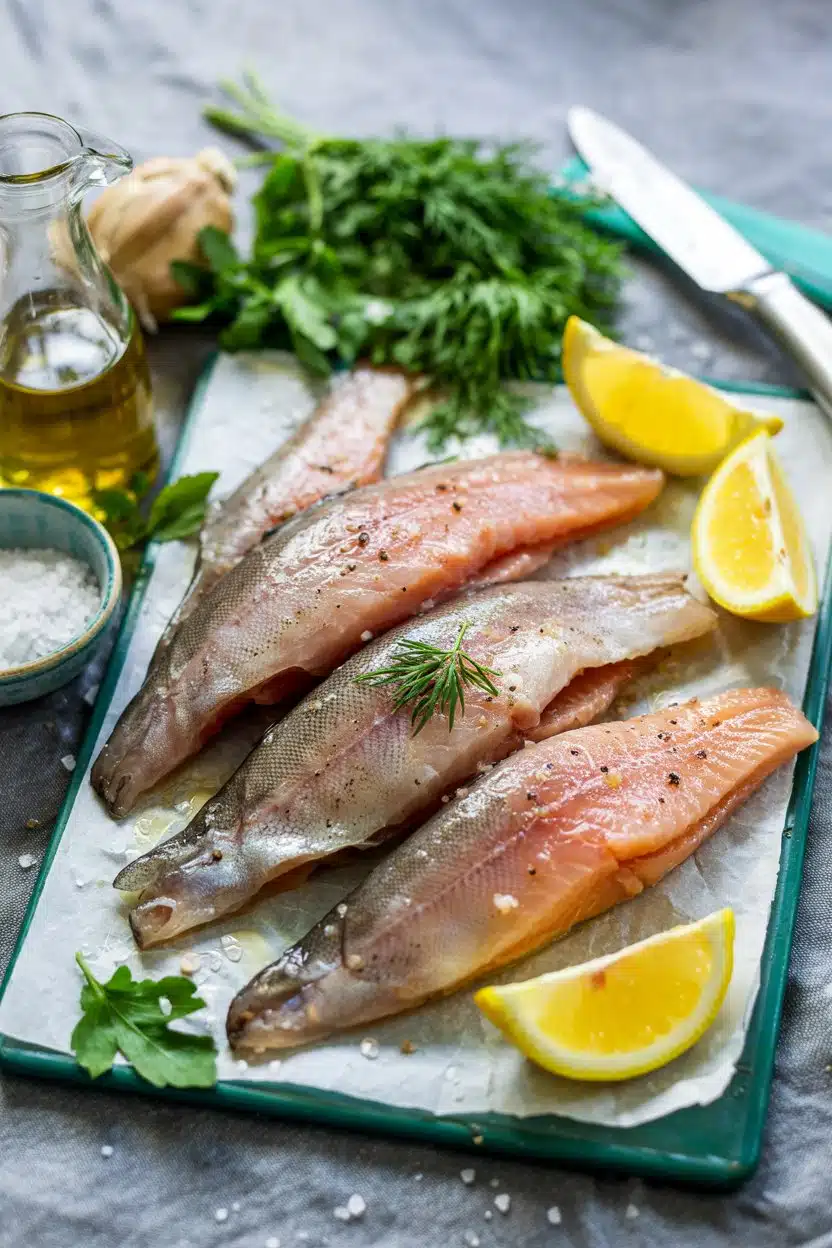
Pan-seared trout develops a nutty, crisp skin with almost no effort, while a whole roasted fish stuffed with lemon and herbs stays moist and clean-tasting all the way through.
That flexibility makes it a staple in home kitchens and restaurant menus alike.
Trout is a mild, slightly sweet cold-water fish with a fine flake and tender texture. It suits pan-searing, roasting, grilling, and curing. Fresh fillets last just 1-2 days refrigerated, so plan meals quickly after purchase.
What Is Trout?
Trout belongs to the salmonid family, sharing lineage with salmon and steelhead but occupying its own category as a cold-water freshwater fish - though sea-run varieties do spend time in saltwater.
Remember it later
Planning to try this recipe soon? Save it for a quick find later!
Native to temperate waters across North America, Europe, and Asia, trout has been farmed commercially for over a century, making it one of the most reliably available fresh fish at the counter.
Rainbow trout is the most common market variety, with pale pink to cream-colored flesh and mild flavor. Brown trout carries a slightly earthier profile and is more common in wild-caught form.
Brook trout - technically a char - is the smallest of the group, prized by anglers for its delicate flesh.
Sea trout (also called *trucha* in Spanish-speaking markets) develops a richer, brighter pink flesh from its time in saltwater, sitting closer to salmon in character.
Flavor
Texture
Aroma
Mild
What Does Trout Taste Like?
The closest reference point for trout is mild salmon - less oily, with a finer flake and a cleaner finish on the palate.
Farmed rainbow trout lands on the neutral end of the spectrum: gently sweet, with no strong mineral edge.
Wild-caught fish, especially brown trout from cold rivers, picks up a faint earthiness that reads almost like a whisper of game.
Cooking method shifts the flavor noticeably. Pan-searing skin-on draws out a nuttiness from the rendered fat, while poaching keeps things clean and delicate. Cold-smoking introduces a mineral depth that makes trout work beautifully on toast or in pâté.
Sea trout is the outlier - briny and more assertive, it behaves more like a mild salmon fillet than its freshwater relatives.
For anyone curious about fish and its flavor more broadly, trout is a useful starting point precisely because it doesn't dominate.
How to Use & Cook Trout
Trout rewards simplicity. A skin-on fillet needs little more than a hot pan, a knob of butter, and two minutes per side.
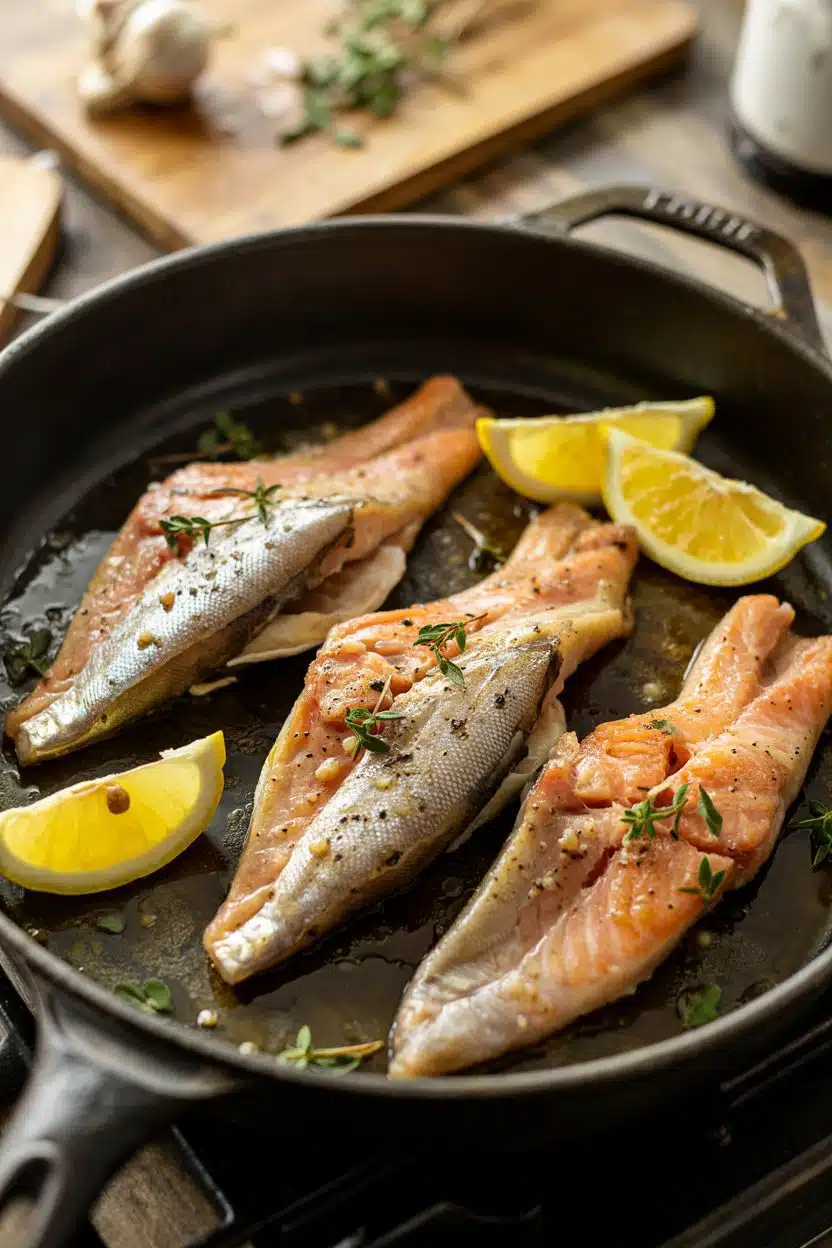
The skin crisps fast and the flesh stays moist - overcooking is the main risk, so pull it from heat the moment it flakes at the thickest point.
| Method | Best For | Tip |
|---|---|---|
| 🍳 Pan-Seared | Skin-on fillets, trout almondine | Start skin-side down in a dry pan; add butter at the end |
| 🔥 Roasted Whole | Herb-stuffed whole fish | Score the skin to allow even heat; roast at 200°C / 400°F |
| 🍖 Grilled | Trout steaks, skin-on fillets | Brush with olive oil; use medium heat to prevent sticking |
| 🧂 Cured | Gravlax-style sliced trout, pâté | Use the same method as [making gravlax cured salmon at home](https://forkliftkitchen.com/gravlax-cured-salmon/) - it transfers directly |
| 💨 Cold-Smoked | Toast toppings, appetizers | Slice thin across the grain; pair with crème fraîche or capers |
| 🫕 Poached | Fish cakes, salads | Poach in court-bouillon; flake gently once cooled |
🇫🇷 French
🇸🇪 Scandinavian
🇯🇵 Japanese
Avoid pairing trout with heavy cream-only sauces or strongly aged cheeses - both overwhelm its subtlety. Brown butter, lemon, and capers are the classic companions for good reason: they add brightness and richness without competing.
fresh dill
brown butter
almonds
capers
new potatoes
parsley
How to Buy and Store Trout
Fresh trout is highly perishable. At the counter, look for moist, translucent flesh with no dry edges or brown patches.
Whole fish should have clear (not cloudy) eyes, bright red gills, and zero sour odor - a faint clean smell is normal, anything stronger is a warning sign. Flesh should spring back when pressed lightly.
Store fresh trout in the coldest part of the fridge, wrapped in wax paper inside a shallow sealed container, and use it within 1-2 days.
Cooked trout keeps for 3-4 days refrigerated.
For longer storage, freeze fillets individually wrapped in plastic and foil - quality holds for up to 3 months.
The same principles that apply to storing salmon correctly apply here, since both fish are similarly delicate.
Start Here for Trout
Trout is the right fish for cooks who want clean, unfussy results without sacrificing quality.
If you're new to cooking fish, start with a skin-on rainbow trout fillet in a hot pan - the technique is forgiving and the payoff is quick.
For those comparing options, understanding the differences between steelhead vs atlantic salmon helps clarify where trout sits on the flavor spectrum relative to its richer salmonid cousins.
Frequently Asked Questions
No - trout and salmon are related salmonids but distinct species with different flavor profiles. Trout is generally less oily, with a finer flake and milder taste. Sea trout and steelhead come closest to salmon in character because both spend time in saltwater, but even they tend to be lighter and less rich than Atlantic salmon.
Fresh trout should not taste fishy. A strong or sour smell before cooking signals the fish is past its prime. Farmed rainbow trout is among the mildest fish available - if anything, first-time eaters often expect more flavor than they get.
The key is pulling it from heat early. Trout's fine flake means it overcooks quickly - remove it as soon as the flesh at the thickest point just begins to separate when nudged with a fork. For whole fish, stuffing the cavity with herbs and lemon creates a steam effect that protects the flesh during roasting.
Rainbow trout is a true trout (Oncorhynchus mykiss) and the species most often sold in supermarkets, available farmed year-round. Brook trout is technically a char (Salvelinus fontinalis), smaller in size, with a more delicate and slightly sweeter flesh - it's common in wild-caught form from anglers but rarely appears in commercial fish counters.
Yes, and it's worth eating when cooked properly. Skin-on pan-searing renders the fat and makes the skin crisp and flavorful - similar to a well-cooked chicken skin. Avoid eating the skin if the fish was wild-caught from potentially polluted water sources, as some contaminants concentrate in the fat layer just beneath the skin.



