
You spot arrowroot powder on the shelf - neat little bag, snow-white, priced not far from cornstarch - and you wonder whether it's worth the swap.
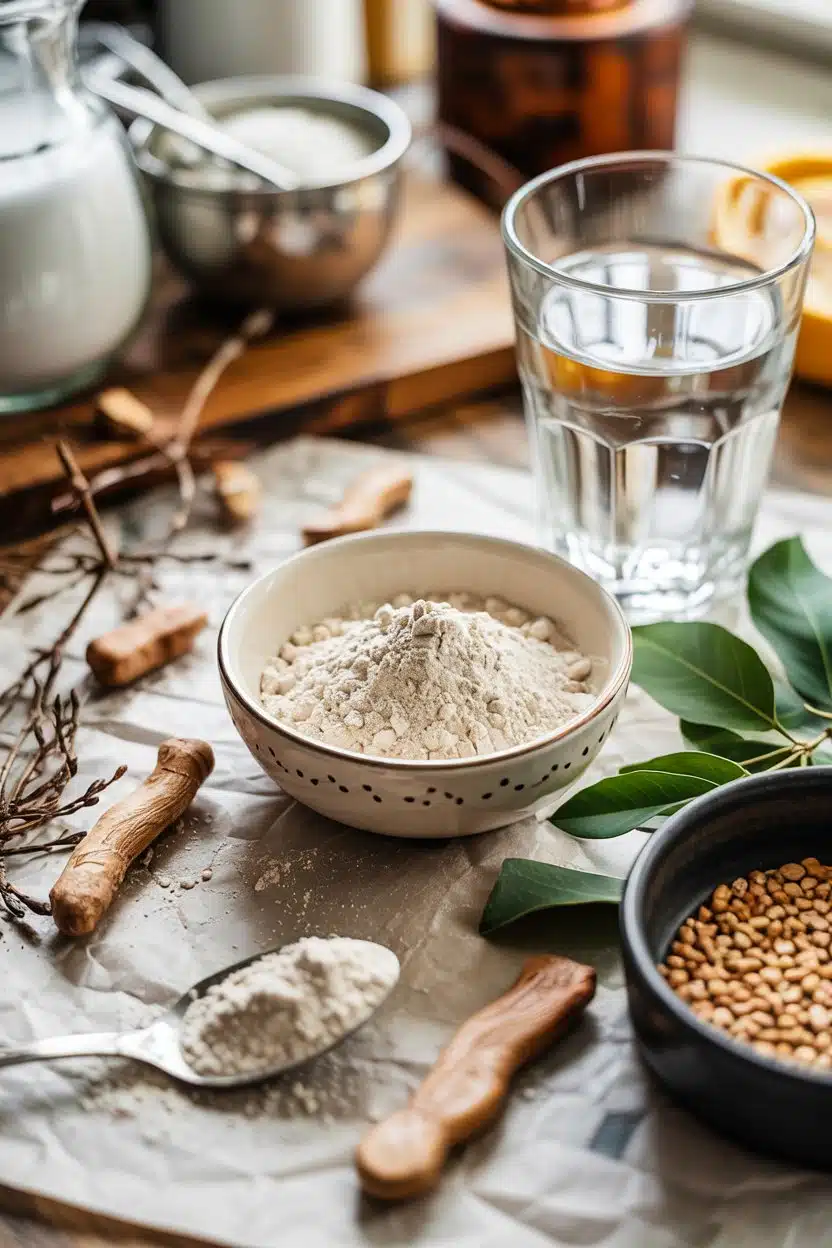
It shows up in gluten-free recipes, restaurant-quality fruit glazes, and crystal-clear gravies where cornstarch would leave things slightly cloudy.
Arrowroot powder is a neutral starch that solves a specific set of problems, and understanding those problems tells you exactly when to reach for it.
Arrowroot powder is a fine, neutral starch extracted from tropical rhizomes. It thickens sauces and fillings with a clear, glossy result and a silky mouthfeel - without the faint floury taste cornstarch can leave behind. Works in gluten-free baking and light fry dredges too.
What Is Arrowroot Powder?
Arrowroot powder - also sold as arrowroot starch or Maranta powder - is extracted from the tuberous rhizomes of *Maranta arundinacea*, a plant native to the tropical Americas and historically cultivated throughout the Caribbean and South America.
Remember it later
Planning to try this recipe soon? Save it for a quick find later!
Processors wash, peel, and pulp the roots, then dry and mill the extracted starch into an ultra-fine white powder.
The result is grain-free and naturally gluten-free.
It belongs to the starch and powdered thickener category alongside cornstarch and tapioca starch.
Unlike tapioca, which comes from cassava root and produces a slightly chewier gel, arrowroot sets to a softer, more fluid consistency at lower temperatures.
That distinction matters depending on what you're making - if you're weighing your arrowroot powder stand-ins, the texture difference is where most swaps fall short.
Flavor
Texture
Aroma
Mild
What Does Arrowroot Powder Taste Like?
Arrowroot powder is about as close to tasteless as a starch gets. Raw, it has a faint dry earthiness - noticeable if you pinch it between your fingers and bring it close - but it largely disappears once hydrated.
That makes it fundamentally different from wheat flour, which carries a raw, wheaty taste that requires cooking out.
Compared to cornstarch in cooking, arrowroot reads cleaner on the palate.
Cornstarch can leave a slightly floury or pasty impression when undercooked; arrowroot doesn't. The absence of flavor is the feature. In a delicate fruit glaze or a refined pan sauce, arrowroot lets the actual ingredients carry the dish.
One caveat: prolonged heat thins it. If you simmer arrowroot too long, the gel structure breaks and the sauce turns watery - at which point you're tasting the ingredients again, but with less body than intended.
How to Use Arrowroot Powder
Always start with a cold slurry.
Mix arrowroot with an equal volume of cold water (or cold liquid from the recipe) before adding it to anything hot - dry powder dropped directly into a hot pan will clump instantly.
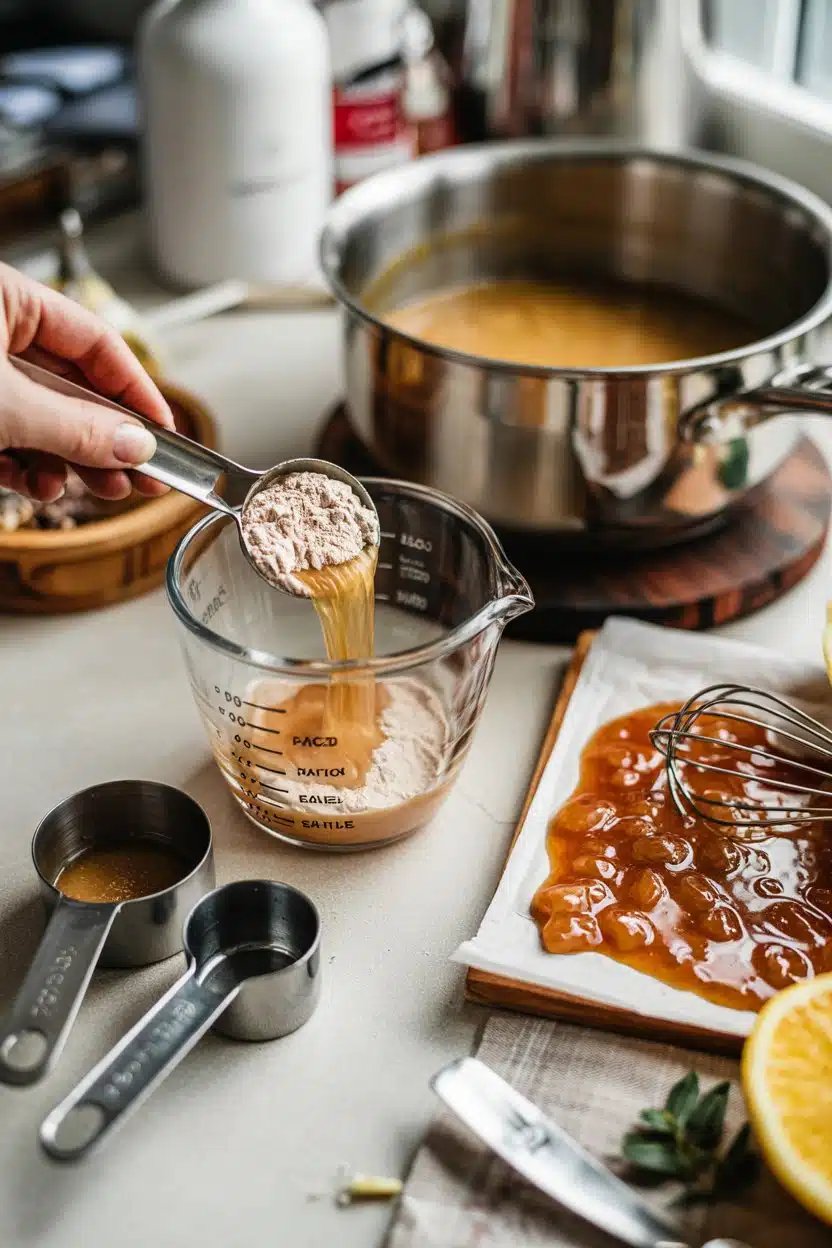
Once your slurry is smooth, whisk it into simmering liquid and stir briefly, just long enough for the sauce to clarify and thicken.
| Method | Best For | Tip |
|---|---|---|
| 🥗 Slurry | Clear sauces, pan juices, consommés | Dissolve in cold liquid first; add at the end of cooking |
| 🍳 Simmered briefly | Fruit pie fillings, glazes, compotes | Stir in near the end off heat; overcooking breaks the gel |
| 🥐 Dry blend | Gluten-free baking mixes | Replace up to 1:1 of other starches in small percentages for tender crumb |
| 🍤 Dredge | Light fried coatings (fritters, cutlets) | Combine with rice flour for crispness; arrowroot alone can turn gummy |
🌎 Latin American
🌏 Southeast Asian
🌾 Gluten-Free Western
citrus
butter
egg yolks
soy sauce
rice flour
broth & consommé
How to Buy and Store Arrowroot Powder
Look for a fine, bright-white powder with clean labeling that reads "100% arrowroot" or "arrowroot starch." Grayish color or visible clumps signal moisture damage or age - skip those bags. Check the gluten-free or baking aisle; it's occasionally shelved near specialty flours.
Sealed glass jars are preferable to open paper bags for anything you'll use infrequently.
Once home, transfer the powder to an airtight container and keep it in a cool, dry pantry away from the stove or sink.
Moisture is the main enemy - even a humid kitchen will shorten its working life.
Unopened, arrowroot stays usable for 2-3 years.
Opened and properly sealed, expect 12-18 months.
There's no benefit to refrigerating or freezing arrowroot powder - temperature swings cause condensation inside the container, which clumps the starch.
When to Reach for Arrowroot Powder
Arrowroot earns its place in three specific situations: you need a clear, glossy result (not a cloudy one), you're cooking for someone avoiding corn or gluten, or your sauce can't handle extended heat.
If those conditions don't apply, replacements for cornstarch may already be in your pantry and will work just fine.
Start with fruit glazes or a simple pan sauce - two applications where arrowroot's clean finish is immediately obvious.
Frequently Asked Questions
No - they come from different plants and behave differently in cooking. Tapioca starch (from cassava) produces a slightly chewier, stickier gel and holds up better at higher temperatures; arrowroot gels at lower heat and produces a softer, more fluid set. In most sauce applications they're interchangeable in a pinch, but the texture of the finished dish will differ noticeably in custards and pie fillings.
Yes, at roughly a 1:1 ratio in most sauce and filling recipes. Arrowroot thickens at a lower temperature and produces a clearer result, so sauces will look glossier and set slightly softer than they would with cornstarch. Avoid using arrowroot in recipes that require long simmering or dairy-heavy sauces - it can turn slimy when cooked with milk or cream for extended periods.
Start with 1 teaspoon per cup for a lightly thickened sauce or broth, and use 2 teaspoons per cup for a firmer set in pie fillings or compotes. Always dissolve it in an equal amount of cold liquid first to prevent lumping. Because arrowroot is more potent by weight than flour, these amounts are considerably smaller than flour-based thickening ratios.
Arrowroot begins thickening at a lower temperature than cornstarch - around 140-160°F (60-71°C) - so it can gel in warm rather than fully boiling liquids. However, it doesn't thicken in completely cold, unheated liquid the way some gelling agents do. The slurry must still reach enough heat to activate the starch granules before cooling to its final set.
Two things cause this: overcooking or combining it with dairy in a long-cooked sauce. Arrowroot's gel structure breaks down past a certain temperature threshold, and the starch molecules lose their ability to hold liquid, producing a gluey or stringy texture. Keep heat brief and moderate, and add arrowroot near the end of cooking rather than at the start.



