
Most people assume oatmeal is a single thing - a beige, bland bowl of breakfast cereal.
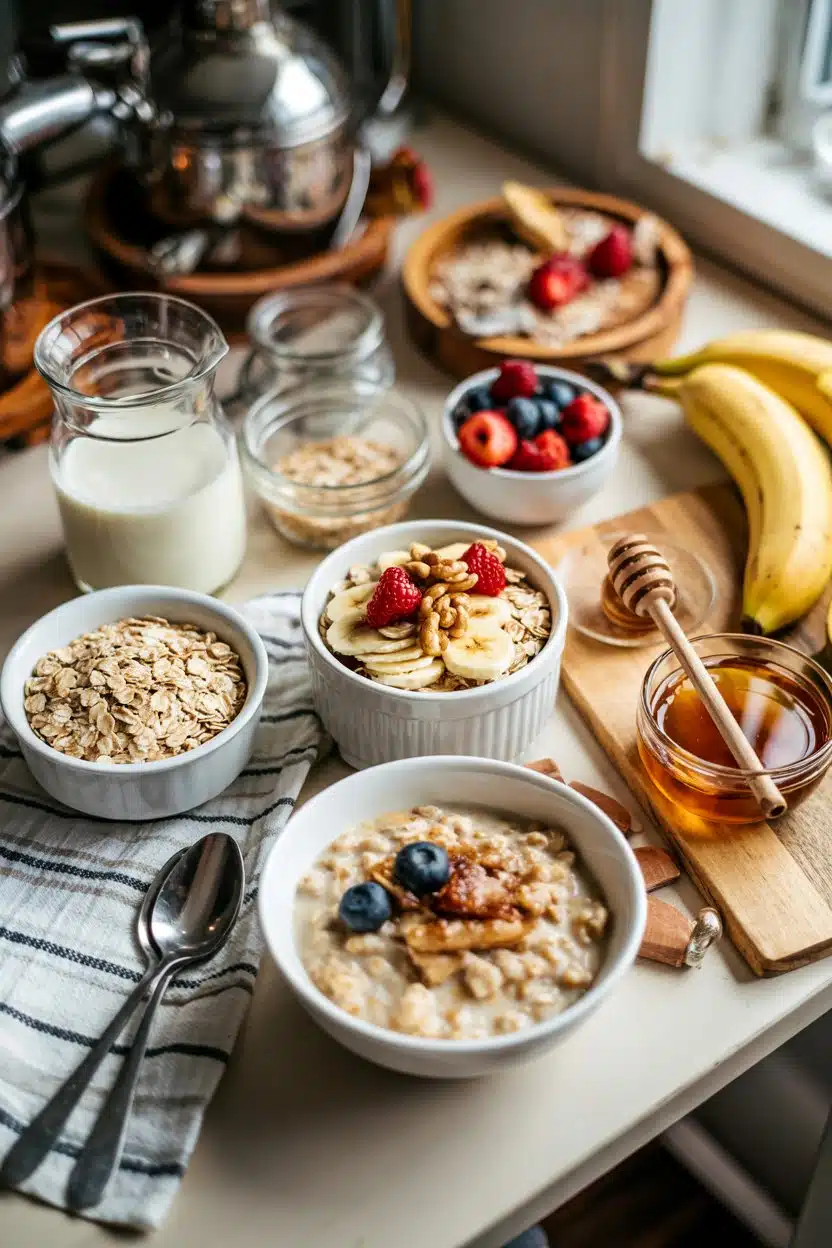
That's not quite right. Oatmeal covers a family of processed oats that behave very differently depending on how they're cut, rolled, or steamed, and each form has a distinct texture and use in the kitchen. Understanding those differences changes how you cook with it.
Oatmeal is a whole grain cereal made from processed oats - groats, rolled flakes, or steel-cut pieces. It has a mild, nutty, cereal-like flavor, cooks into creamy or chewy textures depending on the cut, and works across porridge, baking, and binding applications.
What Is Oatmeal?
Oatmeal refers to oats that have been processed from their raw grain form - oat groats - into something cookable. The groat is the hulled whole grain; every other form is derived from it.
Remember it later
Planning to try this recipe soon? Save it for a quick find later!
Steel-cut oats are groats chopped into small pieces, rolled oats are steamed and pressed flat, and instant oats are rolled thinner still for fast hydration.
Origin matters here.
Oats were domesticated in temperate Eurasia during the Bronze Age and became a staple grain across Britain, Scotland, and the Nordic countries long before widespread wheat cultivation in those climates.
Scottish and British porridge traditions are among the oldest continuous uses of the grain in cooking - something like making coconut milk rice porridge at home, but centuries older and built around a hardier crop.
Flavor
Texture
Aroma
Mild
What Does Oatmeal Taste Like?
Raw oats have a dry, straw-like quality that gives little away. Cooking changes everything.
Simmered in water, rolled oats develop a soft, cereal-forward flavor - think whole wheat porridge but with a nuttier, heartier grain note that lingers longer on the palate. Steel-cut oats push that nuttiness further, with a chewier bite that holds up even after extended cooking.
Toasting is where the flavor shifts most noticeably. Dry-toasting oat flakes in a skillet or oven brings out a deeper, almost caramel-grain aroma that reads closer to granola than porridge. The natural sweetness - from the grain's starches - becomes more pronounced against heat.
Oatmeal doesn't assert itself the way spices or alliums do. Its role is more structural: it absorbs flavors from milk, butter, cinnamon, or fruit without disappearing.
That makes it a reliable backdrop rather than a focal ingredient.
How to Use Oatmeal
Oatmeal's most common form is stovetop porridge: rolled oats simmered in water or milk until thickened, then finished with salt and whatever toppings work for the meal.
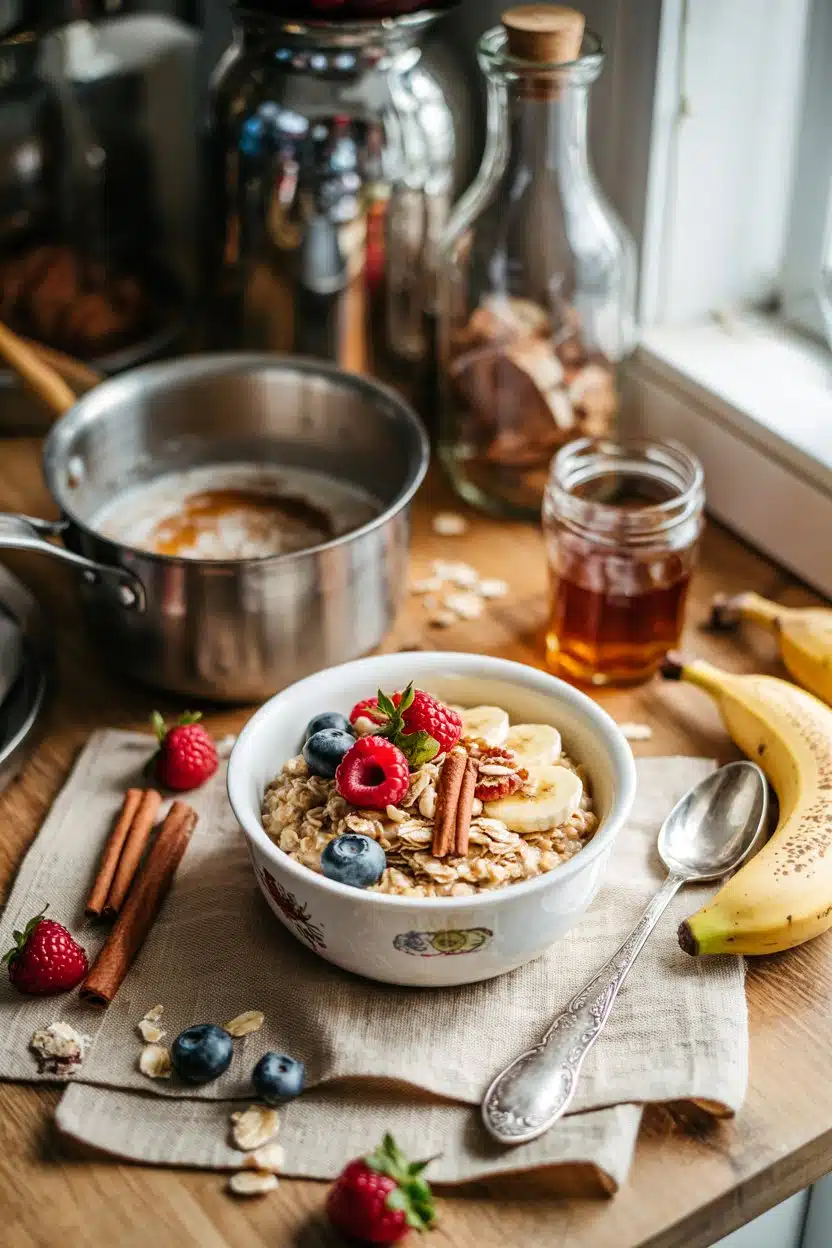
Overnight oats skip the heat entirely - oats soak in milk or yogurt for several hours, softening through hydration rather than cooking.
Beyond breakfast, oat flour works as a partial substitute in quick breads and pancakes, and whole rolled oats bind meatballs or veggie patties the way breadcrumbs do.
If you're thinking about swapping out oatmeal in a recipe, the right alternative depends heavily on whether you need the texture or the binding function.
| Method | Best For | Tip |
|---|---|---|
| 🍲 Simmering | Stovetop porridge, oat-thickened soups | Low heat and frequent stirring prevent sticking |
| 🥣 Soaking | Overnight oats, cold-prep muesli | Add acid (yogurt or kefir) for better texture |
| 🔥 Baking | Granola, fruit crisps, baked oatmeal casserole | Toast at 325°F for even browning without burning |
| 🍔 Binding | Meatballs, veggie burgers, oat-based patties | Use rolled oats uncooked; they hydrate during cooking |
🇬🇧 British
🇺🇸 American
🇸🇪 Nordic
maple syrup
apple
berries
almond or walnut
butter
cinnamon
nut butter
How to Buy and Store Oatmeal
Buy by cut, not by brand. Steel-cut oats feel dense and granular in the bag; rolled oats are flat, pale, intact flakes.
Avoid any package where the oats look yellowed or carry a faint oily smell - that's rancidity from the grain's natural fats breaking down.
Instant oats are pre-cooked and rolled even thinner; they're convenient but give up texture in return.
Storage is straightforward for most cuts. Dry rolled oats keep well in an airtight container in a cool, dark pantry, similar to storing flour correctly - cool, dark, and sealed.
In warm or humid climates, refrigerate or freeze opened quick or instant oats to slow oil degradation. For a full breakdown of timing by cut, see how long oatmeal keeps.
Where to Start with Oatmeal
Start with rolled oats if you're new to cooking with oatmeal - they're the most forgiving cut, ready in about five minutes, and work equally well in sweet and savory applications.
Move to steel-cut oats once you want more texture and chew.
Use instant oats only when time is genuinely short; the softness is a trade-off, not an upgrade.
Oatmeal rewards the extra few minutes.
Frequently Asked Questions
Steel-cut oats are whole groats chopped into small pieces; rolled oats are steamed and pressed flat. Steel-cut oats take 20-30 minutes to cook and stay chewy throughout, while rolled oats are ready in 5 minutes and produce a creamier, softer porridge. Both come from the same grain - the difference is entirely in processing.
Oats are naturally gluten-free, however most commercial oats are processed in facilities that also handle wheat, barley, or rye, making cross-contamination common. People with celiac disease need certified gluten-free oats, which are grown and processed under controlled conditions to prevent contact with gluten grains.
Yes - cooked oatmeal freezes well for up to three months. Portion it into silicone muffin cups or freezer-safe containers before freezing, then reheat from frozen with a splash of water or milk to restore consistency. Avoid freezing oatmeal that already contains fresh fruit, as the fruit releases water and turns watery on thawing.
Oatmeal is a good source of beta-glucan, a soluble fiber shown to reduce LDL cholesterol when consumed regularly - a benefit specific to oats rather than grains generally. It also provides manganese, magnesium, and plant protein. The main variable is what you add: heavy sugar, flavored syrups, or instant packets with added salt can offset those benefits quickly.
Switch from instant oats to rolled oats - they hold structure better during cooking because the flakes are thicker and less pre-processed. Cook over medium-low heat and pull the pot off early; residual heat continues softening the oats for another minute or two. Stirring less frequently also helps the oats keep some body rather than breaking down into paste.



