
Crack open a lobster claw and the smell hits you first - that clean, briny rush of cold ocean followed by something faintly sweet, almost nutty.
Then the meat itself: firm, dense, and far sweeter than you'd expect from anything that lives on the seafood shelf.
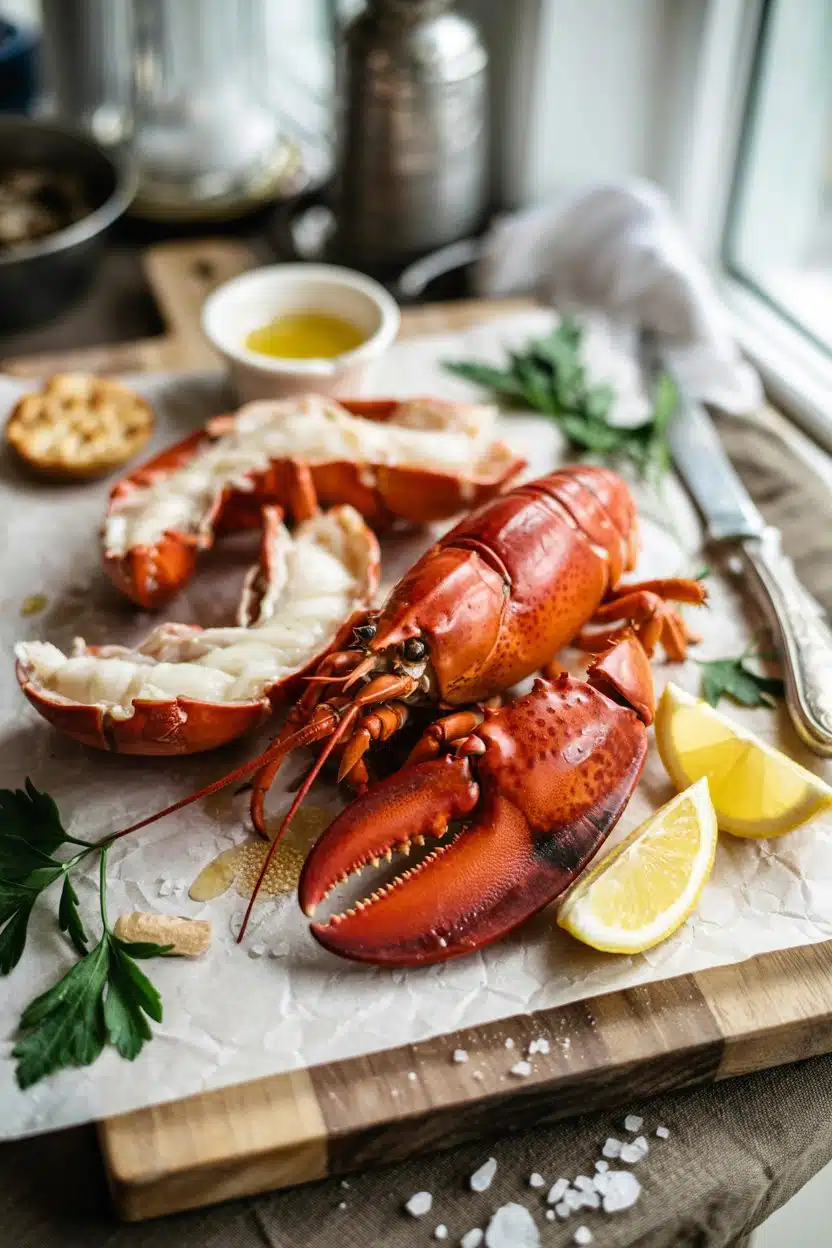
Lobster has a flavor that doesn't need much help, which explains why drawn butter and lemon are still the default pairing after centuries of use.
Lobster is a North Atlantic marine crustacean with sweet, briny, firm white meat. The tail is meaty and dense; the claws are more delicate. Best cooked simply - steamed, boiled, or broiled - and served with butter or folded into rolls, pasta, or bisque. Cooked meat keeps for just 48 hours in the fridge.
What Is Lobster?
Lobster is a large marine crustacean in the family *Nephropidae*.
Remember it later
Planning to try this recipe soon? Save it for a quick find later!
The species you'll find in most North American restaurants and fish markets is *Homarus americanus* - the Maine lobster, harvested along the New England and Atlantic Canada coastlines.
It has a hard exoskeleton, two heavy front claws used for crushing and cutting prey, and a muscular tail that holds most of the edible meat.
Spiny lobster, common in warmer waters, is a different genus with no large front claws. It's often sold just as tails and has a slightly different flavor profile, though both fall under the broad "lobster" umbrella at retail.
You'll find lobster sold live, whole-cooked, as picked claw and tail meat, or vacuum-packed. True Maine lobster is the benchmark for flavor in North American markets.
Flavor
Texture
Aroma
Moderate
What Does Lobster Taste Like?
Lobster tastes closer to crab or sweet shrimp than to fish, but the meat is firmer and the sweetness more pronounced than either.
There's a clean brininess underneath - the ocean without the fishiness - and a faint mineral note that reads almost buttery on its own.
The tail meat is the denser, more assertive bite. It holds up to grilling and broiling and carries seasoning well.
Claw meat is softer and sweeter, with a more delicate texture that falls apart gently rather than needing to be chewed through.
Heat matters here. Perfectly cooked lobster - just opaque through - is sweet and yielding.
Overcooked lobster turns rubbery and loses most of its natural sweetness, leaving behind only the briny shell flavor. Butter and cream amplify the richness, while lemon and tarragon cut through it.
How to Use and Cook Lobster
Lobster is expensive enough that most cooks want to get the method right.
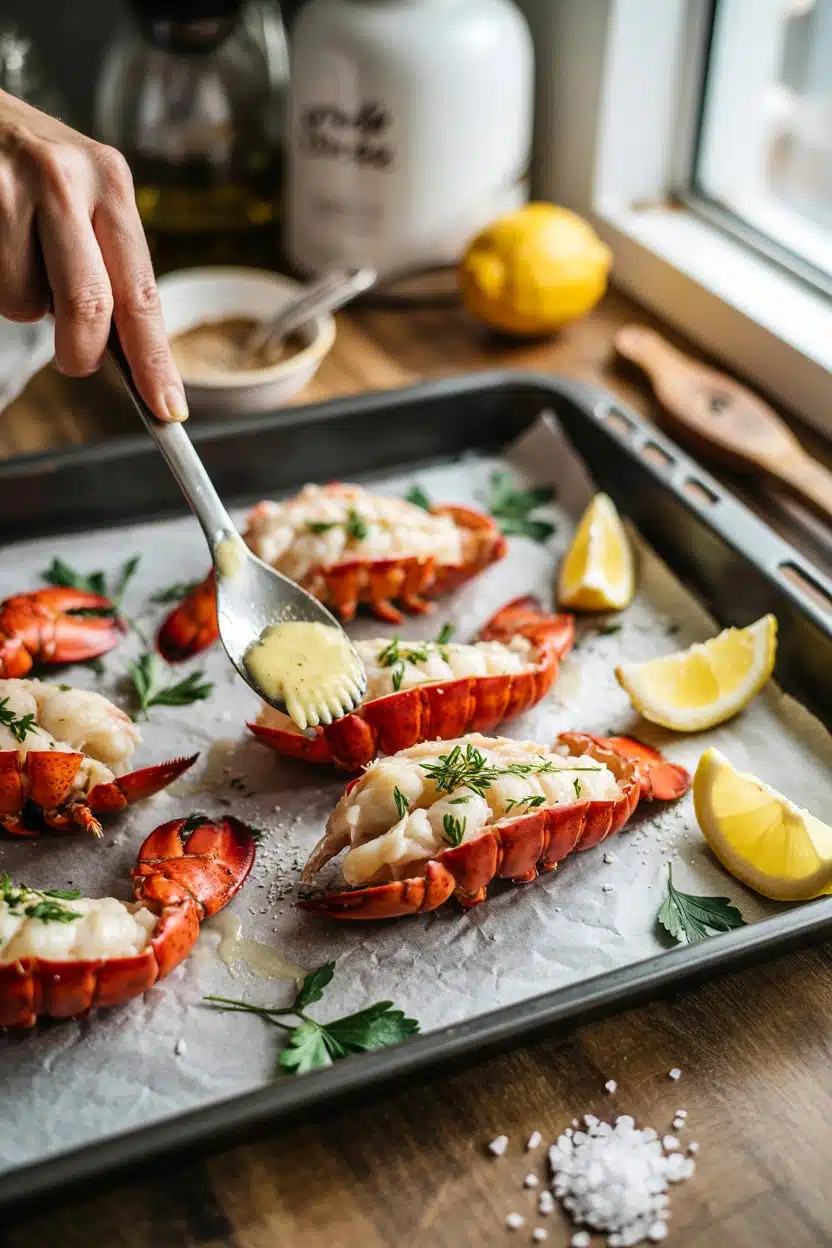
Steaming is gentler than boiling and preserves more of the natural sweetness; if you want to understand the differences between sous vide vs boiling, both methods have real trade-offs for shellfish specifically.
| Method | Best For | Tip |
|---|---|---|
| ♨️ Steaming | Whole live lobster, preserving sweetness | Steam 8-10 min per pound; tail should curl fully |
| 🔥 Broiling | Split tails, garlic-herb applications | Brush with butter before and halfway through cooking |
| 🫕 Poaching | Butter-poached tail for fine dining presentations | Keep butter below 180°F to avoid toughening the meat |
| 🥗 Cold/Dressed | Lobster rolls, seafood platters, chilled salads | Chop claw and tail meat; toss with mayo or warm butter |
| 🍲 Simmered | Bisque, chowder, cream-based pasta sauces | Add shells to stock first for maximum depth; meat goes in last |
🇫🇷 French Classic
🇬🇧 British Isles Coastal
🍽️ Modern American
If you're thinking about what pairs with lobster bisque, the soup's richness calls for acidic or starchy counterparts - not more shellfish on the same plate.
lemon
tarragon
shallot
cream
cognac or brandy
sweet corn
old bay or smoked paprika
How to Buy and Store Lobster
Live lobster should move actively when handled - limp claws and a loose, uncurled tail are bad signs. Claws will be rubber-banded; that's standard. For pre-cooked lobster, the meat should be bright white with a firm texture and no sour or ammonia odor. With vacuum-packed meat, check that the liquid inside is clear, not cloudy.
Cooked meat should go into the fridge immediately and be used within 48 hours. For a full breakdown, lobster tails' shelf life follows similar rules whether bought raw or pre-cooked.
Frozen cooked meat holds for up to 3 months - seal it tightly and thaw overnight in the fridge.
Start Here If You're New to Lobster
If this is your first time cooking lobster, steam a whole live lobster rather than attempting bisque or thermidor.
It requires no sauce-making, nothing can go wrong with the flavor, and you'll understand the meat's natural character before you start adding cream and cognac to it.
Those who want the lobster roll experience first should know that lobster rolls' shelf life is short - eat them the day they're made, not the next morning.
Once you've tasted the meat plain, everything else is just deciding how much richness to add.
Frequently Asked Questions
Lobster is sweet, not fishy. The flavor comes from natural glycine (an amino acid) in the muscle tissue, which registers as sweetness on the palate. Any fishiness usually signals the lobster wasn't fresh or was overcooked.
There's a family resemblance - both are sweet crustaceans with a briny edge - however lobster meat is considerably firmer and the sweetness is more concentrated. Shrimp also has a slightly more pronounced oceanic snap where lobster reads richer and more neutral.
Live lobster should be visibly active with a tail that curls when the body is lifted. For cooked or picked meat, the clearest sign is smell - fresh lobster has a clean, mildly sweet ocean scent. Any ammonia or sour note means it's past its window.
Raw lobster is eaten in some Japanese preparations (lobster sashimi), but it carries a risk of Vibrio bacteria, which causes serious foodborne illness. Unless the lobster is sourced specifically for raw consumption and handled under strict cold-chain conditions, cooking it through is the safer call.
Several factors converge: lobsters must be kept alive until cooking, which adds significant logistics costs; they grow slowly and molt their shells multiple times before reaching market size; and wild harvest from regulated fisheries limits total supply. The result is a product that costs more to catch, transport, and sell than almost any other common shellfish.



