
Most people assume heavy whipping cream is interchangeable with any white liquid labeled "cream" at the store.
It isn't.
The fat content is the dividing line - at a minimum of 36% milk fat, heavy whipping cream sits at the top of the fresh cream category, which is exactly what gives it the body to whip, reduce, and enrich in ways that lower-fat creams simply can't replicate.
If you've reached for creme fraiche swaps that work in a sauce recipe, understanding what heavy cream actually does will help you make that call more confidently.
Heavy whipping cream is a high-fat fresh dairy product (36%-40% milk fat) with a clean, mildly sweet flavor. It whips to stable peaks, reduces into thick sauces, and enriches custards, soups, and ganache. Unopened, it keeps 2-3 weeks refrigerated.
What Is Heavy Whipping Cream?
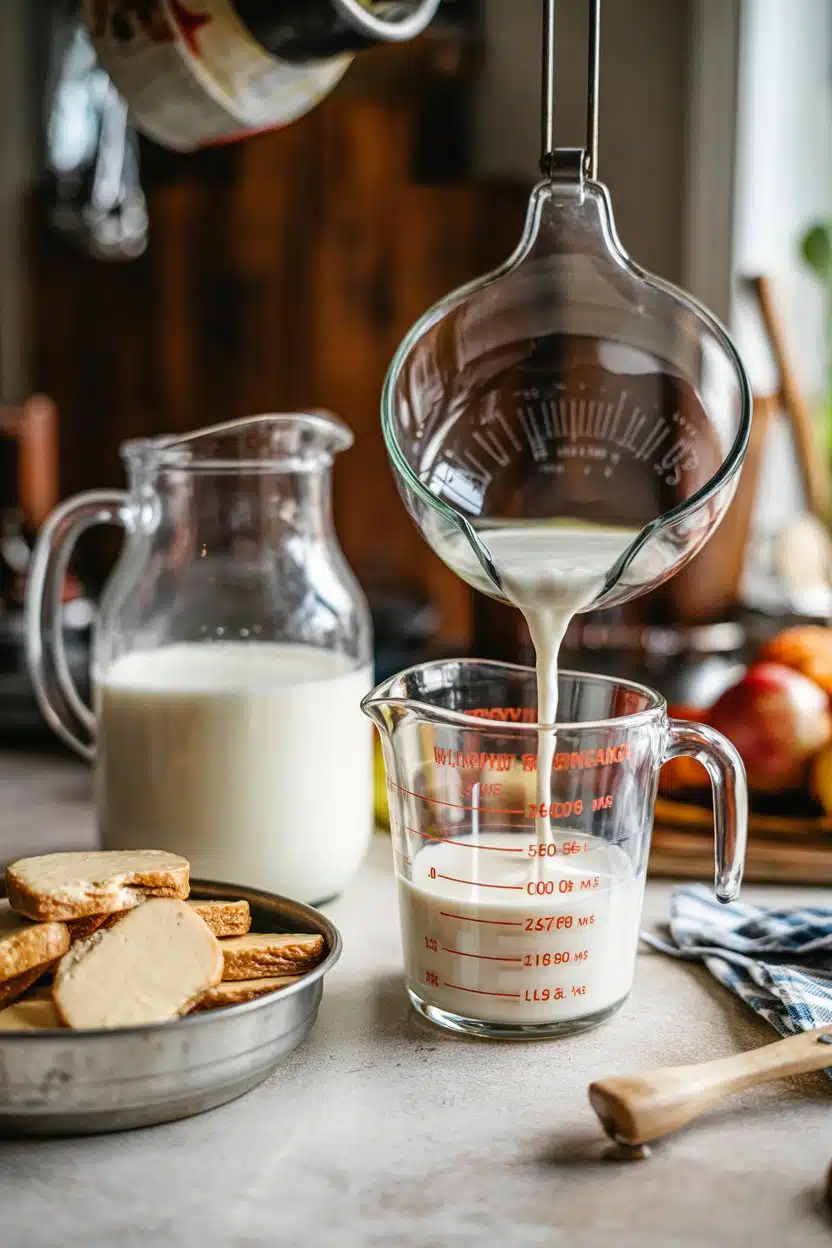
Heavy whipping cream is the fat-rich portion of cow's milk, separated from the water-based portion either by centrifuge or by allowing fat to rise naturally.
Remember it later
Planning to try this recipe soon? Save it for a quick find later!
In the US, federal standards require at least 36% milk fat for the "heavy whipping cream" label - cartons reaching 40% fat are also common.
You'll see it sold as heavy cream or heavy whipping cream interchangeably in American markets.
In the UK, the closest equivalent is double cream, which runs even higher at around 48% fat; what the British call "single cream" is a separate, much lower-fat product and does not whip.
Most commercial heavy cream today is ultra-pasteurized (UHT), which extends shelf life but can slightly mute fresh dairy aroma compared to standard pasteurized versions.
If you want the freshest flavor for cold applications like alternatives to whipped cream recipes, standard pasteurized cream from a local dairy is worth seeking out.
Flavor
Texture
Aroma
Moderate
What Does Heavy Whipping Cream Taste Like?
In liquid form, heavy whipping cream tastes like a richer, more coating version of half-and-half - same clean dairy base, but with a weight on the palate that lingers.
The sweetness is subtle and comes from lactose, not added sugar, so it reads as creamy rather than overtly sweet.
Heat changes it. Reduced in a pan, the water evaporates and the flavor concentrates into something noticeably more buttery and round.
That's the foundation of a proper Alfredo or mushroom cream sauce - the long simmer is doing real flavor work, not just thickening.
Cold temperature matters too. Whipped heavy cream softens its richness slightly, distributing the fat as air is incorporated, which is why freshly whipped cream tastes lighter than the liquid poured straight from the carton.
For a texture comparison, think of clotted cream as the concentrated end of the same spectrum - if you've looked into using clotted cream in dairy recipes, heavy cream is the more pourable, less concentrated relative.
How to Use Heavy Whipping Cream
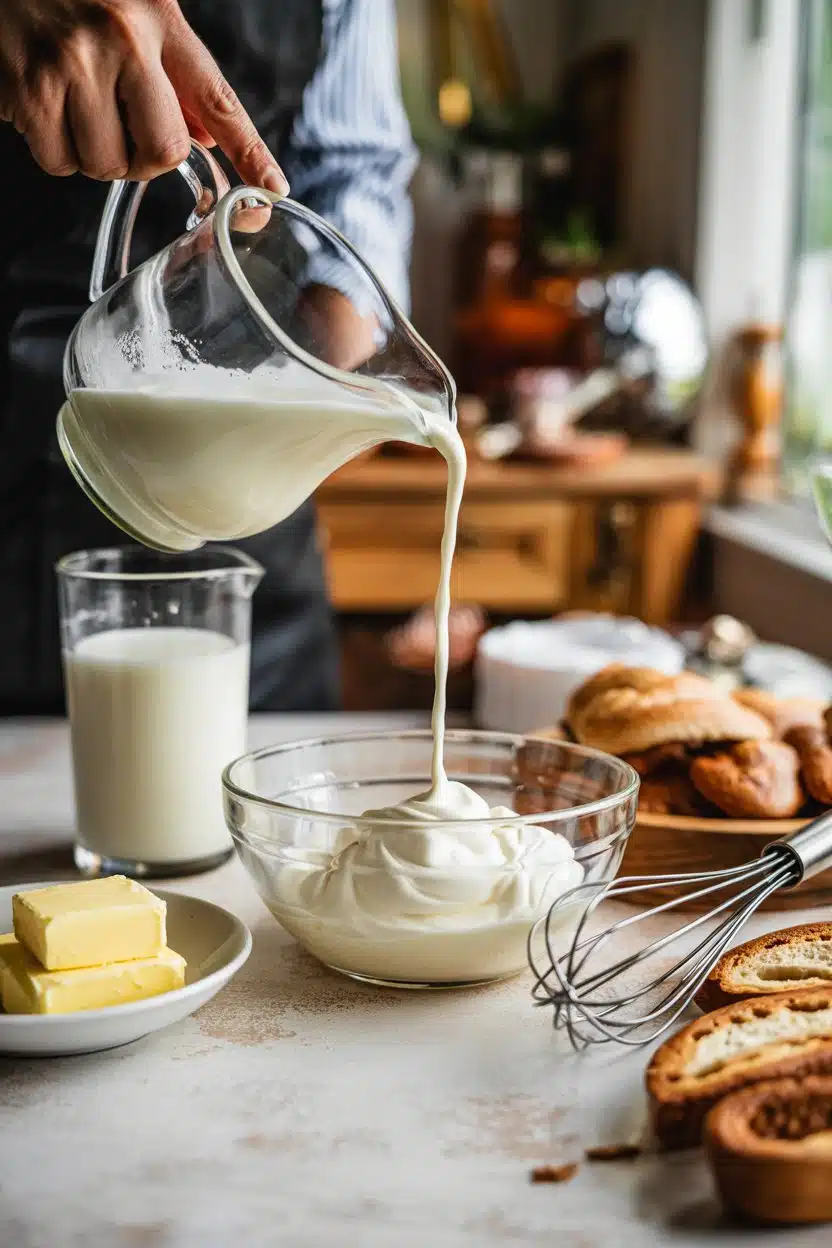
Heavy whipping cream does different jobs depending on temperature and technique. Cold, it traps air to build structure.
Hot, it surrenders water and thickens. The fat content - not additives - is what makes both possible.
| Method | Best For | Tip |
|---|---|---|
| ❄️ Whipped (cold) | Mousse, pie toppings, piped cream, trifles | Chill bowl and beaters; stop at stiff peaks before it turns grainy |
| 🍳 Reduced (low simmer) | Alfredo, mushroom cream sauce, pan sauces | Keep heat moderate - boiling hard can cause fat separation |
| 🍫 Ganache base | Chocolate ganache, pastry cream, truffles | Pour hot cream over chopped chocolate; fat ratio controls set firmness |
| 🥄 Folded/stirred (low heat) | Custards, ice cream bases, scrambled eggs | Add at the end of cooking to preserve silkiness without curdling |
| 🍲 Finishing | Soups, pan sauces, beurre monté | Stir in off-heat or on very low heat; acids in the pan can split it if held too long |
🇺🇸 American
🇮🇹 Italian
🇬🇧 British
Ganache is one of the clearest demonstrations of fat doing structural work - the cream-to-chocolate ratio directly controls whether the result is a pourable glaze or a firm truffle center. For anyone working without it on hand, there are reliable heavy cream in ganache stand-ins worth knowing. On the savory side, finishing a soup or pan sauce with a small pour of heavy cream rounds out sharp or bitter edges without thinning the base.
chocolate
berries
butter
mushrooms
nutmeg
vanilla
How to Buy and Store Heavy Whipping Cream
Look for cartons labeled "heavy cream" or "heavy whipping cream" with 36%-40% milk fat listed in the nutrition panel. Avoid anything simply labeled "whipping cream" without the "heavy" qualifier - that product typically runs 30%-35% fat and won't whip to the same stable peaks.
Check the use-by date and skip any carton that's swollen or leaking.
Once opened, transfer to a clean airtight container and use within 7-10 days.
Freezing is possible - up to two months - however the texture will separate on thawing, making it better suited for cooked applications than whipping.
A full breakdown of how long heavy whipping cream keeps covers spoilage signs in detail.
For reference, other high-fat dairy like storing sour cream correctly follows a similar refrigeration logic - opened containers need the same vigilance.
Start Here If You're New to Heavy Cream
Buy it for one savory and one sweet application first.
A quick mushroom cream sauce and a batch of hand-whipped cream cover both modes.
Once you see how fat percentage drives the result - thick sauce versus airy peaks - choosing the right product becomes instinctive. Don't substitute lighter creams in recipes that call for reducing; they won't hold.
Heavy whipping cream is the one product in the cream aisle where the fat number is the feature.
Frequently Asked Questions
Heavy cream (or heavy whipping cream) must contain at least 36% milk fat by US federal standards; standard whipping cream typically falls between 30% and 35%. That gap matters in practice - standard whipping cream produces softer, less stable peaks and breaks down faster in hot sauces. For most baking and sauce work, heavy cream is the more reliable choice.
They're close but not identical. UK double cream runs around 48% milk fat, which is noticeably thicker and richer than US heavy whipping cream at 36%-40%. In most recipes they're interchangeable, however double cream whips faster and holds its shape longer because of the higher fat content.
Yes, for up to two months in a sealed container. The fat and water phases tend to separate on thawing, so frozen-then-thawed cream won't whip reliably but works fine stirred into soups, sauces, or custard bases where texture separation isn't visible. Thaw overnight in the refrigerator and shake or stir before using.
Fresh whole milk runs through a centrifuge that spins at high speed, forcing the denser skim milk outward and allowing the fat-rich cream to concentrate at the center. The cream is then standardized to a target fat percentage, pasteurized (or ultra-pasteurized for longer shelf life), and packaged. No fat is added - the process only separates what's already in the milk.
Some separation of liquid whey from the fat is normal, especially in non-homogenized or older cream - a gentle shake or stir recombines it. If the liquid is very pronounced, the smell is sour, or the cream has thickened into lumps, those are signs of spoilage and the cream should be discarded. Temperature fluctuations during storage (such as door shelf storage) accelerate separation.



