
Scatter a handful of cacao nibs over a bowl of yogurt and you might stare at them, wondering if you've just topped breakfast with gravel.
They look like broken shards of something - dark, jagged, oddly beautiful - and then you take a bite and understand exactly what unsweetened chocolate actually is, stripped of everything that makes it approachable.
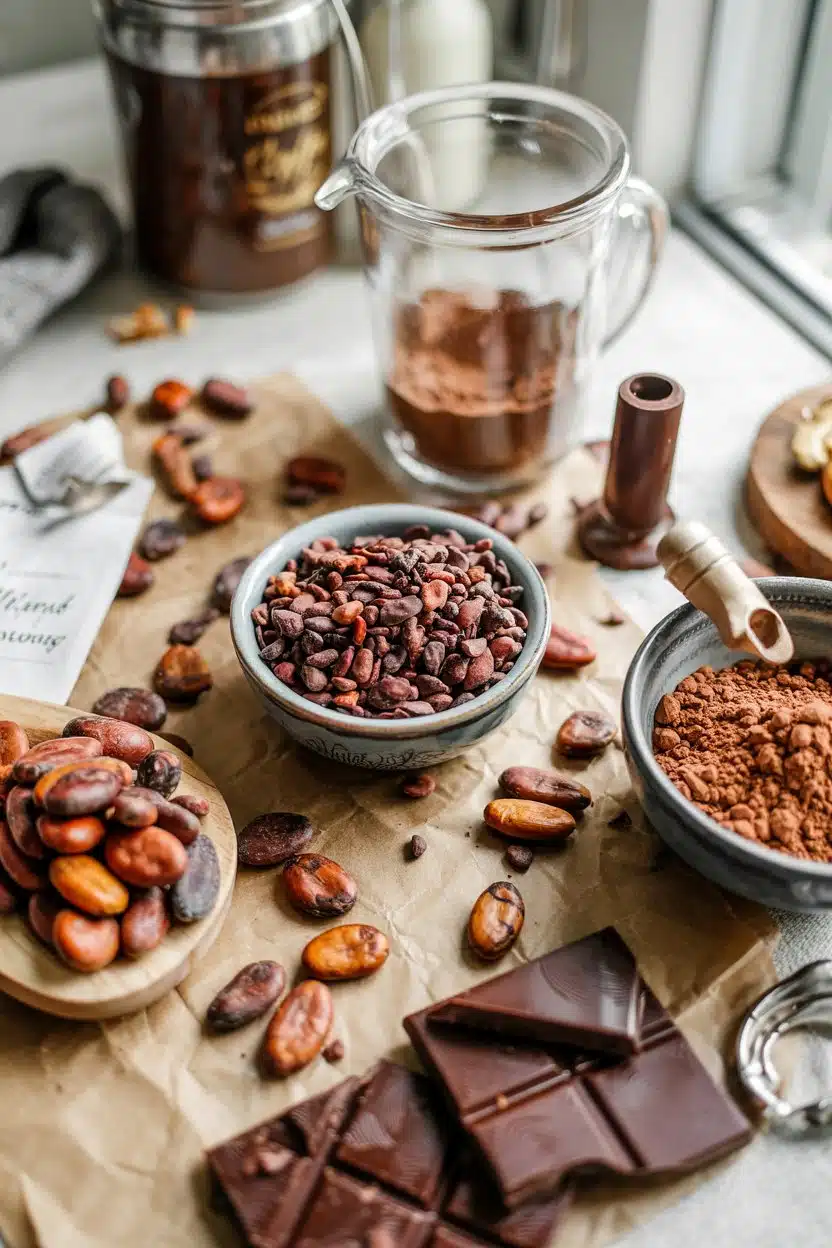
Most chocolate lovers have never encountered cacao nibs in this unguarded form. That first bitter crunch tends to reframe everything you thought you knew about where chocolate flavor comes from.
Cacao nibs are small fragments of roasted cacao beans with zero added sugar. They deliver an intense bitter-chocolate crunch and work across sweet and savory recipes wherever you want deep chocolate character without sweetness.
What Is cacao nibs?
Cacao nibs are the edible inner fragment of the cacao bean - what remains after the bean has been fermented, dried, roasted, and cracked, with the papery husk winnowed away.
Remember it later
Planning to try this recipe soon? Save it for a quick find later!
The process is part of how fermentation shapes the final character of the nib; for more context on that chemistry, see what happens to gluten during fermentation.
You'll also see them sold as cocoa nibs, cacao bits, cacao crunch, or cacao kernels - all the same product.
They come from cacao-growing regions in West Africa, Central America, and South America. Single-origin nibs, sourced from a specific farm or region, carry distinct regional flavor signatures that mass-blended nibs won't.
Flavor
Texture
Aroma
Strong
What Does Cacao Nibs Taste Like?
Think unsweetened dark chocolate crossed with very bitter espresso grounds - then add a nutty, almost brown-ale-like roasted quality underneath. That's the core experience.
There's also a faint fruity acidity that comes through on the mid-palate, a remnant of fermentation, before the tannins close everything down with a dry, lingering finish.
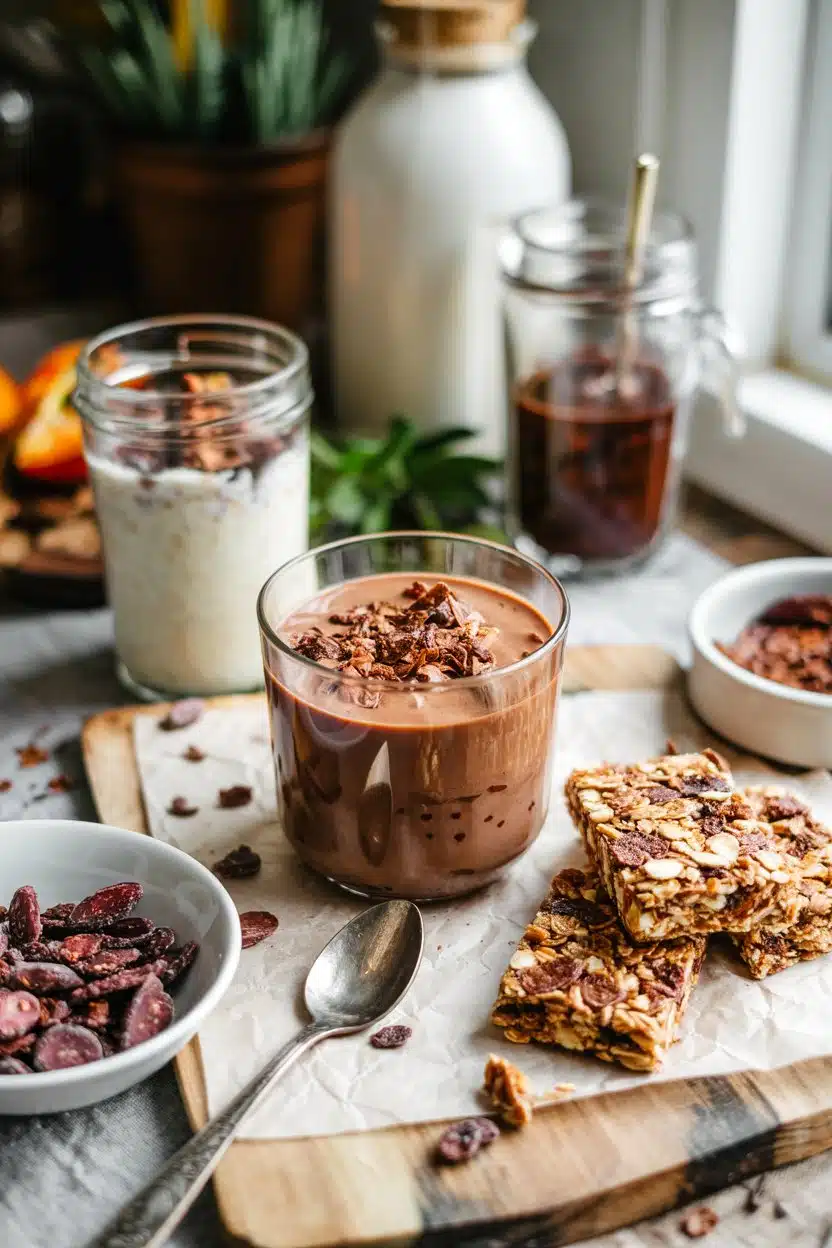
Nothing here is sweet. Nothing is mellow.
Raw nibs hit hard, and that astringency coats the tongue in a way that milk chocolate never does.
Cooking shifts the character somewhat. Folded into brownie batter, they hold their crunch but the baking heat rounds the sharpest bitter edges slightly.
Toasted in a dry pan, the roasted notes deepen and a subtle nuttiness emerges that wasn't there before. They never become sweet, however - heat amplifies intensity, not gentleness.
How to Use Cacao Nibs
Cacao nibs work wherever you want genuine chocolate depth without added sugar doing the heavy lifting. Their crunch makes them as useful as a topping as they are as a mix-in.
If you need a different flavor profile in a recipe, check the replacements for cacao nibs - though most swaps sacrifice either the crunch or the raw bitterness.
| Method | Best For | Tip |
|---|---|---|
| 🥗 Raw | Yogurt, granola, smoothies, ice cream topping | Pair with something sweet or fatty to balance bitterness |
| 🍪 Baked In | Cookies, brownies, energy bars | Fold in at the end; overbaking makes them harder |
| 🔥 Toasted | Salad croutons, roasted vegetable topping, meat rubs | Dry pan, medium heat, 2-3 minutes; watch closely |
| 🫙 Infused | Compound butter, flavored cream, chocolate sauces | Steep in warm liquid 15-20 minutes, then strain nibs out |
| ⚙️ Ground | Mole sauce, spice rubs for red meat, homemade chocolate paste | Grind with spices in short pulses; overprocessing creates paste |
Ground nibs are central to mole-style preparations - the kind of bitter-chocolate base that defines traditional Latin American sauces. If you've made mole and stored it, knowing how long mole sauce keeps matters as much as the nib quality itself.
🇺🇸 Modern American
☕ Specialty Dessert
🍫 Artisan Chocolate
orange zest
dried cherry
hazelnuts
coconut milk
espresso
chili
maple syrup
How to Buy and Store cacao nibs
Look for nibs that are uniformly dark brown to near-black with a dry, slightly glossy surface. Avoid bags showing white bloom, visible oil pooling, or excessive fine dust at the bottom - these signal age or poor storage conditions.
Single-origin labels are worth seeking if regional flavor complexity matters to you; generic blended nibs prioritize consistency over character.
Store in an airtight, opaque container in a cool, dark pantry for everyday use. The refrigerator extends life significantly - sealed well, nibs won't absorb surrounding odors and stay fresh longer.
For a full breakdown of cacao nibs's shelf life under different conditions, that guide covers the specifics in detail.
Pantry life runs 6-12 months. Refrigerated and properly sealed, expect up to 18 months.
Worth Adding to Your Pantry?
Cacao nibs earn their place if you bake regularly or want chocolate flavor without loading a dish with sugar.
Start with a granola bowl or a batch of brownies - both show what nibs do that chips and powder can't.
If you're stimulant-sensitive, note the theobromine and caffeine content (see our theobromine in acai guide for comparison context) and keep portions measured.
For everyone else, a bag lasts months and covers more ground than its single-purpose appearance suggests.
Frequently Asked Questions
Yes - the terms are interchangeable in commercial use. Technically, "cacao" refers to the unprocessed or minimally processed bean and its derivatives, while "cocoa" traditionally signals further processing (like alkalization). However, most brands use both names for the same roasted, cracked bean fragment with no meaningful difference in the product itself.
Yes, and most packaged nibs are already roasted, so "raw" in this context means straight from the bag without further cooking. They're safe to eat directly and are commonly used as a no-prep topping. The flavor is intensely bitter unaccompanied, so pairing with something sweet or creamy makes them far more approachable.
They do, but theobromine - a milder stimulant in the same chemical family - is present in higher concentrations than caffeine. A one-ounce serving contains roughly 10-15 mg of caffeine alongside significantly more theobromine. People sensitive to either compound should treat nibs the way they'd treat strong dark chocolate: use them, but track how much.
A short toast in a dry pan - two to three minutes over medium heat - deepens the roasted, nutty notes and reduces some of the sharper astringency. The nibs don't sweeten, however; they become more complex rather than more mellow. This makes toasted nibs particularly well-suited for savory applications like spice rubs or salad toppings where you want aroma alongside crunch.
No - unlike chocolate chips, nibs don't contain added cocoa butter and sugar that allow them to melt into a smooth pool. They soften very slightly in the oven but retain their crunch and stay as distinct fragments in the finished bake. This is the point: they add textural contrast and bursts of bitter chocolate flavor rather than melting into the batter uniformly.



