Bite into a slice and you notice it immediately - pale threads running through the red flesh, slightly resistant where the rest gives way cleanly. Webbing on watermelon isn't mold, isn't damage from the outside, and it won't make you sick.
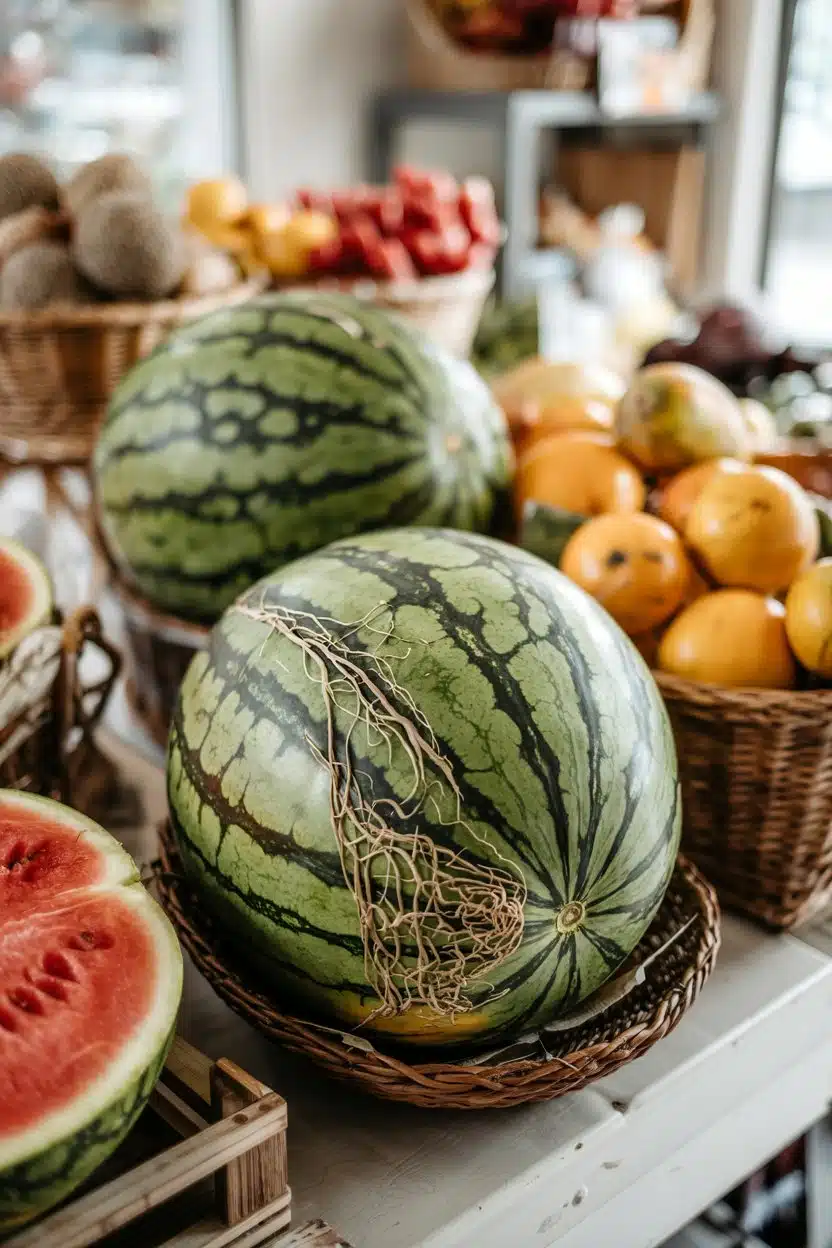
It's the fruit's own vascular tissue, visible when growth conditions push those internal fibers to the surface of perception.
Knowing what it is changes how you use the melon rather than whether you eat it.
Webbing on watermelon is pale fibrous vascular tissue inside the flesh. It's safe to eat but alters texture - stringy and occasionally mealy. Flavor in webbed areas is dull and mildly starchy. Cut away heavy webbing for salads; blend or juice lightly webbed sections.
What Is Webbing on Watermelon?
Watermelons grow a network of vascular bundles - the same structures that move water and nutrients through the fruit during development.
Remember it later
Planning to try this recipe soon? Save it for a quick find later!
Under normal conditions, these bundles stay fine and inconspicuous. Webbing becomes visible when those bundles thicken, often due to water stress, uneven growth surges, or the fruit holding on the vine too long after peak ripeness.
Flavor
Texture
Aroma
Mild
You may also see it called fibrous flesh, stringy watermelon, or vascular streaking. It appears more frequently in seeded heirloom varieties than in modern seedless hybrids, though no variety is entirely immune.
The condition is not a disease and carries no alternate scientific name - it's simply a structural outcome of how the fruit developed.
What Does Webbing on Watermelon Taste Like?
The webbed strands themselves taste closest to the stringy sections of underripe honeydew or the fibrous inner ribs of an overripe cantaloupe. There's a faint starchiness where a good watermelon would deliver pure, clean juice.
Surrounding flesh often tastes slightly duller than usual, too - not sour, not fermented, just flat.
This happens because the disrupted vascular flow means sugars didn't distribute evenly during development.
Where webbing is light and scattered, you may notice only a mild textural interruption.
Dense webbing, however, signals the melon passed its peak, and the flesh there can turn genuinely mealy rather than just fibrous.
How to Use Webbing on Watermelon
Light webbing doesn't disqualify a melon. It just redirects how you use it.
| Method | Best For | Tip |
|---|---|---|
| 🥗 Raw (trimmed) | Summer salads, fruit plates, mezze | Cut away heavy webbing; use crisp surrounding flesh only |
| 🧃 Juicing/Blending | Watermelon agua fresca, smoothies | Straining removes fibrous bits; blend whole including lightly webbed sections |
| 🌶️ Chopped | Salsas, relishes | Dice webbed areas small - texture blends with onion and chili |
| 🧊 Frozen | Granita, sorbet | Freeze only non-webbed crisp flesh for clean, smooth result |
| 🍹 Maceration | Cocktail base, gin mixer | Sugar and lime acid soften fibrous texture during macerating time |
🇲🇽 Mexican agua fresca
🇬🇷 Mediterranean mezze
🌏 Southeast Asian fruit salads
Avoid using heavily webbed sections in thin clear fruit gels or refined purees - the stringiness will survive straining and ruin the texture.
For everything else, maceration with a little lime juice and sugar does a reasonable job of softening the fibers before serving.
mint
lime
cucumber
chili flakes
gin
How to Buy and Store Watermelon
The best prevention happens at the market.
Pick up the fruit - it should feel heavy for its size, a sign the flesh is still dense and moist.
Look for a creamy yellow field spot on the underside, which indicates it sat on the ground long enough to ripen properly.
A white or pale green field spot often means it was picked early, which correlates with uneven vascular development and more webbing.
Once home, keep a whole melon at room temperature for up to seven days.
Refrigerate cut pieces in shallow airtight containers, where they'll hold for three to five days. Webbed sections deteriorate faster - they darken and soften quicker than clean flesh, so use those parts first.
Juicing produce stores differently from solid fruit; just as how long celery for juicing keeps matters when you're prepping batches, timing your watermelon juice right after cutting keeps flavor where you want it.
When to Use It and When to Skip It
If webbing is light - a few thin strands scattered through otherwise firm, deeply colored flesh - use the melon. Juice it, toss it in a salsa, or blend it into agua fresca.
The texture issue nearly disappears once the fruit is processed or diced small.
Skip the heavily webbed sections for anything where texture is the whole point: a clean fruit salad, a watermelon slice served at the table, a sorbet that needs smoothness. Cut those parts away without guilt.
The rest of the melon is still worth using.
Frequently Asked Questions
Yes, webbing is the fruit's own vascular tissue and poses no health risk. The exception is if the webbed area is also soft, discolored, or smells fermented - that signals actual decay, which you should cut away and discard. Webbing alone is a textural issue, not a safety one.
Stringiness comes from thickened vascular bundles, usually triggered by water stress during growing, uneven irrigation, or the fruit remaining on the vine past peak ripeness. Rapid growth spurts after dry periods can also cause these bundles to become more prominent. It's a development issue, not disease or mishandling after harvest.
Not necessarily - light webbing just means the fruit had some growth irregularity. Heavy, widespread webbing combined with dull color and mealy texture does indicate the melon is past its best. In that case the flesh won't improve with storage; use it in blended or juiced applications rather than fresh.
Yes. Juicing or blending is actually the best use for lightly webbed watermelon, since straining removes the fibrous strands. Run the juice through a fine mesh strainer or cheesecloth and the result is clean. Heavily webbed and mealy sections may yield less juice and a slightly flat flavor, so taste before committing a full batch.
Modern seedless hybrid varieties - including Crimson Sweet and Sugar Baby - tend to show less visible webbing than older seeded heirlooms because they've been bred for uniform flesh density. That said, growing conditions matter more than variety; even a seedless melon grown under water stress can develop prominent vascular strands.