Most people store almond milk in the fridge door out of habit, then wonder why it turns sour well before the 10-day mark.
Temperature swings from opening and closing the door are enough to accelerate spoilage, and that's just one of a few handling mistakes that cut the shelf life short.
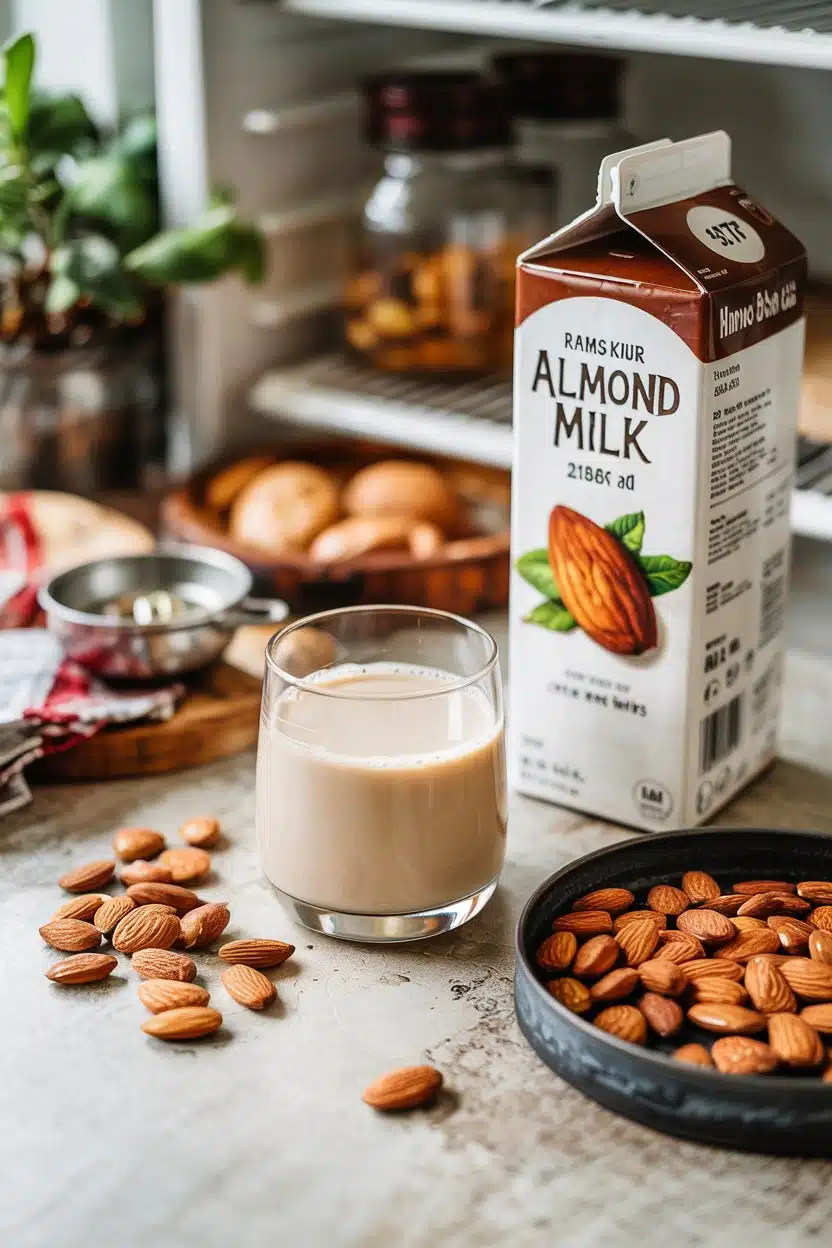
Understanding how almond milk behaves - and why it separates differently than milk in dairy recipes - helps you get every last usable day out of each carton.
Unopened shelf-stable almond milk lasts 6-12 months in the pantry. Once opened, refrigerate and use within 7-10 days. Freezing extends life to 3 months but changes the texture - thawed milk works best in cooked recipes, not cold drinks.
How Long Does Almond Milk Last?
Two distinct product types are in play here: shelf-stable UHT cartons and refrigerated cartons from the dairy case. UHT cartons are heat-processed to eliminate bacteria, which is why they sit unrefrigerated for months.
Remember it later
Planning to try this recipe soon? Save it for a quick find later!
Refrigerated cartons skip that step, so they carry a tighter use-by window - even before opening.
Once you crack either type open, the clock resets. Both last 7-10 days in the fridge after opening, regardless of what the printed date says.
For more on almond milk and its flavor differences between types, that breakdown covers sweetened versus unsweetened varieties in detail.
| Method | State | Duration | Notes |
|---|---|---|---|
| 🏠 Pantry | Unopened (UHT) | 6-12 months | Keep upright, away from heat; use by printed best-by date |
| 🧊 Fridge | Unopened (refrigerated) | 7-10 days | Dairy-case cartons; follow use-by date, best within 7 days of purchase |
| 🧊 Fridge | Opened | 7-10 days | Applies to both carton types; re-seal tightly after every use |
| ❄️ Freezer | Opened | 1-3 months | Use within 1 month for best quality; texture changes after thawing |
How to Store Almond Milk
Unopened shelf-stable cartons need nothing more than a cool, dark pantry shelf. Keep them upright and away from heat sources like the oven or a sunny windowsill.
Don't refrigerate an unopened UHT carton unless the label specifically says to - it won't extend the shelf life and wastes fridge space.
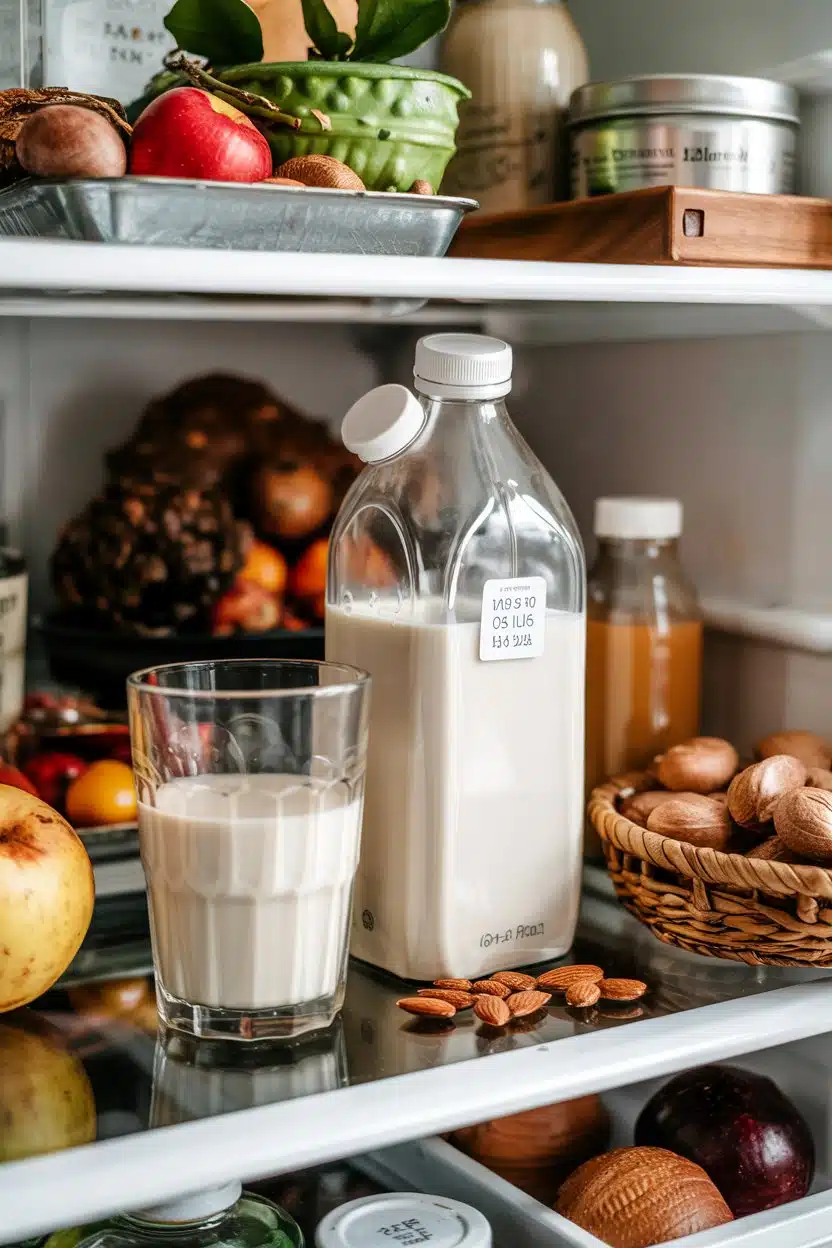
After opening, the approach changes. Reseal the original carton tightly, or transfer to an opaque glass bottle or BPA-free airtight container. Opaque containers matter because almond milk's unsaturated oils are sensitive to light oxidation, which drives that rancid, bitter smell.
Up to 12 months (unopened)
Store UHT cartons upright in a cool, dark cabinet. Keep away from stoves, direct sunlight, and areas with temperature swings. Do not pre-refrigerate.
7-10 days (opened)
Place at the back of the fridge on a middle or lower shelf - the coldest, most stable zone. Seal tightly after every pour. Never store in the door.
If you're buying infrequently, shelf-stable cartons are the smarter purchase. For everyday cold drinking, refrigerated dairy-case cartons tend to taste fresher.
Can You Freeze Almond Milk?
Yes, you can freeze almond milk safely. The catch is texture: emulsifiers like sunflower lecithin and gellan gum that keep almond milk smooth don't survive freezing intact.
Thawed almond milk separates, turns grainy, and often looks slightly curdled. This is normal - it's not spoiled.
Shake or whisk it hard after thawing. Most of the graininess breaks down enough for cooking, baking, or smoothies.
Drinking it cold straight from the glass is a different story; the texture is noticeably off. The same separation issue applies when freezing soy milk, so it's a trait of plant-based milks generally.
- Portion first - Divide into recipe-sized amounts (1 cup portions work well) so you only thaw what you need.
- Leave headspace - Pour into a rigid freezer-safe container or heavy-duty freezer bag, leaving 1-2 inches for expansion.
- Seal and label - Press out excess air, seal tightly, and write the date. Use within 1 month for best quality.
- Thaw in the fridge - Move to the refrigerator 24 hours before you need it. Don't thaw at room temperature.
- Shake or whisk vigorously - Separation is expected. Stir well before measuring into your recipe.
Signs Almond Milk Has Gone Bad
Normal almond milk separates slightly when it sits - a quick shake fixes that. Spoilage looks and smells different. Thick clumps, mold near the carton rim, or a sharp sour smell are all clear signals to discard the carton entirely.
Don't taste-test suspicious almond milk to decide. If you're uncertain, it goes in the bin.
Visual Signs
- Large curd-like clumps that don't break up after shaking
- Thick gelatinous separation that won't re-emulsify
- Mold around the carton opening or container rim
Smell Signs
- Sharp sour or vinegar-like odor instead of mild nutty aroma
- Rancid, bitter smell from oxidized oils
Texture Signs
- Slimy film on the surface when poured
- Persistent gritty or chalky mouthfeel after vigorous shaking
Getting the Most from Every Carton
Small habits make a real difference with almond milk.
If you find yourself frequently tossing leftovers before the 10-day mark, consider swapping out almond milk for a format that better matches your usage rate - shelf-stable cartons for occasional use, refrigerated for daily drinkers.
- 📍 Store opened cartons at the back of the fridge, not in the door, where temperatures fluctuate most.
- ✏️ Write the opened date on the carton - don't rely on the printed best-by date for tracking.
- 🥣 Use thawed almond milk in oatmeal, soups, baked goods, or smoothies rather than drinking it cold.
- 🛒 Match carton type to your habits: shelf-stable for pantry stocking, refrigerated cartons for fresher daily use.
Frequently Asked Questions
Freezing almond milk is safe, but the texture changes significantly. The emulsifiers that keep it smooth break down during freezing, so thawed almond milk separates and turns grainy. It's still usable in cooked dishes, baking, or blended drinks - just not ideal for cold drinking.
Opened almond milk lasts 7-10 days in the fridge, regardless of whether the carton was shelf-stable or refrigerated before opening. The printed best-by date becomes secondary once the carton is open - the 7-10 day rule takes over from the moment you first pour.
Homemade almond milk lasts only 3-5 days in the fridge - significantly shorter than the 7-10 days for commercial versions. Store-bought almond milk contains stabilizers like gellan gum and sometimes preservatives that extend its fridge life. Homemade has none of those, so it separates faster and spoils sooner.
For an unopened shelf-stable carton, a sell-by or best-by date is a quality marker, not a hard safety cutoff - it may still be fine a week or two past that date if stored properly. However, for opened almond milk, the 7-10 day rule from opening applies regardless of the printed date. When in doubt, check for smell, clumping, or sliminess before using.
Separation in fresh almond milk is a natural settling process - the almond solids and water gradually pull apart between uses. Emulsifiers like sunflower lecithin slow this but don't stop it entirely. A firm shake before pouring is all it takes to recombine the mixture; it's only a concern if clumps don't dissolve or the smell is off.