
Most people assume a Honeycrisp apple tastes sweeter than other varieties - but the real draw is its balance, not its sugar level.

That sweet-tart tension, built on a honeyed note backed by citrus-like acidity, is what makes it so distinctive.
If you've reached for fuji apple swaps that work when Honeycrisp sold out, you already know how hard this apple is to replace.
The Honeycrisp apple is a Minnesota-bred pome fruit with explosive crunch, sweet-tart flavor, and a light floral aroma. Eat it raw, slice it into salads, or bake it into pies where it holds shape well. Refrigerate for up to 4-6 weeks.
What Is Honeycrisp Apple?
Honeycrisp is a pome fruit developed at the University of Minnesota and released commercially in 1991. Its breeding code was MN 1711, and it's sometimes written as "Honey Crisp" - though Honeycrisp is the correct single-word form.
Remember it later
Planning to try this recipe soon? Save it for a quick find later!
The variety's signature crunch comes from unusually large, juice-filled cells in the flesh. When you bite through, those cells rupture all at once - producing a snap and spray of juice that most other apples simply can't match.
Visually, Honeycrisp apples show a bright red blush over a yellow-green background. You'll often see small lenticel spots on the skin, which are normal and not a defect.
The skin itself is thin but holds up to slicing without tearing.
There are no widely sold sub-varieties of Honeycrisp, though breeders at Minnesota have since released SweeTango and Rave as spiritual descendants.
If you've run out and need a close stand-in, a guide to honeycrisp apple stand-ins can help you match the texture and acidity.
What Does Honeycrisp Apple Taste Like?
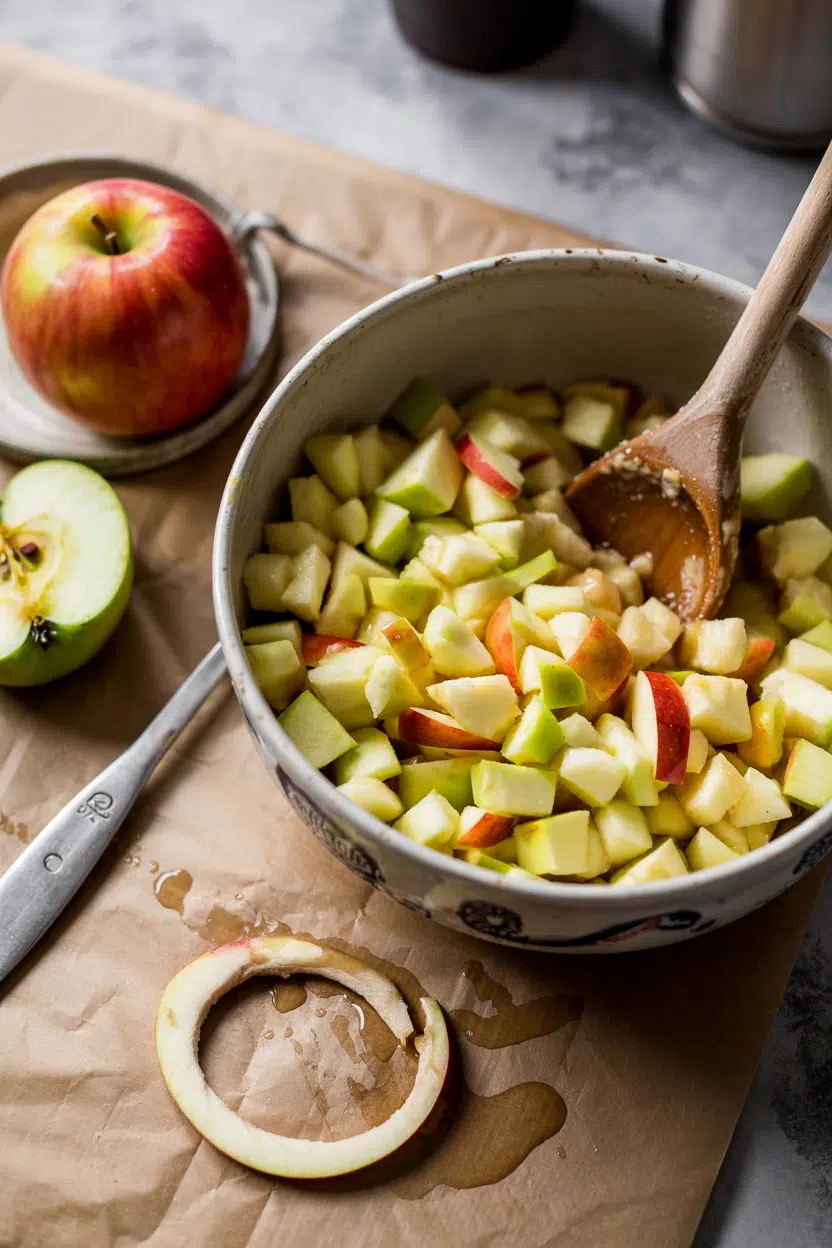
Honeycrisp lands at a moderate intensity - assertive enough to stand out in a dish, but not overwhelming.
The sweetness is real and honeyed, but it's kept in check by a bright, citrus-like acidity that stops the flavor from going flat.
Compared to Gala, Honeycrisp has a similar sweetness level but noticeably more acidity and a far crisper bite. Against Fuji, Honeycrisp tastes brighter and less starchy, with a juicier, more forceful snap.
McIntosh is softer and milder - closer to applesauce texture even when fresh.
With heat, the floral notes fade first. Brief roasting concentrates the sweetness while retaining some acidity.
Long cooking dissolves that crunch entirely, leaving behind a mild, lightly sweet apple flavor with little character left.
How to Use Honeycrisp Apple
Raw applications are where Honeycrisp earns its reputation. Thin-sliced in green salads - especially alongside arugula, walnuts, and sharp cheddar - the sweet-tart contrast cuts through bitter greens without dressing overload.
Cubed into a slaw or fruit salsa, it holds its shape far longer than softer varieties.
For baking, Honeycrisp is a reliable choice. It keeps structure in pies and tarts because its dense flesh doesn't turn to mush at oven temperatures the way McIntosh does.
When you're building your spice mix, knowing the alternatives to apple pie spice helps you control the seasoning without masking the apple's natural acidity.
| Method | Best For | Tip |
|---|---|---|
| 🥗 Raw | Salads, slaws, snacking, fruit salsas | Toss slices in lemon juice to slow browning |
| 🥧 Baked | Pies, tarts, apple crisps | Skip pre-cooking the filling - it holds shape on its own |
| 🍳 Roasted | Sheet-pan sides with pork or root vegetables | High heat, short time - 15 minutes max to preserve acidity |
| 🫧 Poached | Elegant desserts, breakfast compotes | Brief poach in wine or cider keeps aroma intact |
| 🔥 Grilled | Char-marked slices for grain bowls or salads | Brush with oil and grill over high heat for 2 minutes per side |
Pairing-wise, Honeycrisp works naturally with pork roasts and chops, where its acidity balances fat. Maple and cinnamon amplify the honeyed notes.
Sharp mustard alongside thin slices cuts the sweetness and adds edge.
- 🥗 Waldorf-style salads - use Honeycrisp instead of Red Delicious for crunch that lasts through dressing
- 🧀 Cheese boards - pair with aged sharp cheddar or manchego; the tart edge offsets salt
- 🍖 Roasted pork sides - wedges alongside root vegetables pick up caramelized edges without losing identity
- 🥣 Breakfast grains - diced raw over oatmeal or farro where the crisp texture contrasts soft grains
Avoid long, slow stews and heavily sugared jams - both erase the acidity and crunch that make Honeycrisp worth using.
How to Buy and Store Honeycrisp Apple
Press the flesh with your thumb - a fresh Honeycrisp yields no give at all. Look for that red blush over a yellow-green ground color, with no soft spots or bruising.
Small lenticel dots on the skin are harmless. Smell near the stem: a light floral, orchard scent signals peak ripeness.
Store them unwashed in the refrigerator crisper, either in a perforated plastic bag or loose in the drawer. Washing before storage introduces moisture that accelerates softening.
A full breakdown of the honeycrisp apple's shelf life covers edge cases like partial cuts and bulk storage. In general: refrigerated and unwashed, expect 4-6 weeks of firm texture.
At room temperature, plan to use them within 5-7 days.
Where to Start with Honeycrisp
If you've never cooked with Honeycrisp before, start raw. Slice one thin, lay it over arugula with sharp cheddar and walnuts, and taste the balance before heat changes anything.
From there, move to baking - a simple apple crisp or pie shows you how well it holds structure in the oven.
Roasting alongside pork comes last; that's where you learn how its acidity functions as a seasoning, not just a flavor.
Frequently Asked Questions
Not significantly. Both varieties have similar sugar levels, but Honeycrisp's more pronounced acidity makes the sweetness taste brighter and more complex. Gala reads as gentler and more one-dimensional by comparison.
Honeycrisp was specifically bred to have unusually large, juice-filled cells in the flesh. When you bite, all those cells rupture simultaneously, producing that explosive snap. No other widely available apple variety has the same cell structure.
Stored unwashed in the crisper drawer, they last 4-6 weeks before texture softens noticeably. Keep them away from ethylene-producing produce like bananas, which speeds ripening.
Yes, for pies, tarts, and crisps where you want slices that hold shape. They're less suited to applesauce or butter, where a softer apple like McIntosh breaks down more efficiently.
They brown at a moderate rate - faster than some varieties but slower than Fuji. A light toss in lemon juice or cold water slows oxidation for up to two hours after slicing.



