
Cambozola occupies a rare spot on any cheese board - it delivers the creamy richness of a triple-cream without the sharp punch that turns off blue-cheese skeptics.
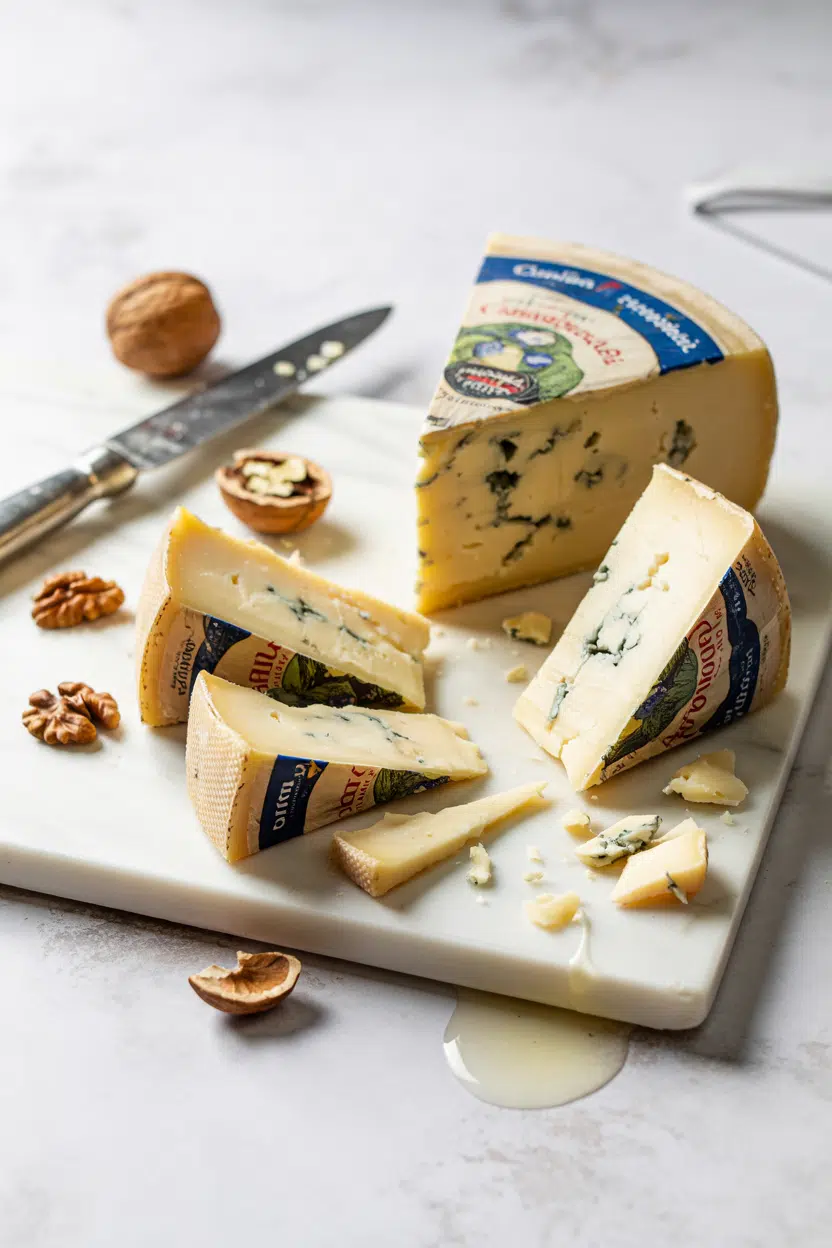
Bavaria's answer to a French-Italian fusion, it melts like brie cheese in dairy recipes yet carries the gentle tang of a soft blue.
If you've been reaching past the blue cheeses at the counter, this one might change that habit.
Understanding how it behaves - on a board, in a pan, stirred into risotto - is what this profile covers.
Cambozola is a Bavarian triple-cream blue cheese with a bloomy white rind, ultra-creamy interior, and mild blue veining. Milder than most blue cheeses, it spreads easily, melts gently, and works on cheese boards, in salads, and stirred into hot dishes at the last minute.
What Is Cambozola Cheese?
Cambozola is a soft-ripened, triple-cream blue cheese made in Bavaria, Germany, by the Käserei Champignon creamery since the 1970s.
Remember it later
Planning to try this recipe soon? Save it for a quick find later!
The name blends "Camembert" and "Gorgonzola," which accurately describes its construction: a bloomy white rind modeled on Camembert wraps an ultra-rich, spreadable interior laced with the mild blue veining associated with Gorgonzola.
What sets it apart from traditional blue cheeses is the triple-cream base - cream is added during production to push the fat content above 70 percent, yielding a texture closer to a soft brie than a firm gorgonzola wheel.
The result is a cheese that looks like a small white-rinded round from the outside and reveals soft blue marbling when cut.
You may see it labeled Cambozola Blue or simply cambozola cheese in lowercase on retail packaging.
No major sub-varieties exist by name, though an aged "Black Label" version from the same producer offers a firmer texture and more pronounced blue flavor.
Bavaria is known for rich, dairy-forward products - the same regional tradition behind using prinzregententorte bavarian cake for creaminess in layered desserts applies to its cheese-making culture. Cambozola is one of that region's most recognizable modern exports.
What Does Cambozola Cheese Taste Like?
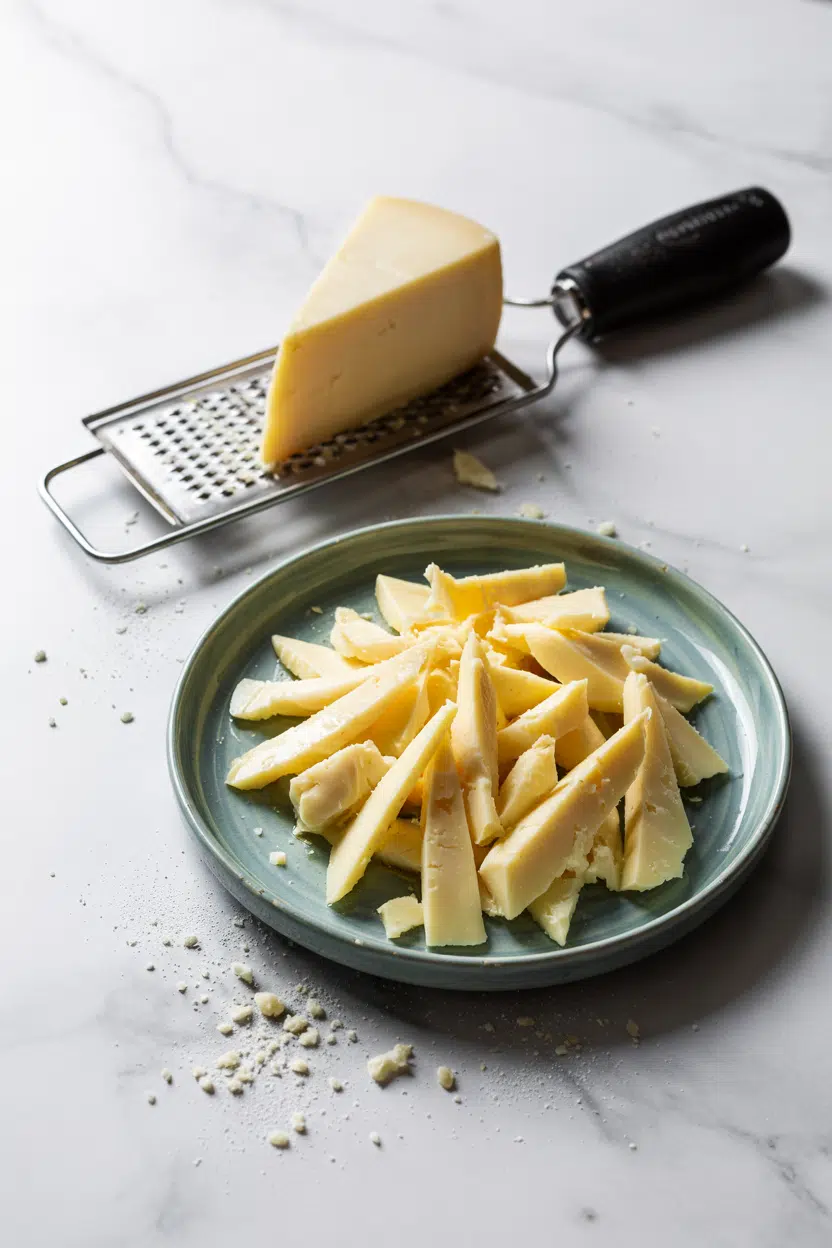
Cambozola tastes like a mild gorgonzola dolce crossed with a creamy brie - buttery and rich up front, with a gentle blue tang that surfaces in the finish rather than leading the bite.
The white rind adds a faint mushroomy note, similar to what you'd find on a standard Camembert.
The intensity is genuinely moderate - not timid, not aggressive.
Cold from the fridge, the blue notes are subtle and the texture feels almost dense.
At room temperature, the fat loosens, the creaminess opens up, and the tang becomes slightly more pronounced.
Heat pushes the blue flavor forward, which is why it works well crumbled over a warm pear and arugula salad just before serving.
How to Use Cambozola Cheese
Cambozola works across a wider range of applications than most blue cheeses because its mild intensity doesn't dominate other ingredients. Pairing it with sweet or acidic elements - pear, fig jam, crisp apple, honey - brings out its buttery side.
Walnuts, hazelnuts, rye bread, and sourdough are natural companions on a board.
For wine, lean toward light-bodied options. A dry Riesling or a glass of Champagne balances the cheese's fat without clashing with its blue notes.
Heavier reds tend to overwhelm it.
| Method | Best For | Tip |
|---|---|---|
| 🥗 Cold Board | Cheese plates, crackers, fruit | Serve at room temp; pair with honey and walnuts |
| 🍳 Gentle Melt | Steak topping, burgers, mashed potatoes | Add in the last minute of cooking; avoid sustained heat |
| 🔥 Baked Whole | Appetizer with fruit preserves and crackers | Wrap in parchment, bake at 350°F until just softened |
| 🥄 Stirred In | Risotto finish, creamy dips, pasta sauces | Add off heat or at the very end to preserve texture |
Stirring cambozola into risotto just before serving is one of its best applications - the cheese dissolves into the grains and adds a mild blue creaminess without sharpness.
Keep in mind that how long risotto keeps applies here too; cambozola-finished risotto should be eaten the same day. For cold applications, it crumbles cleanly over salads once slightly chilled.
Avoid strongly smoky flavors that overwhelm its subtle notes, and skip long braises where the creamy texture would break down completely. If you need a stand-in for any recipe, a look at cambozola cheese stand-ins will point you toward workable alternatives.
Recipes calling for gorgonzola cheese in dairy recipes often accept cambozola as a milder swap with better spreadability.
How to Buy and Store Cambozola Cheese
At the counter, look for a wheel or wedge with a thin, white, slightly velvety rind - no heavy brown discoloration and no sharp ammonia smell when you lean in close.
The interior should show blue veins distributed through the paste without dominating the whole cut face. Press the center gently; it should yield slightly, not feel hard or hollow.
Wrap cut surfaces in wax paper or dedicated cheese paper, then place loosely inside a container in the fridge.
Plastic wrap traps gases against the rind and accelerates ammonia buildup - skip it.
For more detail on how long cambozola cheese keeps under different conditions, the full breakdown is at how long cambozola cheese keeps.
As a general guide, an unopened wheel holds 3-4 weeks refrigerated; an opened wedge is best within 1-2 weeks.
Start With the Cheese Board
If cambozola is new to you, a simple board is the right entry point.
Lay out a few thin slices alongside fig jam, sliced pear, and a handful of walnuts - the sweetness and crunch frame the cheese's mild blue notes without competing.
From there, try it melted over steak or stirred into a risotto finish for a low-effort way to explore what camembert in dairy recipes and blue-style cheeses can each do in a hot application.
Cambozola rewards straightforward treatment. Skip the complicated preparations; this cheese does its best work when the recipe keeps things simple.
Frequently Asked Questions
Yes, technically - it contains blue-green mold veins produced by Penicillium cultures. However, it's a triple-cream hybrid, so the blue character is far milder than Gorgonzola or Roquefort.
No. Gorgonzola is an Italian DOP cheese with a firmer texture and stronger blue flavor. Cambozola is German, triple-cream, and noticeably milder - the two share only a general blue-cheese category.
Yes, and it melts smoothly due to its high fat content. Add it off heat or in the final minute of cooking - sustained high heat breaks down the creamy texture and sharpens the blue flavor.
Moderate - noticeably more complex than plain brie, but far less assertive than Roquefort or aged gorgonzola. The Black Label version from the same producer is firmer and somewhat stronger.
Dry Riesling and Champagne are the most reliable choices. Both have enough acidity to cut through the fat without overpowering the mild blue notes. Avoid full-bodied tannic reds.



