
Dry rubs for ribs, ranch dip mix, a bowl of seasoned burger meat - onion powder shows up in all of them, quietly doing the work that a raw onion never could.

It dissolves into spice blends and sauces without adding moisture, texture, or the bite of fresh alliums.
Understanding preparing onion salt vs onion powder properly helps clarify exactly where each belongs in your pantry.
If you've ever wondered why your homemade spice blend tastes flat compared to a store-bought version, onion powder is often what's missing.
Onion powder is a dehydrated, finely ground spice with a concentrated savory-sweet onion flavor. It blends invisibly into dry rubs, sauces, and meat mixtures. Shelf life runs 2-4 years unopened. Gluten-free and vegan at typical seasoning amounts.
What Is Onion Powder?
Onion powder is a dehydrated powdered seasoning made by drying whole onions - usually at low heat - then grinding them into a fine, shelf-stable powder. It originates from Central Asia, where onions were first cultivated, though modern commercial production is global.
Remember it later
Planning to try this recipe soon? Save it for a quick find later!
You'll see it labeled as dried onion powder, ground onion, or onion seasoning depending on the brand.
Most versions are made from yellow or white onions, though some specialty blends use sweet onion varieties for a milder profile.
It sits in a different category from comparing onion flakes vs minced onion options - those retain more texture and rehydrate when cooked, while powder disperses completely. Onion salt is a separate product that combines onion powder with salt, which matters when you're managing sodium in a recipe.
- 🧅 Dried onion powder - standard label, fine grind, all-purpose use
- Onion seasoning blends - may include salt, garlic, or anti-caking agents; check labels
- Toasted onion powder - heat-treated for a nuttier, deeper flavor; less common
- Sweet onion powder - made from Vidalia-type onions; lower pungency
What Does Onion Powder Taste Like?
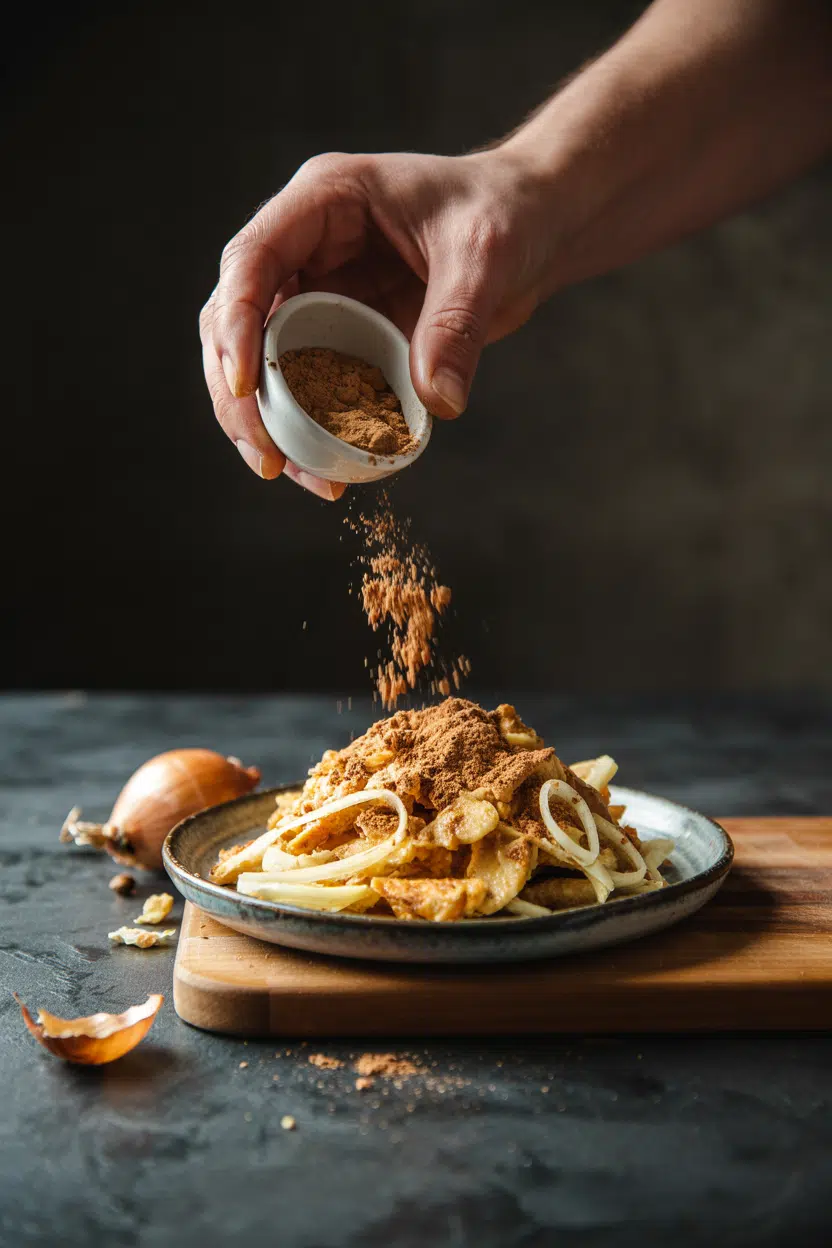
Onion powder tastes like a concentrated version of cooked or caramelized onion - savory, mildly sweet, with a background pungency that never reaches the sharpness of raw fresh onion.
The dehydration process drives off the volatile sulfur compounds responsible for that sharp bite, leaving a rounder, more mellow flavor behind.
Heat changes it further. Added early to a hot pan, onion powder toasts slightly and picks up a nutty, almost Maillard-adjacent depth that raw powder doesn't have.
In liquid-based recipes - soups, braises - it softens into the background, acting more like a flavor foundation than a featured note.
How to Use Onion Powder
Dry rubs are where onion powder earns its reputation. Unlike fresh onion, it won't release moisture into a spice crust, so the bark on making memphis dry rub ribs at home stays intact through the full cook. It pairs directly with garlic powder, paprika, and salt - a combination that shows up in almost every BBQ blend for good reason.
Beyond grilling, the powder excels anywhere uniform flavor matters more than texture.
Folded into meatloaf or burger mixes, it seasons every bite evenly.
Stirred into soups and sauces, it adds an onion base without visible pieces.
It's also a standard component in ranch-style dip blends and taco seasoning - and preparing popcorn seasoning blends properly often calls for it as a savory backbone.
| Method | Best For | Tip |
|---|---|---|
| 🥗 Cold Blend | Dry rubs, seasoning mixes, dips | Mix with fat-based ingredients to help it adhere |
| 🍳 Early Pan Toast | Stir-fries, sautéed bases | Add to hot oil for 30-60 seconds before adding other ingredients |
| 🍲 Simmered in Liquid | Soups, stews, braises, sauces | Dissolves fully - no straining needed |
| 🥩 Folded Into Meat | Burgers, meatloaf, meatballs | Distributes evenly; use less than you think - it concentrates as it cooks |
| 🍞 Mixed Into Breading | Fried chicken, coated vegetables | Combine with flour or breadcrumbs before dredging |
American BBQ and dip culture leans heaviest on onion powder, but Middle Eastern spice blends and Eastern European soups also use it as a background layer.
It pairs well with soy sauce in Asian-influenced marinades, and with butter and cream in potato-based dishes.
When you run out mid-recipe, options like replacements for onion powder cover the most practical swaps - just as alternatives to garlic powder are worth knowing for the spice that most often sits next to it.
How to Buy and Store Onion Powder
Good onion powder looks uniformly light tan - almost beige - with a fine, even grind. Dark brown powder suggests over-toasting during processing, which dulls the savory notes and pushes toward bitterness.
Check the best-by date and avoid jars with clumping, which signals moisture exposure.
Storage is straightforward once you know the rules. An airtight, opaque container in a cool pantry is all it needs - light and humidity are the two main enemies.
For guidance on preparing onion powder properly to maximize its shelf life, the full breakdown covers signs of spoilage and when to replace.
- Unopened shelf life - 2 to 4 years at best quality
- Opened shelf life - 6 to 12 months before noticeable potency loss
- Signs to replace - clumped solid mass, faded aroma, grey or very dark color
- Anti-caking agents - some brands include silicon dioxide; not harmful, but signals a processed product
Start Here for Onion Powder
New to using this spice? Start with a simple dry rub - one part onion powder, one part garlic powder, one part paprika, plus salt.
That ratio works on chicken, pork, and roasted potatoes alike. From there, use it anywhere a recipe calls for onion flavor but where fresh onion pieces would be inconvenient or unwanted.
If fresh onion is what a recipe actually needs - salsas, raw slaws, anything where texture matters - don't reach for the powder. It solves a specific problem, and knowing when that problem doesn't apply saves the dish.
Frequently Asked Questions
It tastes like concentrated caramelized onion - savory, mildly sweet, with moderate pungency but none of the sharp bite of raw onion. The dehydration process removes most of the harsh sulfur compounds responsible for raw onion's intensity.
No - onion salt is a blend of onion powder and table salt, typically in a 1:3 ratio. Swapping one for the other without adjusting your salt levels will throw off the seasoning balance of a dish.
One teaspoon approximates the flavor of a medium onion in cooked applications. Start there and adjust up - the powder's intensity varies by brand and how long the jar has been open.
For flavor only, yes. It cannot replicate the texture, moisture, or structural role of fresh onion in dishes like salsas, caramelized onion toppings, or raw salads. Use it as a flavor substitute, not a full ingredient swap.
Generally no - it contains concentrated fructans, which are high-FODMAP compounds. Even small amounts used in seasoning blends can trigger symptoms in people following a strict low-FODMAP protocol.



