
Cipollini onions do something in a hot pan that no other onion quite manages - they caramelize deeply and evenly without turning to mush, holding their round, flattened shape while their high sugar content concentrates into a rich, almost jammy sweetness.

That combination of structural integrity and fast browning is why you'll find them at the center of Italian agrodolce, French braises, and American sheet-pan dinners alike.
Pairing them with balsamic vinegar cooking methods opens up a whole glossy glaze approach that suits everything from pork roasts to pizza toppings.
Getting them onto a preparing roasting rack properly setup lets hot air circulate underneath, which accelerates browning without steaming.
The cipollini onion is a small, squat Italian bulb with a higher sugar content than common yellow onions. It caramelizes faster, holds its shape when roasted or braised, and delivers a mild sweetness that deepens dramatically with heat.
What Is cipollini onion?
Cipollini onions - the plural is cipolline in Italian - are a distinct variety of bulb onion native to northern Italy, where they've been cultivated for centuries as a cooking staple.
Remember it later
Planning to try this recipe soon? Save it for a quick find later!
Unlike common yellow onions, they grow flat and wide, rarely exceeding two inches across, with a thin, papery golden-bronze skin that peels away more easily than most alliums.
Their defining characteristic is a higher sugar-to-water ratio than standard yellow onions, which means they brown faster and taste noticeably sweeter, especially once cooked.
You'll sometimes see them labeled "Italian pearl onion," which is misleading - pearl onions are a different species entirely, smaller and more spherical, with a crisper texture.
Cipollini are also occasionally compared to shallots, and the resemblance holds when both are eaten raw: a mild, slightly complex onion flavor without the sharp bite of a white onion. However, cipollini are larger, flatter, and behave differently under heat.
- 🧅 Size - Typically 1-2 inches in diameter, much flatter than round onion varieties
- 🌱 Skin - Thin, golden-bronze, papery; peels cleanly after blanching
- 🍬 Sugar content - Higher than yellow onions, lower than sweet Vidalia onions
- 📍 Names used - Cipollini, cipolline, Italian pearl onion (inaccurate but common)
What Does cipollini onion Taste Like?
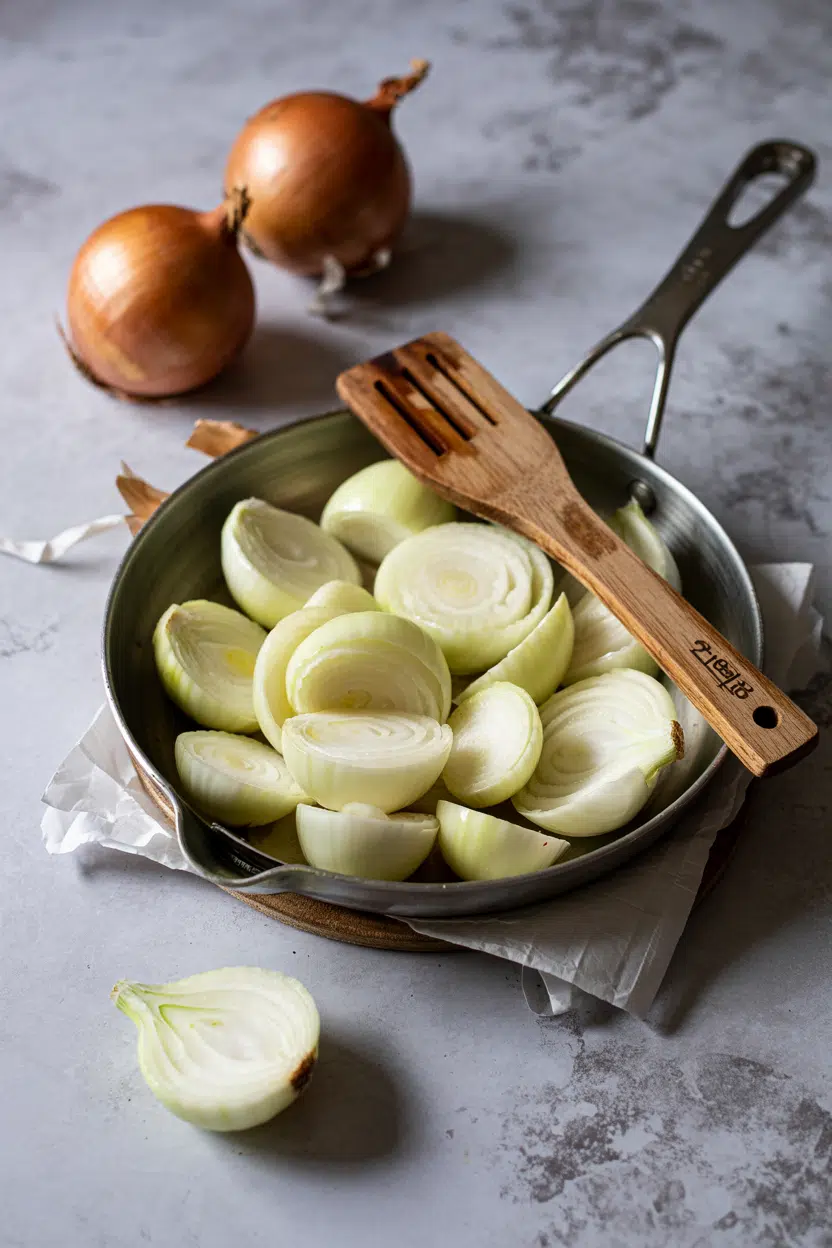
Raw cipollini carries a moderate onion pungency - sharper than a shallot, gentler than a white onion. There's a clean sweetness underneath that isn't saccharine, more like the natural sugar in a good spring onion.
The texture at this stage is firm and dense, almost snappy when sliced.
Heat changes everything. Slow roasting or braising coaxes out a buttery, caramelized depth that few other alliums can match at this small size.
The flesh turns creamy and yielding, and the flavor shifts from mild-pungent to something closer to roasted sweet onion with a faint savory edge.
Quick pickling shifts the profile again - acid tempers the sweetness and introduces a bright, tangy note that works well as a garnish over fatty meats or rich cheese plates.
How to Use cipollini onion
Cipollini onions are almost always cooked whole or halved, which preserves their shape and lets the cut surface brown evenly. Their small size means they're ready to drop straight into a dish without any further prep beyond peeling.
Roasting is where they perform best. Tossed in olive oil with thyme and a little honey, they go glossy and golden in about 25 minutes at 400°F. Laid out alongside carrots and parsnips on a sheet pan, they hold their own against heartier root vegetables without dissolving.
Braising opens up a different set of pairings. Whole cipollini added to a red wine braise with braised beef or lamb absorb the cooking liquid and emerge silky and deeply savory.
Their dense flesh doesn't fall apart the way pearl onions sometimes do after long cooking.
For agrodolce - the Italian sweet-sour preparation - cipollini are reduced in butter, balsamic vinegar, and a pinch of sugar until glazed and sticky. It's one of the most direct ways to show off their natural sugar content.
Understanding cipollini onion cooking methods helps you match the right technique to whatever dish you're building.
| Method | Best For | Tip |
|---|---|---|
| 🔥 Roasting | Sheet-pan dinners, side dishes | High heat (400°F+) accelerates browning; don't crowd the pan |
| 🥩 Braising | Beef, pork, or lamb braises and stews | Add whole in the last 45-60 minutes so they hold shape |
| 🍯 Pan-glazing | Agrodolce, balsamic reductions | Medium heat; stir often once the sugar starts to caramelize |
| 🥒 Quick pickling | Garnishes, cheese boards, sandwiches | Slice thin; use wine vinegar for a cleaner, less sweet brine |
Grilling whole cipollini on skewers alongside lamb or pork is common in Mediterranean cooking - the char adds a slight bitterness that contrasts the sweetness nicely.
Even for pizza and flatbreads, caramelized cipollini pair well with Parmigiano and a drizzle of olive oil.
The same sweet-savory dynamic that makes them work in Italian contorni carries across into dishes inspired by other traditions - similar to how preparing fried shallots asian garnish properly relies on coaxing maximum sweetness from a small allium under fast, controlled heat.
How to Buy and Store cipollini onion
Look for bulbs that feel firm and heavy for their size, with dry, intact papery skins and no visible soft spots or green shoots. Loose or shriveled skin usually signals age or moisture damage.
Jarred peeled cipollini are a reliable shortcut - check that the brine is clear, not cloudy.
Store whole, unwashed bulbs somewhere cool, dry, and ventilated - a mesh bag in a pantry or root cellar works well, and they'll keep for 2-4 weeks.
Once peeled or cut, move them to an airtight container in the fridge and use within 3-5 days.
Knowing the cipollini onion spoilage signs helps you catch early deterioration before it affects the rest of your batch.
Pickled cipollini last months unopened; once opened, refrigerate and use within a few weeks.
Where to Start With Cipollini
Cipollini rewards simple treatment. If you've never cooked with them before, roast a batch whole with olive oil, thyme, and a splash of balsamic - thirty minutes is enough to see exactly what sets them apart from a standard onion.
From there, try adding them whole to a slow braise.
Their dense flesh holds up where other small onions don't, and the flavor they absorb from stock and wine is genuinely different from anything a yellow onion delivers at the same scale.
Frequently Asked Questions
No. Pearl onions are a different species - smaller, rounder, and crisper with a more neutral flavor. Cipollini are flatter, sweeter, and caramelize much faster due to their higher sugar content.
Blanch them in boiling water for 30 seconds, then drop into ice water. The skins loosen immediately and slip off with minimal effort, leaving the flesh fully intact.
Yes, in most cooked applications. Cipollini are larger and sweeter, so use fewer and expect a slightly richer result. They don't work as a raw shallot substitute where a finer mince is needed.
Yes, noticeably. Their higher sugar-to-water ratio makes the sweetness more pronounced both raw and cooked. They're not as sweet as Vidalia onions, but they caramelize faster than either.
Yes, though their flavor is best developed through cooking. Raw, they work thinly sliced in quick pickles or as part of a cured meat board where mild onion bite is welcome.



