
You spot a small bag of reddish-orange seeds at a Latin grocery and wonder if they're worth the detour from your usual spice rack - they are.

Annatto seed, also called achiote, is what gives Caribbean rice its golden hue, Yucatán pork its deep rust color, and Filipino kare-kare its warm, earthy base, doing jobs that alternatives to saffron or swapping out achiote paste can only approximate. Mild in heat, strong in color, it's a seed that punches well above its flavor weight.
Annatto seed is a natural coloring spice from the Bixa orellana shrub. Its flavor is mild - earthy, faintly peppery, slightly nutty - while its pigment is bold reddish-orange. Used whole, ground, or simmered into oil, it's a staple across Mexican, Filipino, and Caribbean cooking.
What Is Annatto Seed?
Annatto seed comes from Bixa orellana, a flowering shrub native to the Amazon basin and Central America.
Remember it later
Planning to try this recipe soon? Save it for a quick find later!
The shrub produces spiky pods that split open to reveal dozens of small, hard, brick-red seeds coated in a pigment-rich resin.
That resin is the source of bixin and norbixin, the carotenoid compounds responsible for annatto's signature orange-red color in foods, fabrics, and cosmetics.
You'll find it sold under several names depending on region.
- 🌿 Achiote - the Spanish name, used across Latin America and in paste form
- 🌿 Urucum - the Brazilian Portuguese name, common in South America
- 🌿 Annatto powder - dried, ground seeds sold as a loose spice
- 🌿 Achiote paste - seeds ground with spices and citrus into a wet seasoning brick
Whole seeds are hard and brittle, roughly the size of a lentil. Ground powder is fine and rust-colored, while commercial achiote paste varies from dark maroon to bright orange depending on the producer's spice blend.
What Does Annatto Seed Taste Like?
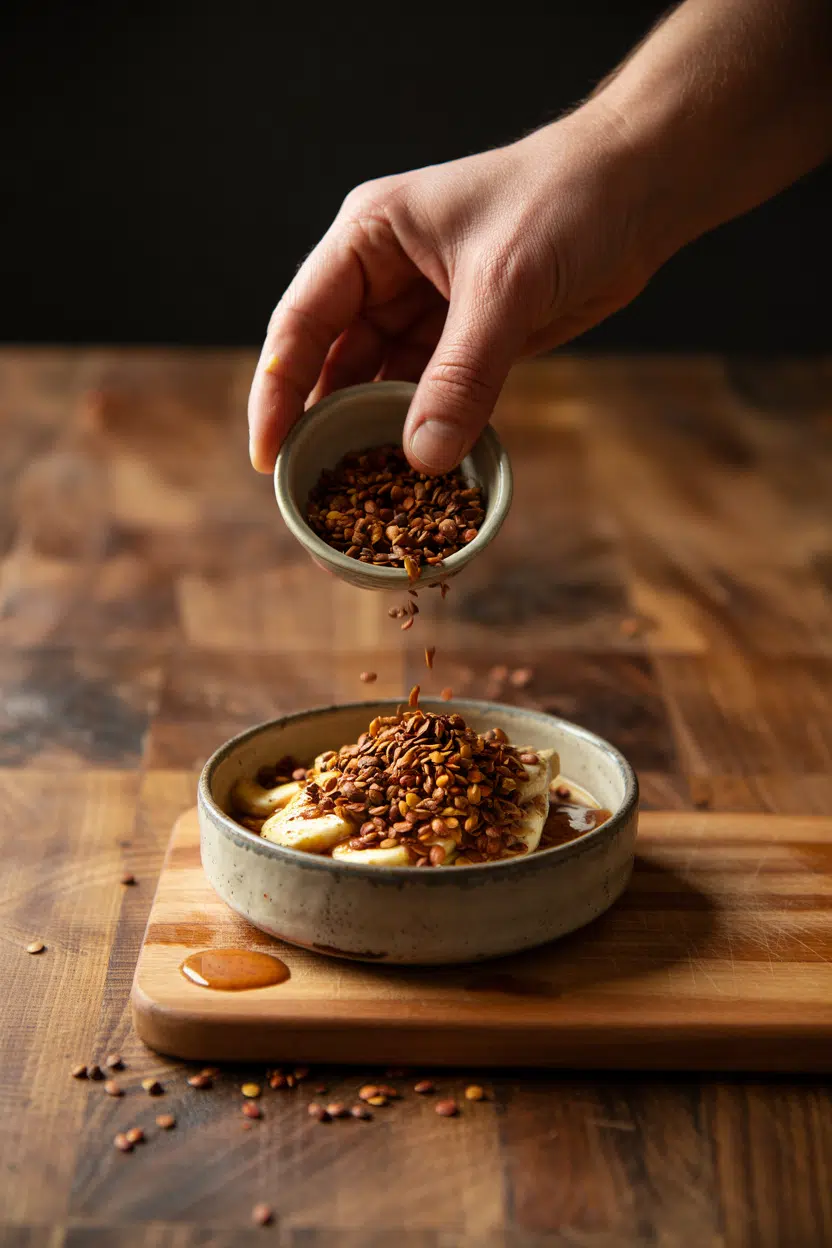
Annatto's flavor is mild - noticeably more subtle than its color suggests. The closest comparison is toasted paprika, though with less sweetness and none of smoked paprika's char. There's a faint pepper note, a dry nuttiness, and a barely-there tang that surfaces when seeds are briefly toasted before grinding.
Heat changes annatto's character.
Simmered in oil, the seeds release a mellow, nutty depth without any sharpness.
In achiote paste, the addition of cumin, cloves, citrus, and oregano builds on that base - the seeds provide the backbone, not the headline flavor.
If you've ever tasted dishes that use paprika swaps that work for color, annatto sits in that same register: more colorant than spice, but not flavor-neutral.
How to Use Annatto Seed
Annatto oil - called achiote oil - is the most accessible starting point. Simmer a tablespoon of whole seeds in neutral oil over low heat for about five minutes until the oil turns deep orange, then discard the seeds. That oil substitutes for plain cooking fat in rice, soups, and stewed meats, carrying color through the whole dish.
| Method | Best For | Tip |
|---|---|---|
| 🫙 Infused Oil | Rice, chicken stews, sofrito base | Keep heat low; seeds burn quickly and turn bitter above medium |
| 🧱 Achiote Paste | Yucatán pork marinades, chicken rubs | Mix with sour orange juice to loosen before applying |
| 🌾 Ground Powder | Spice blends, cheese, dry rubs | Use sparingly - color intensifies more than flavor does |
| 💧 Hot Water Steep | Sauces and broths needing color without oil | Strain before adding to dish; liquid will be bright orange |
Achiote paste is where annatto really earns its place in complex cooking. Blended with cumin, cloves, cinnamon, citrus, and garlic, it becomes the defining marinade for making Yucatan cochinita pibil pork at home - the slow-roasted dish that banana leaves and underground ovens were made for. In the Philippines, annatto seeds steep directly in coconut milk for kare-kare, the peanut-based oxtail stew. Caribbean cooks use achiote oil as a base for rice and beans, while Peruvian preparations fold annatto powder into stewed chicken dishes like arroz con pollo.
It pairs well with citrus (especially sour orange and lime), garlic, cumin, and oregano. Coconut milk and pork both absorb annatto's color beautifully.
How to Buy and Store Annatto Seed
At the store, whole seeds should look deep reddish-orange and glossy. Dull, grayish, or dusty seeds have lost pigment potency and will give weak color.
For achiote paste, read the label: quality products list annatto, spices, and citrus - nothing more. Pastes padded with food starch or artificial color are worth skipping.
Storage is straightforward:
- Whole seeds - airtight, opaque container away from heat and light; good for 1-2 years
- Ground powder - same conditions, but flavor fades faster; use within 6-12 months
- Prepared paste - refrigerate in a sealed container and use within 1-3 months; freeze for longer storage
Check for annatto seed spoilage signs if your seeds have been in the pantry awhile - faded color and no aroma are the clearest signals.
Where to Start With Annatto Seed
If you've never cooked with annatto, start with annatto oil.
It takes five minutes, uses whole seeds, and immediately shows you how the color works in rice or a simple stew.
From there, achiote paste is the natural next step - especially if you're drawn to Mexican or Caribbean cooking.
Understanding the role natto plays versus annatto also helps: both trade on fermented or aged character in their respective cuisines, but annatto's job is purely color and mild earthiness.
If you run short, check the alternatives to annatto seed before reaching for paprika - the substitution logic matters.
Frequently Asked Questions
Yes. Achiote is simply the Spanish name for annatto seed and the Bixa orellana plant. In most Latin American markets, "achiote" refers to both the whole seeds and the spiced paste made from them.
No. Annatto has no heat. The faint pepper note is more aromatic than spicy - significantly less sharp than black pepper and with no capsaicin whatsoever.
They're in the same flavor neighborhood - earthy, mild, with reddish-orange color - but annatto is less sweet and has a slightly more mineral, woody character. Smoked paprika diverges further; annatto has no smokiness at all.
Combine one tablespoon of whole annatto seeds with a quarter cup of neutral oil in a small pan. Heat on low for four to five minutes until the oil turns deep orange, then strain out and discard the seeds.
Yes - it's one of the most widely used natural food colorings globally. Bixin and norbixin, the carotenoids in annatto, color cheese, butter, snack foods, and beverages without synthetic additives.



