
That first glass of freshly squeezed orange juice - poured cold, slightly pulpy, carrying a sharp citrus lift that bottled versions rarely match - sets a high bar.

Orange juice brings both sweetness and acidity to everything it touches, from morning smoothies to pan sauces.
If you cook with it regularly, understanding what drives its flavor changes how you use it.
And if you reach for replacements for orange marmalade in citrus-forward recipes, fresh OJ is often the bridge ingredient that makes those swaps work.
Orange juice is the pressed liquid of sweet orange varieties - bright, tart, and lightly floral. Fresh-squeezed tastes noticeably cleaner than concentrate. Use it in glazes, marinades, baked goods, and cocktails. Refrigerate after opening and use within 7-10 days for pasteurized bottled OJ, or 48-72 hours for fresh-squeezed.
What Is Orange Juice?
Orange juice is the liquid extracted from sweet oranges (Citrus sinensis), a species domesticated in ancient Southeast Asia and later commercialized across the Mediterranean and the Americas. Today it's one of the most widely consumed fruit juices in the world.
Remember it later
Planning to try this recipe soon? Save it for a quick find later!
You'll find it under several labels. Fresh-squeezed or freshly squeezed OJ comes straight from the fruit with no processing. Not-from-concentrate (NFC) is pasteurized but never dehydrated, making it the closest bottled version to fresh.
From-concentrate OJ is dehydrated to remove water for shipping, then rehydrated before bottling - a process that blunts some aromatics.
The orange variety matters too. Navel oranges are sweet and low in acid, while Valencia oranges are the commercial standard - balanced and reliably juicy.
Blood oranges produce a deeper, more raspberry-tinged juice, and cara cara varieties lean toward honey-sweet with less sharpness.
When a recipe leans on citrus character, knowing comparing dried orange zest vs fresh options helps round out how the whole orange - not just its juice - contributes to a dish's flavor profile.
What Does Orange Juice Taste Like?
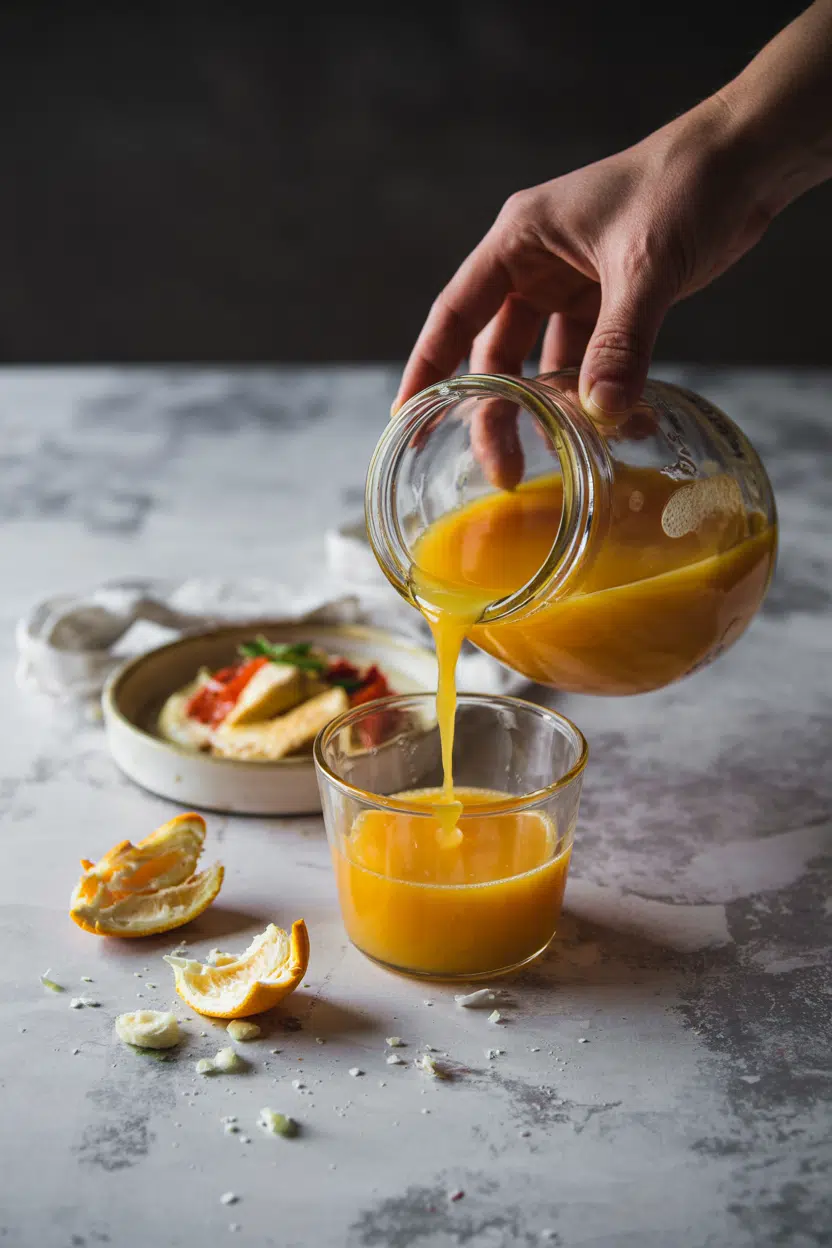
Orange juice tastes sweet-tart, with bright citrus up front and a mild bitter note on the finish.
That bitterness traces back to pith contact during pressing - more pith means more bitter compounds, which is why commercial juicing equipment is calibrated precisely.
Some varieties, particularly cara cara and Valencia, offer subtle floral or honey undertones that set them apart from generic supermarket blends.
Compared to tangerine juice, OJ is slightly less fragrant and a touch sharper - though if you're weighing those two, reading about alternatives to tangerine puts the differences in useful context.
Heat changes things. Reduced orange juice concentrates both sweetness and acidity, pushing the bitterness forward.
Fresh-squeezed has a clean, rounded brightness that fades within 48 hours as citric acid and volatile aromatics degrade.
How to Use Orange Juice
Orange juice pulls double duty in the kitchen - it's both a liquid ingredient and an acid source. That combination makes it useful across a wider range of cooking methods than most fruit juices.
| Method | Best For | Tip |
|---|---|---|
| 🥗 Raw | Vinaigrettes, smoothies, cocktail mixers, punches | Whisk with olive oil and Dijon for a quick citrus dressing |
| 🍳 Reduction | Glazes for duck, chicken, or pork; pan sauces | Reduce by half before adding stock; bitterness intensifies, so balance with honey |
| 🍳 Deglaze | Lifting browned fond from skillet for quick sauces | Add off direct heat first, then return to medium to control splattering |
| 🧁 Baked | Orange loaf, muffins, citrus syrups poured over cake | Replace some liquid in the recipe; zest amplifies the orange character |
| 🥣 Marinade | Pork tenderloin, chicken thighs, Cuban mojo | Keep marinating time under 2 hours - the acid breaks down protein texture fast |
In French cooking, orange juice builds gastrique (a sweet-sour reduction with vinegar) and classic beurre à l'orange. Latin kitchens use it as the backbone of Cuban mojo, blended with garlic, cumin, and olive oil for roasted pork.
OJ pairs well with soy sauce, garlic, and ginger in sweet-savory glazes. It also works alongside thyme, rosemary, and star anise in braised or roasted meats.
For cocktails, its natural sweetness balances sparkling wine in a mimosa without added sugar.
When you need a citrus stand-in mid-recipe, knowing your orange juice stand-ins keeps cooking on track without a trip to the store.
How to Buy and Store Orange Juice
Fresh-squeezed OJ should look bright orange with no cloudiness from fermentation and smell cleanly of citrus - not yeasty or sharp. For bottled OJ, "not-from-concentrate" is the call for flavor; check the pasteurization date rather than the best-by date alone.
Avoid bottles with bulging caps, off-odors, or visible separation that won't recombine with shaking. Once opened, store in the original sealed container or a covered glass bottle.
- 🧃 Fresh-squeezed - best within 48-72 hours; flavor and vitamin C drop fast after that
- 🛒 Pasteurized bottled (NFC) - 7-10 days after opening; discard if it smells fermented
- 📦 Shelf-stable UHT or concentrate - months unopened; use within 7-10 days once open
For a deeper look at what affects OJ past its window, the full breakdown of how long orange juice keeps covers signs of spoilage by type.
If you're curious how citric acid preservation compares across products, comparing fruit fresh vs citric acid options puts the chemistry in plain terms.
Start With What You Have
Fresh-squeezed is the standard to aim for - but not-from-concentrate bottled OJ is a reliable daily substitute that handles glazes, marinades, and baking without compromise.
Reserve from-concentrate for smoothies and punches where the flavor difference matters least.
If you're building a sauce or a marinade, use what you have cold from the fridge, taste as you go, and adjust acidity with a small squeeze of lemon if the orange reads too sweet.
Frequently Asked Questions
Sweet-tart and bright, with mild bitterness on the finish from pith contact during pressing. Fresh-squeezed also carries subtle floral or honey notes that bottled versions lose during pasteurization.
Bitterness comes from compounds in the pith and seeds released during pressing. It intensifies when OJ is reduced by heat, because those bitter compounds concentrate as water evaporates.
From-concentrate OJ is dehydrated to remove water, shipped, then rehydrated before bottling - a process that dulls aromatics. Not-from-concentrate is pasteurized but never dehydrated, so it retains more of the fresh citrus character.
Yes. Pour into an airtight container leaving headspace for expansion, and freeze for up to 3 months. Thaw in the fridge overnight - separation is normal and resolves with shaking.
It provides vitamin C, potassium, and folate, but lacks the fiber of whole oranges and is high in natural sugars. It's nutritionally denser than many juices, however whole fruit delivers more for fewer calories.



