
You spot a tiny bottle of almond extract on the baking aisle and wonder whether it's worth the shelf space - especially when almond flour's shelf life and other almond products already crowd your pantry.
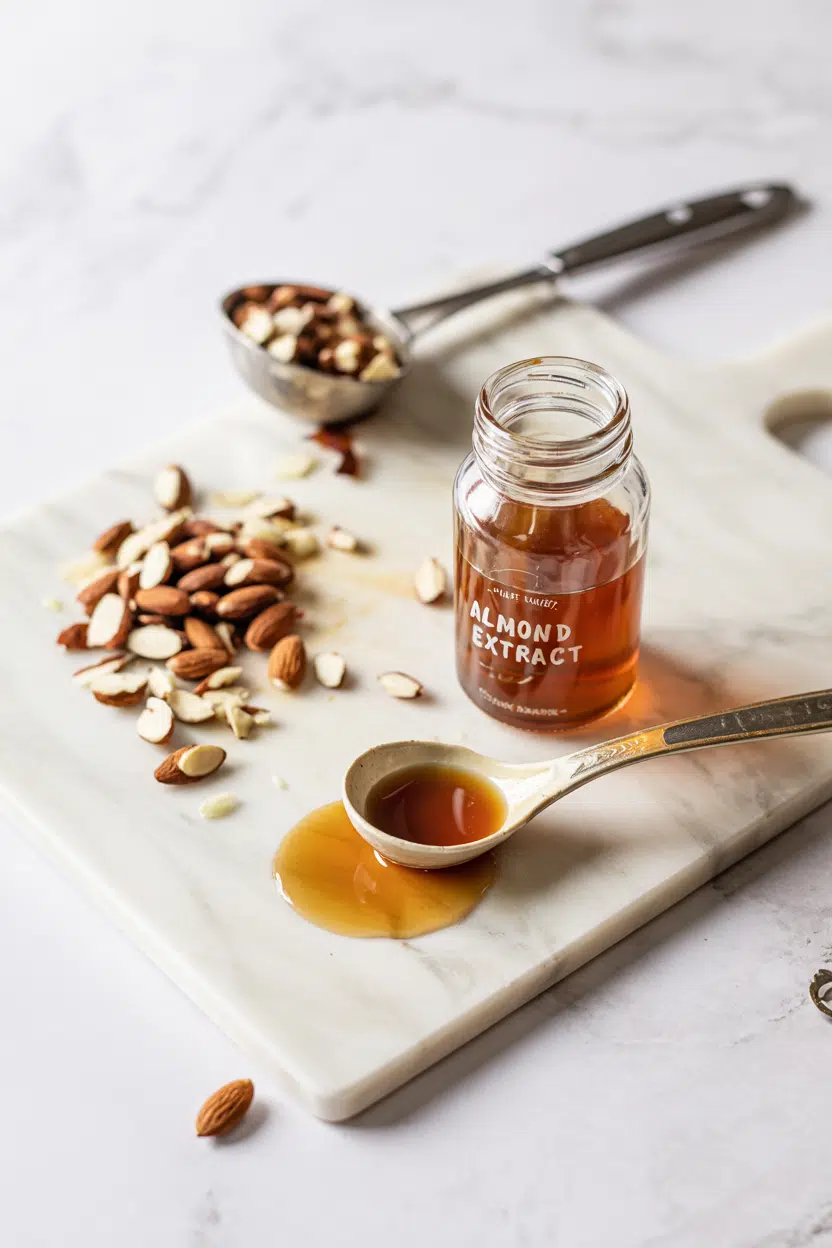
A few drops of this concentrated liquid can do what a handful of whole almonds never quite manages: deliver a sharp, marzipan-forward aroma that anchors cakes, cookies, and icings in a way no other flavoring replicates.
If you've ever reached for lemon extract swaps that work because you ran out mid-bake, you already know how much a single extract can anchor a recipe.
Here's what almond extract actually is, what it tastes like, and how to use it without overdoing it.
A concentrated flavoring extract made from bitter almonds or benzaldehyde, used in small amounts to add a sharp, marzipan-like aroma to baked goods, icings, and confections. A little goes a long way - most recipes need no more than ½ to 1 teaspoon.
What Is Almond Extract?
Almond extract is a flavoring extract produced by dissolving aromatic compounds - primarily benzaldehyde - in an alcohol-and-water base.
Remember it later
Planning to try this recipe soon? Save it for a quick find later!
Natural versions source that benzaldehyde from bitter almonds or from the pits of stone fruits like apricots and peaches, which share the same aromatic chemistry.
You'll also see it sold as bitter almond extract, almond essence, or almond flavoring. "Amaretto extract" is a colloquial name used for versions with a rounder, slightly sweet profile, though it's a different product from the liqueur - for a direct side-by-side, see comparing amaretto vs almond extract options.
Imitation almond extract skips the plant-based source entirely and uses synthetically produced benzaldehyde. The aroma is chemically identical, however the depth of supporting notes is thinner.
- 🌿 Natural almond extract - benzaldehyde from bitter almonds or stone-fruit pits, richer background notes
- 🧪 Imitation almond extract - synthetic benzaldehyde in alcohol, one-dimensional but shelf-stable and nut-free
- 🍶 Almond essence - a term used mostly in British and Australian baking; functionally the same product
What Does Almond Extract Taste Like?
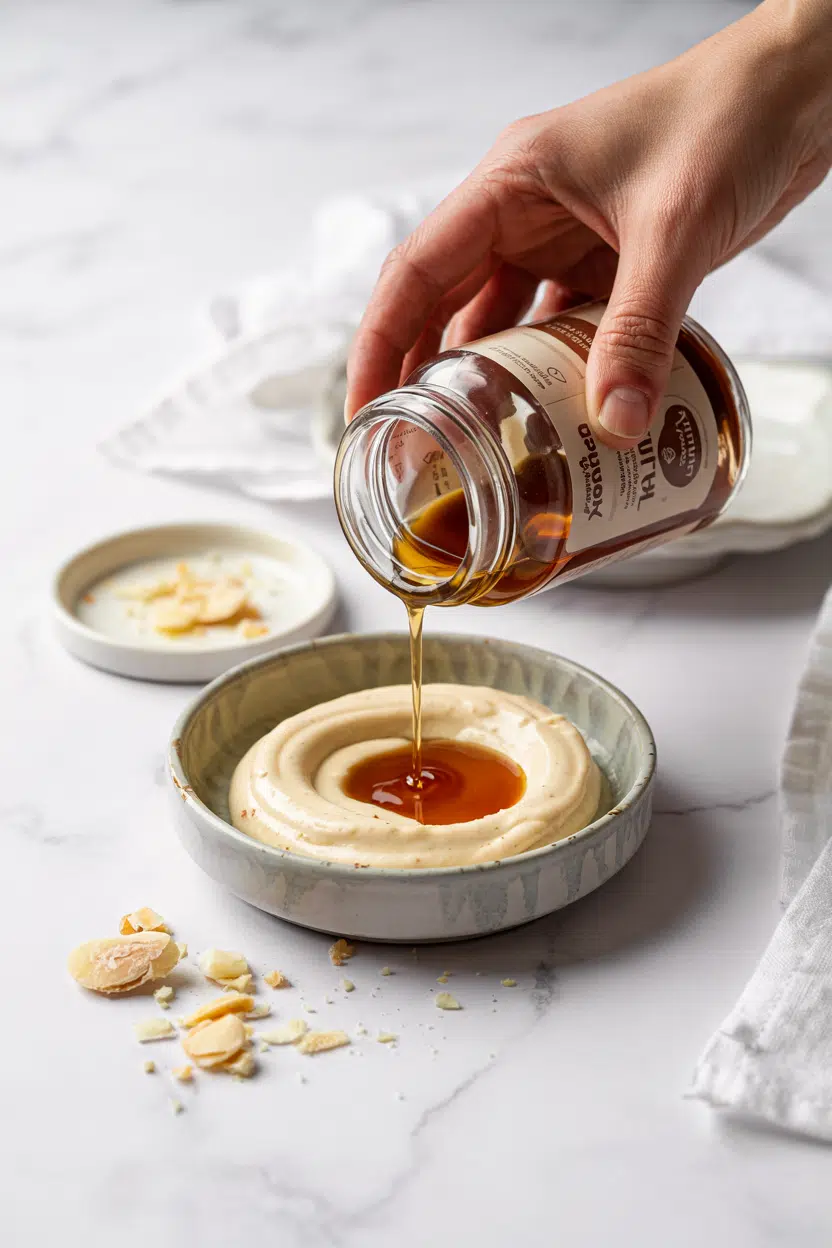
The dominant note is sweet marzipan - the same concentrated almond candy character you get in a frangipane tart or a fresh amaretti cookie.
Behind that sits a sharper benzaldehyde edge that plain whole almonds don't deliver, because roasting mellows their volatile compounds.
On the palate it evaporates fast, landing as aroma more than sustained taste. Overuse is the most common mistake - past about ¾ teaspoon in a standard cake batch, it tips from marzipan into something almost medicinal.
How to Use Almond Extract
Timing matters more than quantity. Because benzaldehyde is highly volatile, adding almond extract after removing a batter or sauce from heat preserves far more aroma than stirring it in at the start of cooking.
In baking, it performs best folded into cake batters, cookie doughs like amaretti or almond biscotti, and glazes just before use. For a full amaretti-style application, the amaretto extract recipe shows how a small measure shapes the entire cookie.
| Method | Best For | Tip |
|---|---|---|
| 🧁 Baked Into Batter | Cakes, financiers, almond biscotti | Add to wet ingredients, not dry - distributes evenly |
| 🥣 Stirred Into Icing | Royal icing, glaze, buttercream | Add off heat after mixing; don't warm the icing again |
| 🍮 Folded Into Custard | Crème anglaise, panna cotta, puddings | Stir in after removing from heat to preserve top note |
| 🍹 Finishing in Drinks | Amaretto-style cocktails, mocktails | 1-2 drops max; shake or stir to integrate |
| 🍑 Fruit Compotes | Cherry, pear, apricot compotes | Add at the end - heat drives off aroma fast |
It pairs cleanly with vanilla, dark chocolate, brown butter, and citrus zest - orange especially. Cherry is its closest natural partner, since bitter almond and cherry pit share the same benzaldehyde chemistry.
For dishes where almond extract feels too sharp, alternatives to almond extract covers swaps that keep the marzipan note without the intensity.
Savory use is narrow but real. Moroccan-style tagines occasionally include a small drop to echo the stone-fruit notes in the sauce - however it clashes in salty, high-reduction contexts.
How to Buy and Store Almond Extract
Always choose a bottle labeled "pure almond extract" over imitation. Check the ingredient list for "bitter almond oil," "almond oil," or "alcohol, water, benzaldehyde" - generic "natural flavor" is a sign the source is vague.
Dark glass bottles with a tight metal cap are the best packaging; they block light and slow evaporation.
Store it in a cool, dark cabinet away from the stove or any heat source. Sunlight and warmth break down volatile compounds quickly.
For a full breakdown of timelines and signs of degradation, almond extract's shelf life covers what to expect at every stage.
- Unopened - 3-5 years at peak aroma in a dark cabinet
- Opened - 1-2 years before noticeable fading; still usable after, just weaker
- Imitation - slightly longer stable window since no natural volatiles to degrade
Almond extract isn't interchangeable with almond oil - one is an aromatic flavoring, the other a fatty oil used in cooking and finishing; if you need a replacement for the latter, almond oil stand-ins lists practical options.
Start Small and Adjust
If you're new to almond extract, begin with ¼ teaspoon in any recipe that calls for it. That single small measure is often enough to register the marzipan note clearly without overwhelming the other flavors.
For recipes that use vanilla extract as the sole flavoring, consider splitting the quantity - half vanilla, half almond - rather than replacing one entirely.
The extract comparison in comparing vanilla extract vs vanilla powder options is a useful reference for understanding how extract-based flavorings behave differently from dry alternatives.
And when a recipe calls for replacements for amaretto, a few drops of almond extract diluted in simple syrup is often the most direct stand-in.
Frequently Asked Questions
No. Almond extract is an alcohol-based flavoring built around benzaldehyde aroma compounds. Almond oil is a fatty oil pressed from sweet almonds - it has almost no almond scent and is used for cooking or finishing, not flavoring.
Pure almond extract may contain trace almond proteins from bitter almonds, so people with tree-nut allergies should avoid it. Imitation almond extract uses synthetic benzaldehyde and is typically nut-free - check the label to confirm.
The bitterness comes from benzaldehyde, the same compound found in bitter almonds and stone-fruit pits. Used correctly it reads as marzipan; too much and the bitter edge dominates because benzaldehyde is not balanced by sweetness at high concentrations.
Only in recipes where an almond note fits - cakes, cookies, and custards work well. Use half the amount, since almond extract is significantly stronger than vanilla. It won't work as a neutral background the way vanilla does.
Sparingly, yes. Moroccan tagines and some Middle Eastern sauces use a single drop to echo stone-fruit notes. Avoid it in salt-forward reductions or dishes with competing sharp flavors - the floral benzaldehyde note clashes badly.



