
Soft, milky, and almost cloud-like on the tongue, stracchino lands somewhere between a gentle crème fraîche and a young robiola cheese for creaminess - lactic, lightly tangy, with a buttery finish that doesn't overwhelm.

It's a northern Italian fresh cheese built for immediacy: spread it cold, melt it warm, or let it collapse into hot pasta just off the heat.
Alongside a few slices of prosciutto's flavor and uses, it anchors an antipasto board with very little effort.
Stracchino is a soft, spreadable fresh cow's-milk cheese from northern Italy with a mild lactic tang and buttery finish. Use it cold on bread, melted into focaccia, or folded into pasta. It's best within a week of opening and suits cured meats, bitter greens, and light wines.
What Is stracchino cheese?
Stracchino is a fresh cow's-milk cheese originating in Lombardy and Emilia-Romagna, where it has been made for centuries using the milk of cows returning from alpine summer pasture -
Remember it later
Planning to try this recipe soon? Save it for a quick find later!
the word derives from stracco, Italian for "tired." That tradition has since industrialized, and today most stracchino arrives in tubs or small wrapped wedges.
It belongs to the family of high-moisture Italian fresh cheeses, sitting close to crescenza - a name often used interchangeably, though some producers and regions treat them as distinct products.
Crescenza tends to be slightly firmer and more structured; stracchino is typically softer and more uniformly spreadable.
The paste is pale ivory, smooth, and almost pudding-soft when it's at peak freshness. You may also see it labelled stracchino d'Italia in Italian delis, or occasionally misspelled as stracino on packaging.
- 🌍 Region - Lombardy and Emilia-Romagna, northern Italy
- 🐄 Milk type - Pasteurized whole cow's milk
- 🧾 Also known as - Crescenza (linked but distinct), stracchino d'Italia
- 📦 Formats - Tubs, wrapped wedges, or small whole wheels
What Does stracchino cheese Taste Like?
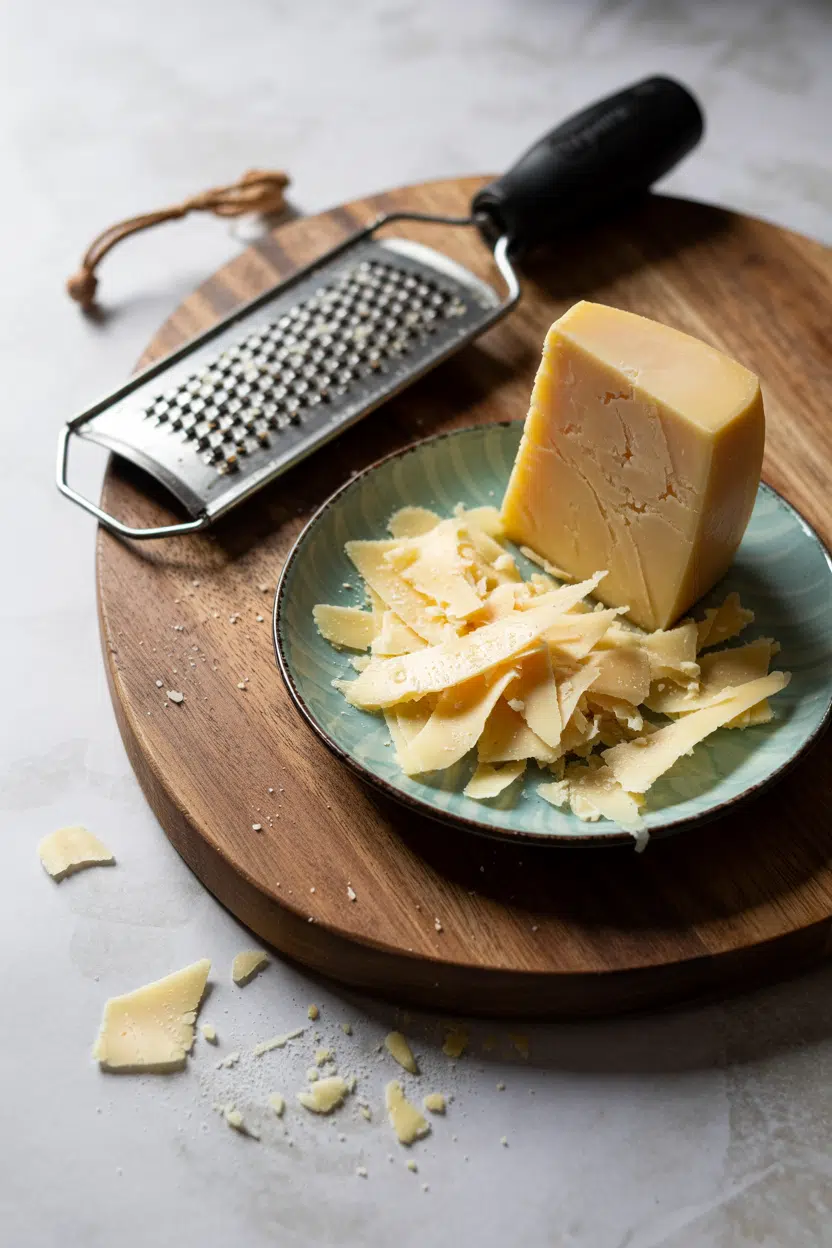
Stracchino is mild and lactic - the kind of cheese that tastes more like very good fresh dairy than anything aged or sharp. A slight tang registers at the back of the palate, followed by a clean buttery sweetness.
Warmed gently, the tang softens and the buttery note comes forward - it's why stracchino works so well folded into hot pasta just off the heat rather than cooked directly over flame.
Comparing it to mozzarella or ricotta misses the mark; young robiola is a closer relative, and a mild crème fraîche lands in the same sensory neighbourhood.
How to Use stracchino cheese
Cold, stracchino behaves like a premium spreadable cheese: drag it across toasted rustic bread, pile it onto crostini with a few drops of olive oil and cracked pepper, or layer it into a panino against cured meats. Arugula in dairy recipes pairs particularly well here -
the bitterness cuts stracchino's milky richness without overwhelming it.
Warm applications are where this cheese becomes genuinely useful.
Folding stracchino into pasta off the heat creates a glossy, creamy sauce with no cream at all.
Dolloped onto hot using polenta for creaminess just before serving, it melts into a soft, silky pool.
Its most celebrated use is inside focaccia al formaggio, the Ligurian flatbread where two thin doughs sandwich a thick layer of cheese before baking.
| Method | Best For | Tip |
|---|---|---|
| 🥗 Cold/Spread | Crostini, panini, antipasto boards | Serve at room temperature for best spreadability |
| 🍝 Folded Off Heat | Pasta sauces, polenta topping | Add after removing from heat to preserve silky texture |
| 🫓 Baked In | Focaccia al formaggio, pizza bianca, vegetable gratins | Sandwich between dough layers to prevent direct heat contact |
For pairings, lean on ingredients that complement its lactic mildness: prosciutto and other cured hams, fresh figs or pear, roasted mushrooms, and bitter greens all work.
Light reds like Pinot Noir suit it better than heavily tannic wines, which can clash with the cheese's delicate acidity.
If you can't source stracchino locally, knowing your stracchino cheese stand-ins keeps most of these dishes within reach.
How to Buy and Store stracchino cheese
At the counter or deli case, look for a uniform pale-ivory paste - no sun-dried cracking at the edges, no dark spots, and no excess watery whey pooled inside the tub. For whole wheels, press gently: the interior should feel smooth and give evenly.
A thin, slightly tacky rind on a wheel is normal and desirable.
Once open, wrap it tightly in wax paper then plastic, or transfer to an airtight container and keep it in the coldest part of your fridge.
Proper handling for **stracchino cheese in dairy recipes](https://forkliftkitchen.com/stracchino-cheese-shelf-life/) covers shelf life in detail, but the short version is: use it within five to seven days of opening for peak creaminess.
- 🗓️ Unopened - Refrigerated tubs keep 2-3 weeks
- 📅 Opened - Best within 5-7 days; texture degrades quickly
- ❄️ Freezing - Not recommended; high moisture causes grainy texture on thaw
- 🌡️ Serving - Pull from the fridge 15-20 minutes before serving cold
Where to Start With stracchino
New to this cheese? Buy a small tub, toast a thick slice of bread, and spread it cold with olive oil and a pinch of salt.
That single preparation tells you everything about its character.
From there, the next step is focaccia al formaggio or a simple pasta: both show what gentle heat does to stracchino's texture.
For anyone exploring similar soft Italian cheeses, using creme fraiche for creaminess or young robiola in the same recipes builds a useful point of comparison.
Stracchino is forgiving, quick to use, and requires almost no technique - just good timing.
Frequently Asked Questions
They're related but not identical. Crescenza tends to be slightly firmer and more structured; stracchino is typically softer and more spreadable. Some Italian producers and regions use the names interchangeably, which adds to the confusion.
Yes - it melts very well under gentle heat. Fold it into hot pasta off the burner or layer it inside focaccia before baking. Sustained direct high heat dries it out, so add it late in cooking.
Young robiola and fresh crescenza are the closest matches. Mild cream cheese thinned with a little crème fraîche works in a pinch for cold applications, though the lactic tang won't be identical.
Unopened tubs keep 2-3 weeks refrigerated. Once opened, use it within 5-7 days - the texture becomes watery and the tang sharpens noticeably past that point.
Italian delis and specialty grocery stores with imported cheese sections carry it most reliably. Online Italian food retailers are a consistent source if you can't find it locally.



