
You spot it at a specialty deli or Italian market - a pear-shaped wheel hanging from twine, its golden rind slightly oiled, labeled with a name most people can't quite place.

Caciocavallo is one of southern Italy's oldest stretched-curd cheeses, and it's worth knowing beyond the novelty.
Young wheels taste milky and mild; aged ones cut sharp and complex.
Whether you're building an antipasto spread or looking for a melting cheese with more character than mozzarella, understanding this cheese helps you use it well - the way it works alongside dishes alongside antipasto squares makes that range even clearer.
A pasta filata cheese from southern Italy with a teardrop shape and a flavor that shifts from milky and buttery when young to sharp, nutty, and umami-rich when aged. Melts beautifully, grates well, and works across antipasto plates, baked dishes, and pan-seared preparations.
What Is caciocavallo cheese?
Caciocavallo belongs to the pasta filata family - the same stretched-curd method used for mozzarella and provolone.
Remember it later
Planning to try this recipe soon? Save it for a quick find later!
The curds are kneaded and pulled in hot water until elastic, then shaped into a teardrop or gourd, tied, and traditionally hung in pairs over a wooden beam to age.
That hanging posture is why some food historians trace the name to "cheese on horseback."
Most wheels come from southern and central Italy, specifically Basilicata, Calabria, Sicily, and Campania.
Protected-designation varieties include caciocavallo silano (DOP from Calabria and surrounding regions) and the rarer caciocavallo podolico, made from the milk of Podolica cattle and considered the premium version.
Smoked wheels - labeled affumicato - add another category entirely. You'll also see it spelled cacio cavallo or called caciocavallo ragusano in Sicily.
Cow's milk is standard, though small producers occasionally blend in sheep's milk for extra richness.
What Does caciocavallo cheese Taste Like?
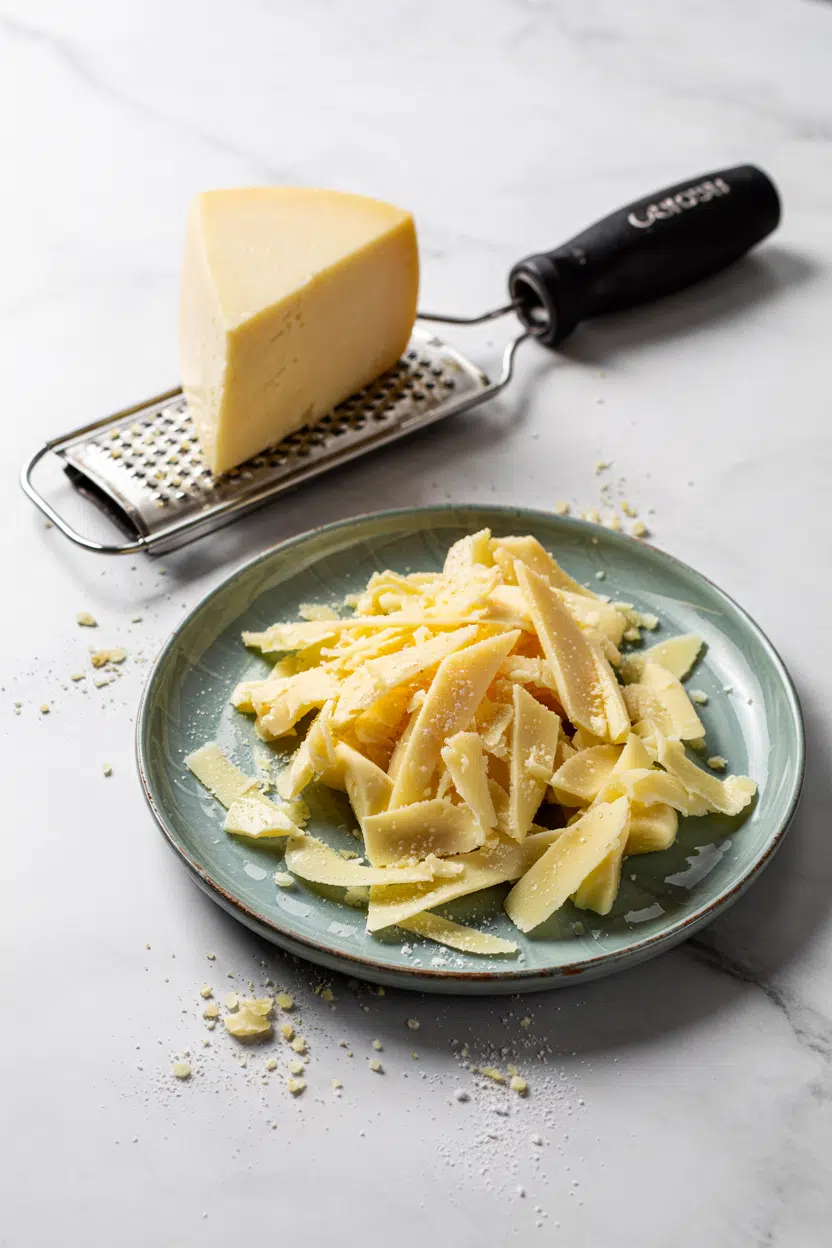
Young caciocavallo tastes clean and milky with a slight buttery sweetness - soft enough to remind you of mild provolone or a young pecorino before bitterness develops. The texture is firm but springy, nowhere near crumbly.
Aged wheels shift noticeably. Sharpness builds, tanginess arrives, and a deeper umami and nutty character comes forward.
Some describe a faint piquant heat, similar to a mature provolone but with more complexity.
Heat changes everything. Melted caciocavallo pulls into long, creamy strings - closer to mozzarella in stretch but richer in flavor.
The smoked version carries a wood-forward aroma even before cooking, intensifying slightly when warmed.
How to Use caciocavallo cheese
Caciocavallo's range across age stages makes it genuinely useful in multiple roles. For caciocavallo cheese in dairy recipes, the age of the wheel you select changes the outcome significantly.
| Method | Best For | Tip |
|---|---|---|
| 🥗 Cold Sliced | Antipasto platters, sandwiches, charcuterie boards | Pair with soppressata, olives, and fresh pear for contrast |
| 🔥 Pan-Seared | Appetizers - thick slices seared golden in a cast iron pan | Serve immediately with honey or fig jam while crust holds |
| 🫕 Baked/Melted | Polenta topping, baked peppers, eggplant, casseroles | Young caciocavallo gives the most stretch; aged adds flavor |
| 🧂 Grated | Finishing pasta, risotto, roasted vegetables | Aged wheels only - young won't grate cleanly |
In southern Italian cooking, caciocavallo appears stuffed into baked peppers and eggplant alongside breadcrumbs and herbs. Melted over polenta in dairy recipes, it creates a savory, stretchy layer that behaves much like a fontina-style topping.
The smoked version pairs well with cured pork - soppressata or prosciutto - in panini, where the smoky echo between ingredients reinforces the whole.
It works in Calabrian and Sicilian cuisines as a workhorse cheese for baked dishes, and Italian-American kitchens have long used it as a sandwich melter with more backbone than standard mozzarella. Robust red wines such as Nero d'Avola or Aglianico hold up to aged wheels without being overwhelmed;
honey and fig jam balance the saltiness in cold preparations.
Steer clear of very sour, citrus-heavy dressings alongside aged caciocavallo - the acidity fights rather than balances the salt. Delicate floral teas suffer the same way.
How to Buy and Store caciocavallo cheese
At the counter, look for a firm, smooth rind with a slight oil sheen on aged wheels - dull or cracked rinds can signal poor storage. Young caciocavallo should have a pale, moist paste and give slightly under finger pressure.
Whole or half wheels are better than pre-sliced supermarket blocks, which are typically older and have lost moisture unevenly.
Wrap the cut face in wax paper or parchment, then loosely in plastic, and keep it in the fridge crisper drawer. Young caciocavallo holds 2-3 weeks once opened; aged wheels stay good for 3-6 weeks with proper wrapping. Smoked wheels tend to last slightly longer due to surface dryness. For extended storage, see guidance on freezing caciocavallo cheese - the texture changes, but grated frozen portions work fine for cooking. Storage principles aren't unlike those for fresh stretched-curd cheeses; storing mozzarella correctly follows a similar logic of breathability over airtight sealing.
Start Here With caciocavallo
New to this cheese? Buy a young wheel first.
Slice it cold against cured pork, or melt it over a simple baked vegetable dish to understand its baseline stretch and mild flavor.
- 🧀 Mild and milky preference - start with young caciocavallo sliced on a board with honey and bread
- 🔥 Want big flavor - go straight to an aged wheel grated over pasta or pan-seared with fig jam
- 🌫️ Like smoke - affumicato versions work immediately in sandwiches or melted on polenta
- 🍷 Wine pairing - aged wheels need a robust red; young wheels accept lighter options like Fiano or Falanghina
Once you've tried it young, aged caciocavallo feels like a logical next step - sharper, more assertive, and worth the upgrade.
Frequently Asked Questions
No, though both are pasta filata cheeses with overlapping flavor profiles. Caciocavallo has a more complex, slightly piquant character when aged and is tied in its distinctive pear shape, while provolone is typically molded into cylinders. Regional production and milk sourcing differ significantly.
Yes - it melts exceptionally well. Young caciocavallo pulls into long, creamy strings similar to mozzarella but with more flavor. Aged wheels melt more slowly and add sharpness rather than stretch.
Young wheels are typically sold after 2-3 months. "Aged" generally means 6-12 months, while some caciocavallo podolico wheels age beyond 2 years for maximum sharpness and complexity.
The rind is the giveaway - smoked wheels (affumicato) have a darker, brownish exterior versus the pale golden rind of unsmoked versions. The label should also state "affumicato" clearly. A quick smell confirms it: smoke is immediately detectable even through wrapping.
Standard commercial caciocavallo uses cow's milk. The premium caciocavallo podolico variety comes specifically from Podolica cattle, a heritage breed, which gives the cheese a distinctive grassy richness. Small artisan producers occasionally blend in sheep's milk.



