
Fold blueberries into pancake batter on a Sunday morning and something small but reliable happens: they sink, burst, and pocket juice into the crumb, turning an ordinary breakfast into something you'd order twice.

That behavior - firm skin, juicy interior, bright sweet-tart flavor - defines why these berries show up in everything from muffin tins to pan sauces for duck.
They're closely related to berries you might already use, and if you're ever swapping out blackberries or swapping out cranberries in a recipe, blueberries are often the first option worth considering.
This guide covers what they taste like, how to cook with them, and what to look for at the market.
Blueberries are small, round berries with a bright sweet-tart flavor, firm pop-skin texture, and juicy interior. They work raw, baked, or simmered, and pair with everything from cream cheese to roasted pork. Refrigerate unwashed for up to 10 days, or freeze for months.
What Is Blueberries?
Blueberries belong to the Vaccinium genus, a group of shrub-grown fruits native to eastern North America and now cultivated across the northern hemisphere. The name covers several species, but two dominate the market: highbush blueberry (Vaccinium corymbosum), the large-fruited commercial type common in grocery stores, and lowbush blueberry, sold as "wild blueberry," which grows smaller, darker, and more intensely flavored.
Remember it later
Planning to try this recipe soon? Save it for a quick find later!
Each berry has a smooth indigo to deep-blue skin with a pale, star-shaped calyx - the dried flower remnant at the blossom end - which is a quick visual identifier.
Bilberry is a close European relative often confused with the wild type, and regional names like huckleberry get applied loosely to wild Vaccinium species across North America.
Fresh blueberries are available summer through early fall in most regions. Frozen, dried, and canned versions extend availability year-round without major flavor loss, especially in cooked applications.
What Does Blueberries Taste Like?
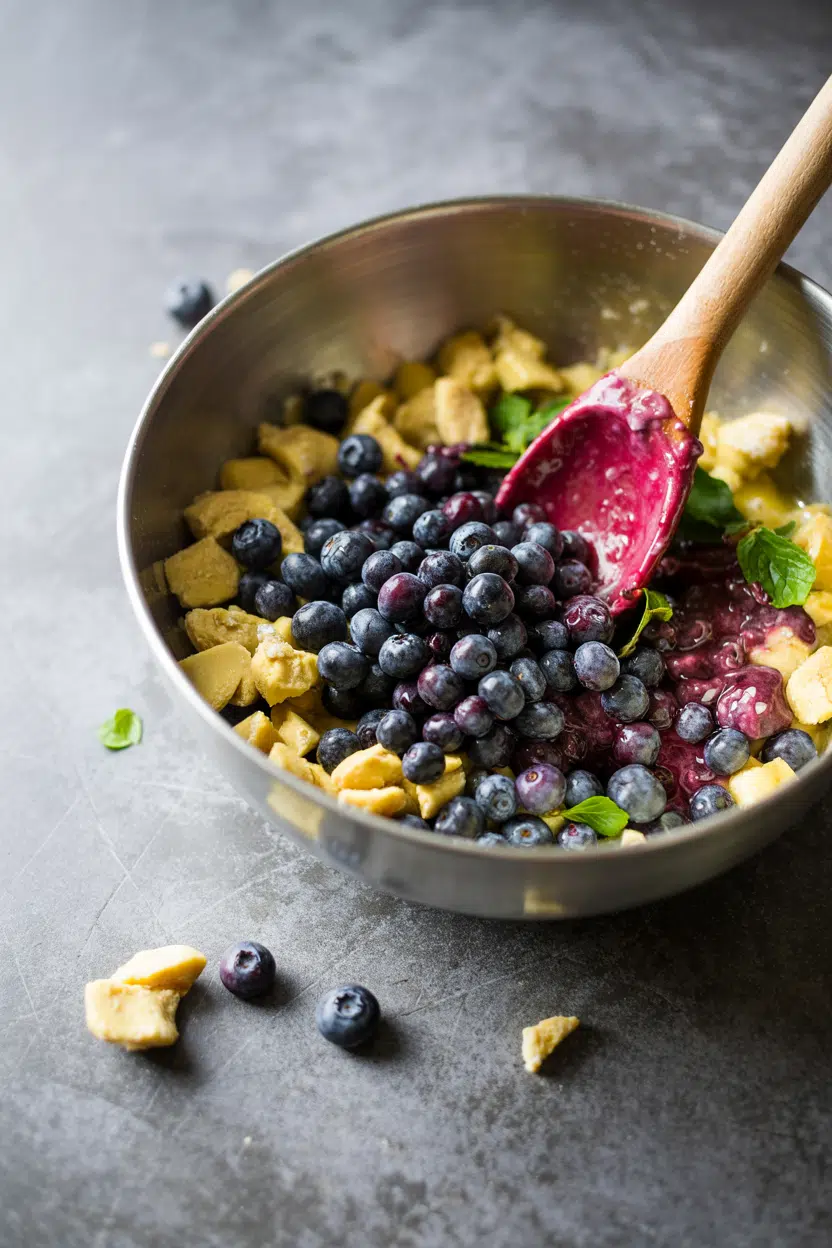
Ripe blueberries read as bright, sweet-tart - similar to a mild blackberry crossed with grape, but with a sharper, cleaner acidity and less of the jammy depth blackberries carry.
Subtle floral and honey notes sit underneath, especially in fully ripe highbush fruit.
Wild lowbush varieties push those characteristics further. Smaller size means more skin-to-juice ratio, which amplifies both the earthy-wild undernote and the acidic tang - they taste more concentrated, less polished.
Heat changes everything. Baked or simmered, the skins soften, the juice releases, and the floral notes concentrate into something richer and more distinctly berry-jam adjacent.
Unripe berries drop the honey notes entirely and lean sour - usable in compote with added sugar, but not ideal raw.
How to Use Blueberries
Blueberries handle heat well and hold their shape in baked applications better than most soft fruits. In muffins and quick breads, they stay mostly intact, pocketing juice into the crumb without collapsing the structure.
Pies and galettes benefit from the skins holding firm while the interior thickens into a cohesive filling.
Simmered into compote, blueberries break down in minutes over medium heat with a splash of lemon juice and sugar. That compote works over pancakes and waffles, alongside roasted pork or duck, or spooned onto ricotta toast. For cocktails and smoothies, they puree cleanly and add deep color alongside mild acidity.
- 🧁 Baked goods - muffins, pancakes, pies, galettes, scones, and quick breads all use them whole
- 🍯 Compote and jam - simmers fast; concentrates the floral notes; keeps well refrigerated
- 🥗 Raw and fresh - tossed in yogurt, oatmeal, salad dressings, or on a cheeseboard with soft cheese
- 🥤 Pureed - blended into smoothies, vinaigrettes, or strained for cocktail syrups
- 🍖 Savory sauces - quick-sautéed with shallot and a splash of vinegar for a glaze over pork or chicken
North American and Scandinavian cooking lean heaviest on blueberries - pies, preserves, and baked goods dominate both traditions.
Modern fusion cooking increasingly treats them as a sauce fruit, pairing blueberries with duck, chicken, and pork the same way stone fruits get used.
For fruit-forward savory pairings, blueberries swaps that work can help when the season is short or supply is low.
| Method | Best For | Tip |
|---|---|---|
| 🥗 Raw | Yogurt, oatmeal, cheeseboards, salads | Use ripe, firm berries; wash just before serving |
| 🧁 Baked | Muffins, pies, tarts, galettes, pancakes | Flour-coat before adding to batter to prevent sinking |
| 🍳 Simmered | Compote, jam, pan sauce, syrup | Add lemon juice early to preserve color and brighten flavor |
| 🥤 Pureed | Smoothies, vinaigrettes, cocktail syrups | Strain through a fine mesh to remove skins for silky texture |
How to Buy and Store Blueberries
Good blueberries don't need much inspection - the visual cues are fast. Look for berries that are plump, uniformly deep blue to indigo, and coated in a natural silvery bloom.
That bloom is a sign of freshness; avoid anything shiny, soft, or leaking. Steer clear of trays with crushed fruit or visible mold at the base, which spreads fast.
Wild lowbush berries run smaller and darker than the highbush commercial variety; expect more concentrated flavor and a firmer, drier texture. Both types store the same way: unwashed in a breathable container in the refrigerator.
Washing before storage introduces moisture that accelerates softening and mold.
For a detailed breakdown of how long blueberries keeps under different conditions, including frozen versus refrigerated timelines, that guide covers the specifics.
Briefly: fresh berries last 5-10 days refrigerated; frozen, they hold well for up to a year with minimal quality loss.
Start Here
If you've never cooked with blueberries beyond raw snacking, a quick compote is the right first step. Four ingredients, ten minutes, and you have a sauce that works across breakfast, dessert, and savory mains.
- 🫐 Raw first - add to yogurt, oatmeal, or a cheeseboard before committing to a recipe
- 🔥 First cooked project - simmer into compote with lemon juice, sugar, and a pinch of salt
- 🧁 First bake - fold into muffin batter, flour-coated, for a reliable result with minimal technique
If you're mid-recipe without blueberries, how long blueberries keeps matters less than having the right swap - and swapping out raspberries follows similar logic when acidity is the main job in the dish.
Frequently Asked Questions
Yes. Blueberries are low in calories and provide vitamin C, fiber, manganese, and anthocyanins - the pigments that give them their color and act as antioxidants. They fit most diets, though they do add natural sugars and carbohydrates to a meal.
Blueberries are milder and brighter, with a cleaner acidity and floral notes. Blackberries are deeper, jammier, and more intensely seedy - their flavor is richer but less delicate than blueberry.
Yes - the skin is fully edible and where most of the anthocyanins concentrate. In pureed applications like sauces or cocktail syrups, straining removes the skins for a smoother result if texture is a concern.
Ripe blueberries are uniformly deep blue to indigo with a visible silvery bloom and give slightly under gentle pressure. Any red or green tinge means underripe - they won't sweeten further once picked.
Spread unwashed berries in a single layer on a sheet pan and freeze until solid - about two hours - then transfer to a freezer bag. This prevents clumping and keeps them loose for easy portioning later.



