
You spot them at the produce section - long, tapered green chiles sitting quietly between the jalapeños and the bell peppers.

The Anaheim pepper doesn't demand attention the way a habanero does, but it earns its place in the cart every time.
Cooks reaching for mild heat with real flavor know this chile delivers without the fire-alarm capsaicin of jalapeno pepper stand-ins or alternatives to serrano pepper.
At 500-2,500 Scoville units, it's approachable, roast-friendly, and genuinely useful across a wide range of dishes.
The Anaheim pepper is a long, thin-walled fresh chile with mild heat and sweet green vegetal flavor. It roasts cleanly, peels easily, and works in stews, salsas, and stuffed chile dishes. Raw peppers last about a week; roasted, they keep 3-5 days refrigerated.
What Is Anaheim Pepper?
The Anaheim pepper is a fresh chile pepper originating in the Southwest United States, with roots in New Mexico and California.
Remember it later
Planning to try this recipe soon? Save it for a quick find later!
It gets its name from Anaheim, California, where a New Mexico grower transplanted the seed stock in the early 1900s.
You'll see it labeled several ways at markets - California Anaheim, Anaheim chile, or sometimes loosely called a New Mexico chile.
Strictly speaking, New Mexico chiles are a related but distinct variety, typically grown at higher elevation and carrying slightly more heat.
The pepper runs 6-10 inches long with a gentle taper, thin walls, and smooth glossy skin. It matures from bright green to deep red, and that ripening matters in the kitchen.
- 🟢 Green (unripe) - milder, grassier, best for roasting and stews
- 🔴 Red (ripe) - sweeter, slightly hotter, good for sauces and drying
- 🌶️ Dried red - becomes a California or New Mexico dried chile used in red sauces
Understanding the role poblano pepper plays in Mexican cooking helps put the Anaheim in context - it occupies a similar mild-chile niche but with less earthiness and a more delicate wall.
What Does Anaheim Pepper Taste Like?
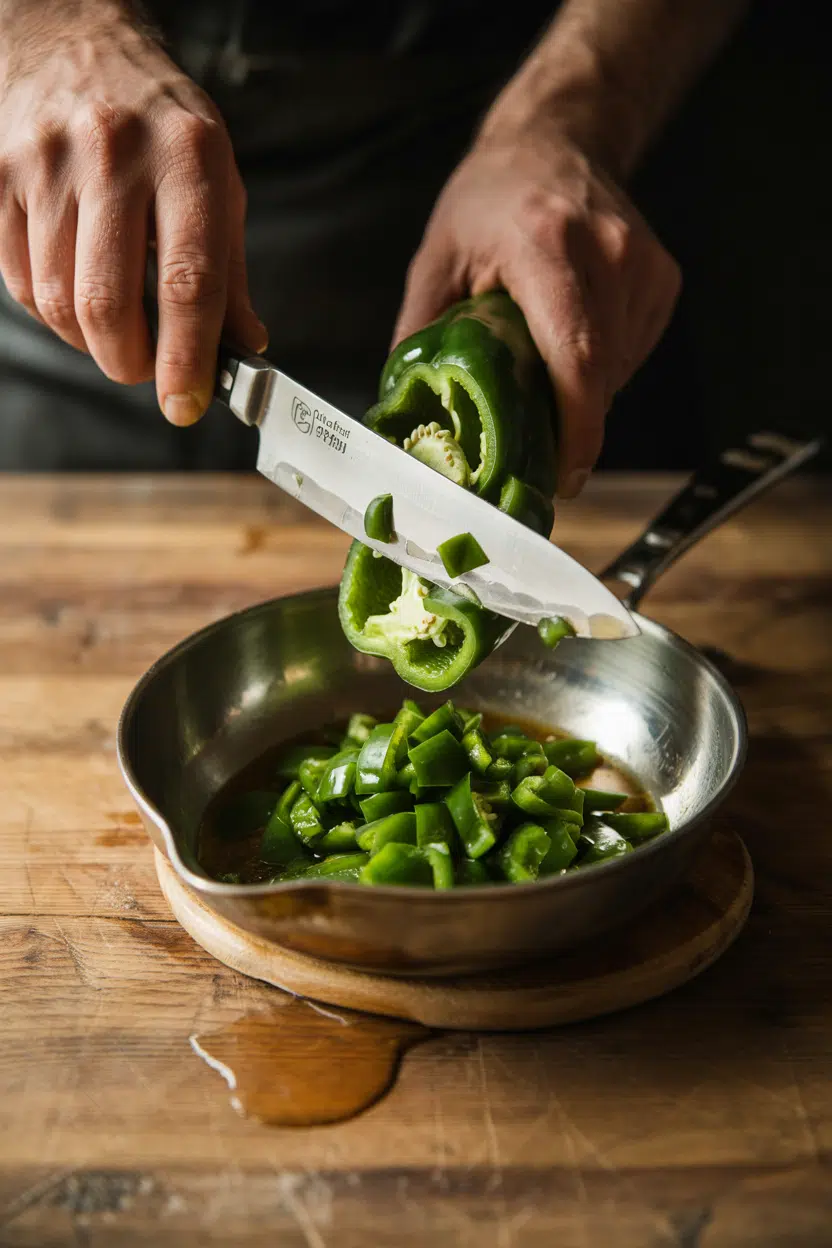
Raw, the Anaheim delivers crisp, bright, green-vegetal sweetness with a gentle tingle at the back of the throat. It's closer in flavor to a mild poblano than to a jalapeño - less earthy, more like fresh grass and sweet capsicum.
Heat changes everything. Roasting over a flame develops a toasty, smoky depth that raw tasting doesn't hint at, and the thin walls collapse into a silky, tender texture that absorbs surrounding flavors readily.
Red-ripe Anaheims push slightly sweeter and warmer on the heat scale - still mild, however, never punishing.
How to Use Anaheim Pepper
Roasting is where the Anaheim shines brightest. Char it directly over a gas burner or under a broiler until the skin blisters black, then steam it in a covered bowl for 10 minutes and peel - the charred skin slips off cleanly, revealing tender, smoky flesh beneath.
If you don't have a wire rack for this, guidance on swapping out roasting rack setups can help you improvise.
Once roasted and peeled, the Anaheim becomes the backbone of several classic dishes. New Mexico-style green chile stew layers it with pork, potato, and garlic for a slow-simmered braise.
Chile rellenos stuff the whole roasted pepper with cheese before battering and frying.
Blended into a sauce, roasted Anaheims join tomatillos well - similar to how they appear in a roasted tomatillo salsa verde recipe that layers green, smoky flavors together.
Raw, sliced Anaheims add mild heat and crunch to pico de gallo or salads. Sautéed, they soften quickly and pair with eggs, onion, and corn in breakfast scrambles.
| Method | Best For | Tip |
|---|---|---|
| 🥗 Raw | Salads, pico de gallo, garnish | Slice thin; thick cuts can taste watery |
| 🔥 Roasted | Rellenos, stews, sandwich topping | Blister fully before steaming to peel |
| 🍳 Sautéed | Fajitas, scrambles, rice dishes | High heat, brief cook - 3-4 minutes max |
| 🫙 Pickled | Tacos, sandwiches, burgers | Vinegar brine with garlic and oregano |
| 🥘 Simmered | Green chile stew, enchilada sauce | Add early; long cook deepens the flavor |
Strong cheese pairings - cheddar, Monterey Jack, queso fresco - work especially well because the pepper's mild sweetness doesn't fight the dairy. Pork, corn, black beans, tomatillo, and lime round out the natural partnership list.
For cooks who find seasoning with anaheim pepper tricky in a specific recipe, swapping in a milder variety is always an option.
How to Buy and Store Anaheim Pepper
At the market, reach for peppers that feel firm and heavy for their size, with skin that's smooth and glossy rather than wrinkled or puckered.
Avoid any soft spots, slimy patches, or stems that look dried out and brown - these signal age.
Back home, store them unwashed in a perforated plastic bag in the produce drawer.
Raw peppers hold well for about a week.
Roasted and peeled, they keep 3-5 days in the fridge in a sealed container.
For longer storage, freeze roasted flesh flat on a sheet tray, then transfer to a bag - the details on how long anaheim pepper keeps in each format are worth knowing before you buy a bulk bag.
Starting Points for the Anaheim Pepper
This pepper rewards cooks who want mild chile flavor without heat management headaches.
If you're new to it, roast one whole over a gas flame and eat it straight - that single step shows you exactly what the pepper does best.
Cooks already comfortable with the poblano pepper swaps that work in their rotation will find the Anaheim fills a slightly different slot: lighter body, cleaner heat, better suited to fresh salsas and quick sautés.
Start with green chile stew or a stuffed relleno - both give the pepper room to perform.
Frequently Asked Questions
Not significantly. At 500-2,500 Scoville units, they register as mild - far below a jalapeño's average of 5,000. Most people sensitive to heat can eat them without discomfort.
Place them directly over a gas flame or under a broiler, turning until skin is fully blackened. Steam in a covered bowl for 10 minutes, then peel the charred skin off by hand.
Poblanos run 1,000-2,000 Scoville units - overlapping but similar to Anaheim. The bigger difference is flavor: poblanos taste earthier and darker, while Anaheims taste sweeter and greener.
Yes, with a trade-off. You'll lose most of the heat and gain more sweetness. Use a larger quantity of Anaheim to compensate for the milder flavor profile in cooked dishes.
Refrigerated in a sealed container, roasted and peeled Anaheims last 3-5 days. Frozen flat in a single layer, they keep up to 6 months without significant texture loss.



