
You spot a wedge of Parmigiano-Reggiano at the cheese counter, rind stamped with its signature pinprick lettering, and it's immediately clear this isn't the stuff in the green shaker.

Knowing how long risotto keeps or watching for cacio e pepe spoilage signs only matters if you're working with cheese worth cooking with - and parmesan, done right, is exactly that.
**Parmesan** is a hard, aged Italian cow's milk cheese with a granular texture, crunchy tyrosine crystals, and deep umami-forward flavor. Aged 12-36+ months, it grates, shaves, and melts into dishes. Best used fresh off the wedge rather than pre-grated.
What Is parmesan cheese?
Parmigiano-Reggiano is a PDO-protected cheese produced exclusively in Emilia-Romagna, Italy - specifically in the provinces of Parma, Reggio Emilia, Modena, and parts of Bologna and Mantua. It's made from raw, partially skimmed cow's milk, shaped into large wheels, and aged for a minimum of 12 months, though 24- and 36-month wheels are common.
Remember it later
Planning to try this recipe soon? Save it for a quick find later!
The aging process is what defines it. As moisture leaves the wheel, proteins and fats concentrate, forming the granular, crystalline texture that makes parmesan distinct from younger pressed cheeses.
Those crunchy bits aren't salt - they're tyrosine crystals, amino acid clusters that develop as proteins break down during extended aging. Longer-aged wheels produce more of them.
Outside Italy, "parmesan" is used as a generic name for similar hard grating cheeses. For authentic PDO flavor, look for the stamped rind.
Similar cheeses worth knowing include Pecorino Romano and - if you're researching dairy alternatives - questions like about is goat cheese lactose free come up often in the same conversation.
- 🇮🇹 Parmigiano-Reggiano - PDO-certified, Italy only, stamped rind
- Grana Padano - similar style, wider production zone, milder flavor
- Domestic parmesan - generic name used outside Italy, variable quality
- Stravecchio - refers to extra-aged wheels (36+ months), intensified flavor
What Does parmesan cheese Taste Like?
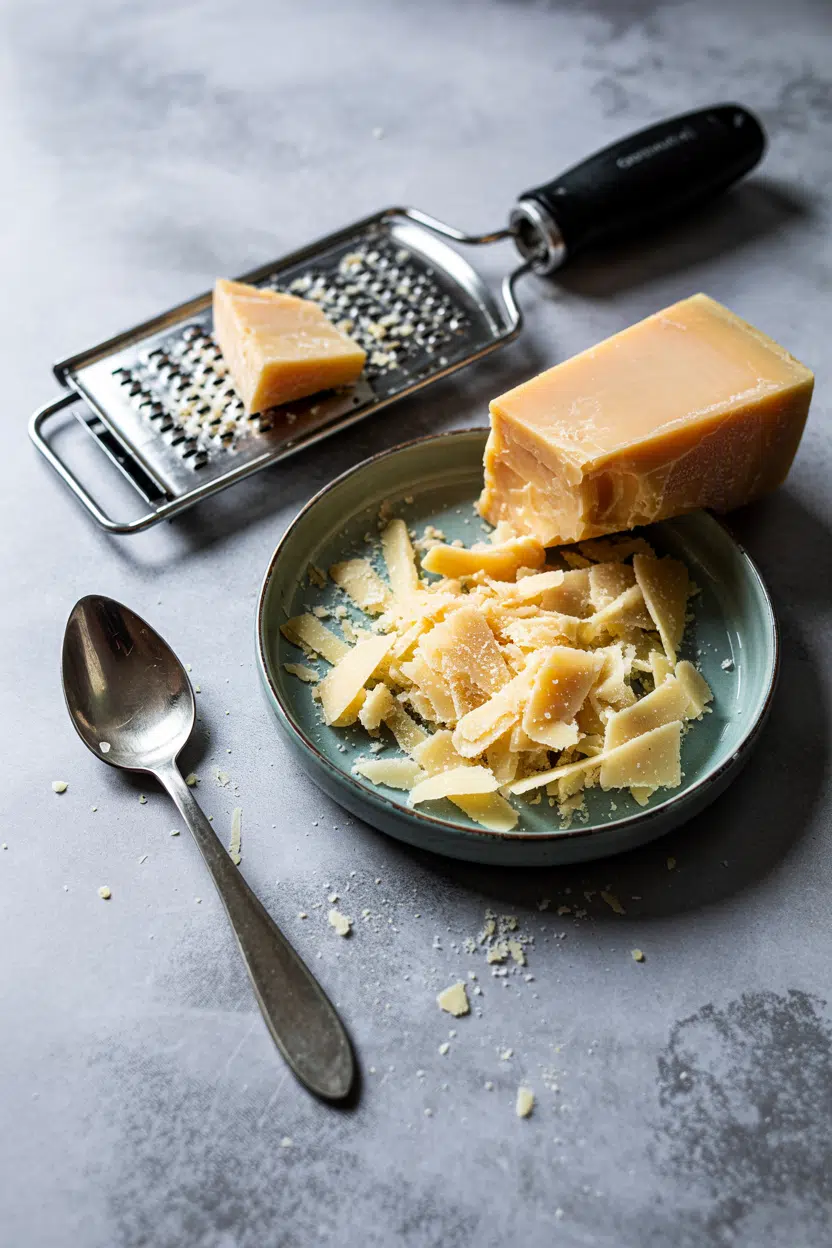
Parmesan leads with salt and umami, but the flavor doesn't stop there.
There's a roasted nuttiness - think toasted almonds - underneath the savory edge, and younger wheels carry a faint milky sweetness that longer-aged versions trade for deeper, almost dashi-like intensity.
Compared to Pecorino Romano, parmesan is less tangy and more nutty - both are salty, however parmesan's salt registers as integrated rather than sharp.
Heat mellows the edge slightly and draws out the buttery notes, which is why a finished risotto tastes richer than the cheese does eaten cold off the wedge.
How to Use parmesan cheese
Parmesan's most common role is freshly grated over finished pasta dishes - carbonara, cacio e pepe, and simple aglio e olio all rely on it. Grating fine and adding off-heat prevents clumping and keeps the texture smooth.
If you ever need a stand-in, options like replacements for parmesan cheese can cover most applications.
Stirred into risotto at the mantecatura stage - the final off-heat emulsification - parmesan adds creaminess alongside umami without requiring cream.
It also shaves cleanly onto cold dishes: beef carpaccio, arugula salads, and roasted beet plates all benefit from thin shards rather than grated powder.
Don't discard the rind. Simmering it in soups, broth, or tomato sauce for 20-30 minutes extracts concentrated savory depth without adding visible cheese.
Rinds also work tucked into braises and bean stews.
| Method | Best For | Tip |
|---|---|---|
| 🧀 Grated | Pasta, risotto, soups, compound butter | Grate fresh; pre-grated loses moisture and crystal texture fast |
| 🔪 Shaved | Salads, carpaccio, cheese boards | Use a vegetable peeler on a cold wedge for clean shards |
| 🍲 Rind simmered | Stocks, soups, braises, tomato sauce | Add whole rind early; remove before serving |
| 🔥 Melted/baked | Gratins, crusts on proteins, baked pasta | Combine with breadcrumbs to prevent oily separation |
Parmesan pairs naturally with olive oil, aged balsamic, black pepper, and truffles in Italian-rooted cooking. On a cheese board, serve chunks alongside honey, dried figs, or pears with a glass of Chianti or Barolo.
Avoid pairing it with very sweet desserts - the salt and umami clash rather than complement.
How to Buy and Store parmesan cheese
At the counter, reach for a wedge with a dry, stamped rind - those pinprick letters spell out Parmigiano-Reggiano and confirm PDO status. Avoid pale, powdery pre-grated containers; anti-caking additives coat the particles and prevent proper melting.
For budget shopping, a whole wedge beats pre-shredded every time.
Wrap cut wedges in parchment or cheese paper first, then loosely in plastic or place in an airtight container.
Store in the coldest part of the fridge, away from strong-smelling foods.
A well-wrapped wedge stays at peak quality for 2-4 weeks; grated parmesan degrades within days.
A full guide to storing parmesan cheese correctly covers edge cases like mold spots and freezing.
For context on how dairy behaves more broadly, the same principles around milk in dairy recipes apply - cold, airtight, and away from odors.
Start with the Wedge
Buy a 200g wedge of stamped Parmigiano-Reggiano before anything else - grate it fresh over pasta one night, simmer the rind in soup another, and serve the last chunk on a board with honey. That single wedge demonstrates every register this cheese works in.
Once you've cooked with the real thing, the pre-grated alternative won't feel like a shortcut anymore.
Frequently Asked Questions
No. Parmigiano-Reggiano is a PDO-protected cheese made only in specific Italian provinces under strict rules. "Parmesan" is a generic term used globally for similar-style hard grating cheeses, with no required origin or production standard.
Those crystals are tyrosine, an amino acid that forms as proteins break down during long aging. They're not salt. More crystals generally indicate longer aging and more concentrated flavor.
Often yes. Extended aging breaks down nearly all the lactose, making Parmigiano-Reggiano one of the lowest-lactose cheeses available. Most lactose-intolerant people tolerate it well in normal portions.
A cut wedge wrapped in parchment and stored in the coldest part of the fridge stays best for 2-4 weeks. Freshly grated parmesan degrades much faster - use it within a week at most.
Drop it into simmering soups, stocks, or tomato sauce and cook for 20-30 minutes. The rind releases concentrated umami and a mild dairy richness. Remove it before serving - it softens but doesn't fully dissolve.



