
That first crumble of Roquefort carries an immediate punch - a cold, salty sharpness followed by something deeper, almost earthy, that lingers.

Few cheeses announce themselves so directly, and that intensity is the whole point.
Made from raw Lacaune sheep milk and aged in natural caves in southern France, Roquefort holds a flavor profile unlike anything produced from cow's milk.
If Roquefort turns out to be too strong for a recipe, knowing your replacements for blue cheese will save the dish.
Roquefort is a PDO-protected French blue cheese made from raw sheep milk, aged in the Combalou caves. It delivers a sharp, salty, tangy bite with mushroomy depth. Use it crumbled cold or melted gently into sauces and dressings. Keeps 2-3 weeks once opened.
What Is Roquefort Cheese?
Roquefort is a mold-ripened blue cheese produced exclusively from the raw milk of Lacaune ewes, a breed native to the Aveyron region of southern France.
Remember it later
Planning to try this recipe soon? Save it for a quick find later!
Its protected designation - both AOC and PDO - means no other cheese can legally carry the Roquefort name.
The cheese is inoculated with Penicillium roqueforti, a mold that creates the blue-green veining and drives much of its sharp, funky character.
Wheels are aged in the Combalou caves near Roquefort-sur-Soulzon, where naturally occurring cold air currents and high humidity shape the final result.
Roquefort has been produced for centuries and is considered one of the oldest named cheeses in the world.
The Combalou caves maintain a consistent temperature near 9°C year-round, and producers use metal rods to introduce air channels, allowing the mold to develop evenly through the paste.
- 🐑 Milk source - Raw Lacaune sheep milk, never pasteurized for PDO-certified wheels
- 🏔️ Aging location - Exclusively the Combalou caves in Roquefort-sur-Soulzon
- 🔵 Veining agent - Penicillium roqueforti, introduced during production and activated by air channels
- 📜 Legal protection - AOC since 1925, PDO under European law; one of the first cheeses to receive this status
What Does Roquefort Cheese Taste Like?
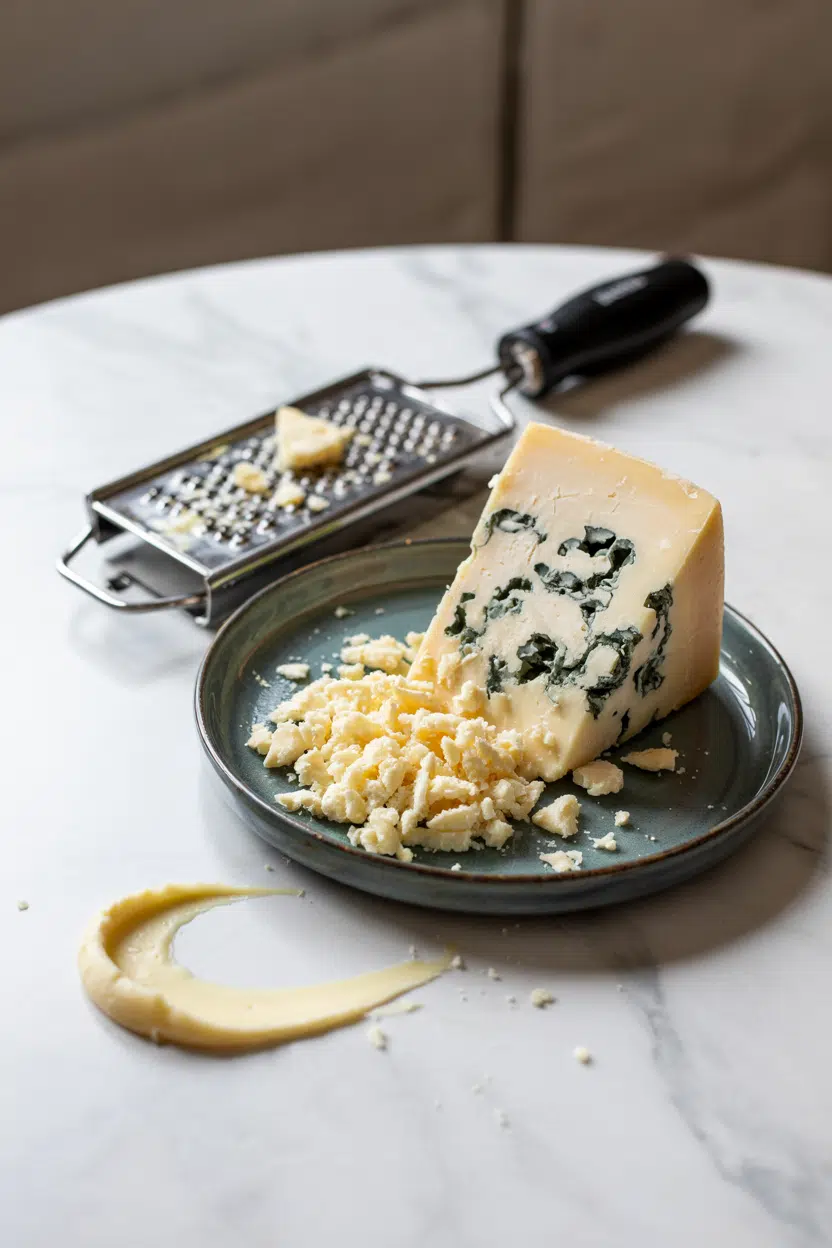
Roquefort hits salt first - more aggressively than most blues - followed quickly by a sharp, tangy brightness tied to butyric acid compounds in the sheep milk. The finish is earthy and savory, somewhere between mushroom and damp stone.
Compared to Stilton, which reads as creamy and relatively mild, Roquefort is considerably more assertive. Against Cabrales, another sheep-milk blue from Spain, it tends to be saltier and more tang-forward rather than barnyard-heavy.
The sheep milk base gives Roquefort a distinct richness that cow-milk blues don't replicate.
Heat softens the sharpness somewhat but reduces the tang noticeably. Cold Roquefort straight from the fridge is at peak intensity; bringing it to room temperature for 20 minutes opens up the aromatic depth without blunting the salt.
How to Use Roquefort Cheese
Cold applications let Roquefort perform at full strength. Crumbled over a Salade Roquefort - the classic Aveyron dish with frisée, walnuts, and vinaigrette - it needs no heat to work.
A thin spread on country bread with a drizzle of honey or a smear of fig jam is one of the most direct ways to use it.
In warm applications, the key is low heat and a short window. Stir crumbled Roquefort into a steak sauce just before serving, or fold it into mashed potatoes off the heat.
It also works stirred into cream-based pasta sauces at the finish, where it melts into the liquid rather than frying in a pan.
| Method | Best For | Tip |
|---|---|---|
| 🥗 Cold/Crumbled | Salads, cheese boards, tartines | Serve at room temp for fuller aroma |
| 🍳 Melted into Sauce | Steak sauces, pasta, gratin | Add off heat or at very low simmer |
| 🥧 Baked in Tart/Quiche | Savory tarts, quiche fillings | Use sparingly - salt intensifies in the oven |
| ✨ Finishing Garnish | Roasted beets, pear slices, grilled lamb | Dot on just before serving, never stir in while plating |
Pairings lean toward contrast.
Sweet Sauternes or off-dry Riesling cuts the salt cleanly; fresh pear or apple does similar work on a board.
Walnuts and toasted hazelnuts add texture without competing on flavor.
When choosing a swap for a recipe, roquefort cheese swaps that work can guide you toward the right intensity and texture match.
For a creamier, milder route, using stilton cheese for creaminess covers the cases where you need less punch.
How to Buy and Store Roquefort Cheese
Look for wedges with visible blue-green veining and a pale ivory to slightly yellow paste that appears moist, not dried out. The rind should be thin and natural-looking.
A strong ammonia smell signals the wheel is past its prime - set it aside.
Always buy from a source that sells it labeled AOC/PDO Roquefort; imported French product under that designation is the real article.
For storage, wrap the cut face in cheese paper or breathable wax paper, then place it in a loosely sealed container in the fridge.
This protects the cheese from absorbing other odors while allowing slight air exchange.
Know the roquefort cheese spoilage signs before assuming any surface change is normal mold versus a sign the cheese has turned.
Opened Roquefort lasts about 2-3 weeks refrigerated. An intact sealed wedge can hold up to 6 weeks depending on handling and the sell-by date.
Where to Start With Roquefort
Roquefort rewards a direct introduction. Eat it cold on bread with honey before ever cooking with it - the flavor profile makes more sense experienced straight than buried in a sauce.
Once you're comfortable with the intensity, a steak pan sauce is the natural next step.
Melt a small knob into reduced cream and black pepper, add it at the very end, and you have a classic bistro finish.
Cooks who enjoy stilton cheese in dairy recipes will find Roquefort pushes further in every direction - more salt, more tang, more funk.
Frequently Asked Questions
No. Roquefort is a specific PDO-protected blue cheese made from raw Lacaune sheep milk in a single French region. All Roquefort is blue cheese, but blue cheese is a broad category that includes Stilton, Gorgonzola, and many others made from cow's milk.
Very strong by most standards - pungent, salty, and sharp. It's considerably more assertive than Stilton and tends to be saltier than Gorgonzola. First-time eaters often find a little goes a long way.
Yes, but add it off heat or at the very end of cooking. Sustained high heat destroys the blue mold character and makes the fat separate unpleasantly. Sauces, pasta, and potato dishes all work well with a final stir-in.
Most health guidelines advise against it. PDO Roquefort is made from unpasteurized raw sheep milk, which carries a listeria risk. Cooking it until fully hot throughout significantly reduces that risk, but cold consumption is generally not recommended during pregnancy.
Wheels are aged in the Combalou caves near Roquefort-sur-Soulzon, where natural air currents maintain a near-constant temperature of around 9°C. Producers pierce each wheel with metal rods to create air channels, allowing Penicillium roqueforti to develop evenly through the paste.



