
You spot it on the back shelf of the liquor store, wedged between bottles you recognize - alternatives to triple sec sit nearby, and so do alternatives to amaretto - and you pick it up wondering what exactly crème de cacao is for.

It turns out this chocolate liqueur earns a permanent spot in any home bar that takes cocktails or desserts seriously.
Crème de cacao is a sweet chocolate liqueur made from cocoa beans, sugar, and neutral spirit. It comes in white (clear) and dark varieties, with moderate intensity. Use it in classic cocktails, dessert glazes, and cake soaks.
What Is Creme de Cacao?
Crème de cacao is a European-origin liqueur built on cocoa bean extract, sugar syrup, and a neutral grain or grape spirit.
Remember it later
Planning to try this recipe soon? Save it for a quick find later!
Despite the name, it contains no actual cream - "crème" refers to the thick, syrupy texture created by the high sugar content.
It comes in two forms. White crème de cacao is filtered clear and delivers chocolate flavor without darkening a drink, while dark crème de cacao retains deeper color and carries more roasted cocoa character.
The liqueur typically runs 20-40% ABV, lower-proof bottles reading sweeter and higher-proof ones showing more spirit heat. Vanilla is a standard secondary addition, giving the base an aromatic warmth that plain cocoa extract alone wouldn't provide.
Understanding how cocoa bean extract is used here helps if you're already familiar with comparing cocoa powder vs baking cocoa options - the soluble cocoa solids in baking follow similar flavor logic, just without the alcohol.
What Does Creme de Cacao Taste Like?
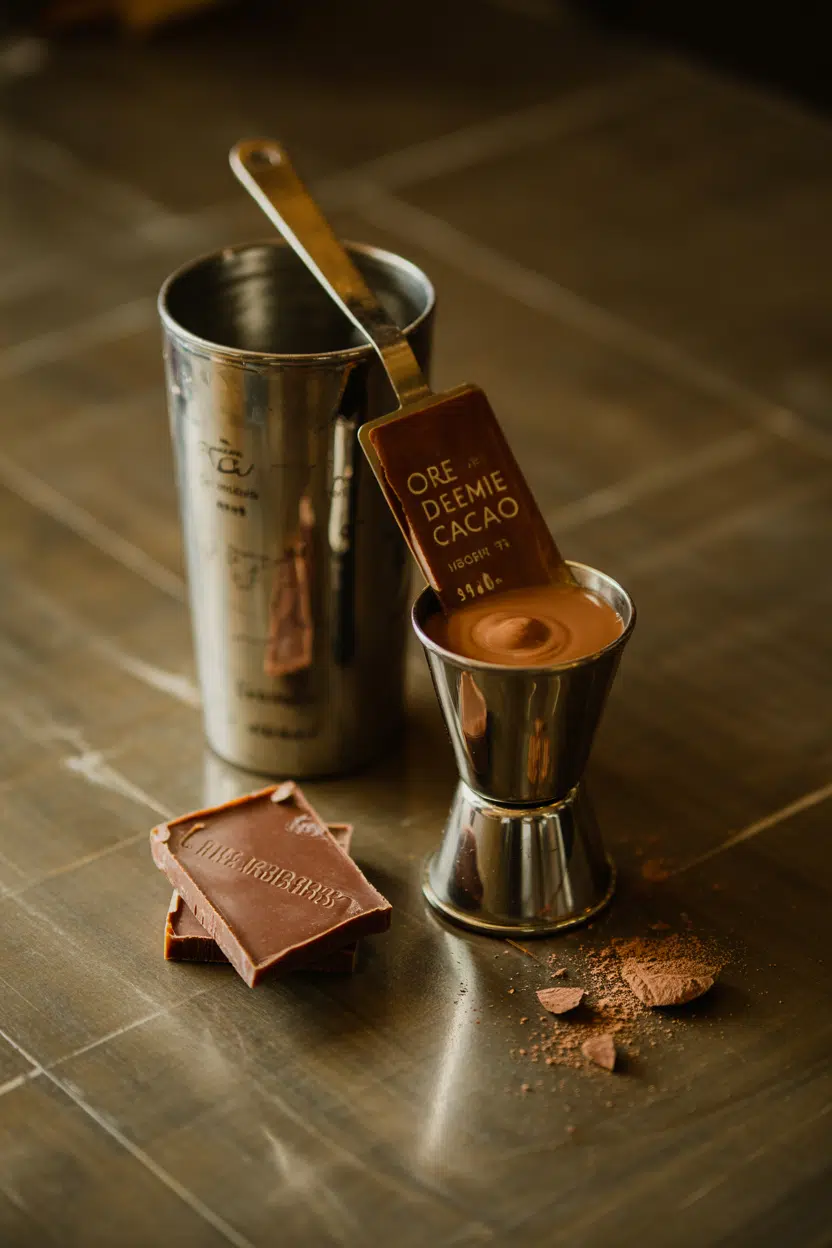
Crème de cacao tastes like chocolate syrup crossed with a lightly sweetened brandy: smooth, cocoa-forward, with a slick body and an alcohol-warmed finish. The sweetness lands up front, followed by a toasty cocoa bitterness that lingers.
Dark crème de cacao skews toward unsweetened cocoa powder with added sugar - noticeably less candy-sweet, more like a bar of 70% chocolate dissolved in spirit. White keeps the vanilla note front and center, making it taste slightly more floral.
Vanilla plays a real supporting role here, much like how the comparing vanilla extract vs vanilla powder options debate shows that vanilla form matters to the final flavor.
Heat doesn't change crème de cacao dramatically, though reducing it concentrates both sweetness and bitterness simultaneously.
How to Use Creme de Cacao
Crème de cacao shows up most reliably in classic cocktail recipes. The Grasshopper calls for equal parts crème de cacao, crème de menthe, and cream - a trio that produces a mint-chocolate drink with a milkshake weight.
The Brandy Alexander pairs it with cognac and cream for a chocolate-forward after-dinner drink.
Beyond the shaker, it works as a dessert ingredient in its own right.
- 🍰 Cake soak - Brush it onto sponge layers or ladyfingers to add chocolate aroma and keep crumb moist without thinning the structure.
- 🍫 Chocolate mousse - Fold a small measure into the base; it adds depth without adding water, which would destabilize the foam.
- ☕ Coffee drinks - Stir into hot espresso or a mug of black coffee for a quick adult mocha; no additional sweetener usually needed.
- 🍦 Ice cream base - A tablespoon per quart of custard lowers the freezing point slightly, giving homemade gelato a softer scoop.
- 🧁 Glaze and drizzle - Reduce gently with a little cream to make a concentrated chocolate glaze for brownies or bundt cakes.
It pairs especially well with brandy and dark rum, cream and half-and-half, espresso, orange zest, hazelnut, and dark chocolate. Avoid pairing it with delicate green herbs or high-acid fruit preparations where its sugar would throw off the balance.
If a recipe calls for it and you're out, the guide on alternatives to creme de cacao covers which swaps hold up in drinks versus baked uses.
Similarly, if you're scaling a Grasshopper and need a crème de menthe replacement, creme de menthe swaps that work walks through the closest options.
| Method | Best For | Tip |
|---|---|---|
| 🍸 Stirred Cold | Cocktails, whipped cream | Use white to avoid color transfer in pale drinks |
| 🍰 Folded In | Mousse, batter, ice cream base | Add after mixing fats to avoid deflating structure |
| 🔥 Reduced | Glazes, drizzles, sauces | Use low heat - high heat drives off aroma quickly |
| 🎂 Brushed On | Cake soaks, ladyfingers | Apply warm layers in two passes for even absorption |
How to Buy and Store Creme de Cacao
Read the label before you buy. Look for "cocoa extract" or "natural cocoa" listed as a flavoring - bottles that only mention "artificial flavor" will taste flat and one-dimensional.
Check that ABV sits between 20 and 40%; anything lower is mostly sugar syrup.
Choose white crème de cacao when color matters in a recipe (pale cocktails, light mousses) and dark when you want roasted cocoa character. Once open, store upright in a cool, dark pantry with the cap tight.
For a full breakdown of timelines and signs of decline, the guide on keeping creme de cacao fresh covers both opened and unopened bottles in detail.
Starting With Creme de Cacao
If you're new to this liqueur, start with a Brandy Alexander - it shows off both the chocolate sweetness and the creamy texture without requiring much technique.
From there, the dark variety earns its place in glazes and cake soaks where roasted cocoa depth matters.
- 🍸 First cocktail - Brandy Alexander: cognac, dark crème de cacao, heavy cream, shaken and strained.
- 🎂 First baked use - Brush white crème de cacao onto a chocolate sponge between layers before frosting.
- ☕ Simplest move - Add a tablespoon to hot espresso; no other changes needed.
Those needing a brandy substitute for the Alexander can find a solid starting point in alternatives to brandy - several options keep the spirit-meets-cream balance intact.
Frequently Asked Questions
Yes. It typically runs 20-40% ABV, depending on the brand. Higher-proof versions show more spirit heat; lower-proof ones taste predominantly sweet.
White is filtered clear and emphasizes vanilla-forward sweetness; dark retains color and carries a stronger roasted cocoa note. Flavor intensity is similar, but dark skews toward bittersweet chocolate.
Yes - it works as a cake soak, mousse addition, and glaze base. Use low heat when reducing, since high temperatures drive off the cocoa aroma before it concentrates.
Crème de cacao and chocolate liqueur are often used interchangeably, but chocolate liqueur brands like Godiva tend to be thicker and sweeter. Crème de cacao generally has a lighter body and cleaner cocoa finish.
The Grasshopper and Brandy Alexander are the two most well-known. It also appears in the Chocolate Martini, the Mudslide, and various after-dinner cream drinks.



