
Buttercream frosting is where most home bakers first reach for butter extract - a tiny bottle that adds a rich, creamy aroma without softening the fat structure that holds a stiff piping swirl together.
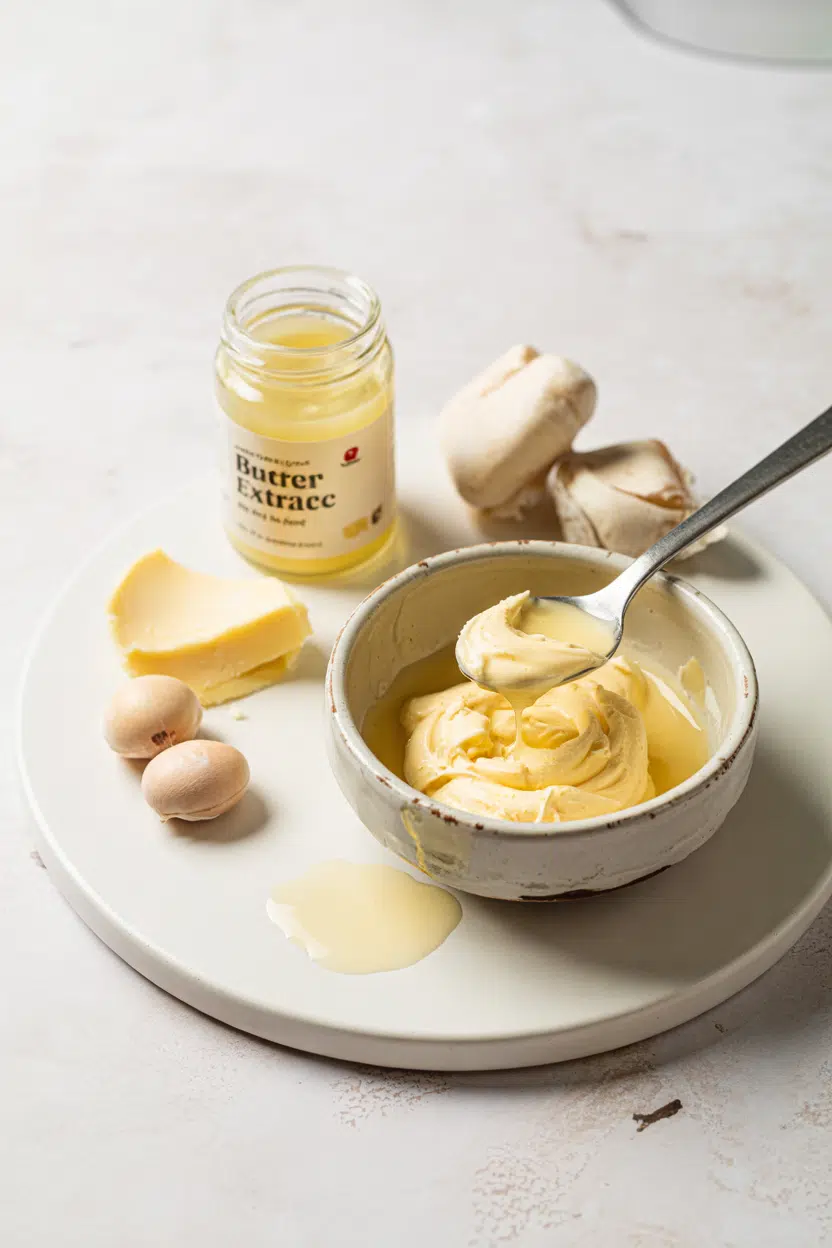
Much like using almond extract for creaminess or using rum extract for creaminess, butter extract works by concentrating flavor compounds into a few potent drops.
It's a small tool with a specific job, and knowing how to use it well makes a measurable difference in finished baked goods.
Butter extract is a concentrated liquid flavoring that mimics browned butter's aroma using lactones and diacetyl dissolved in an alcohol or glycerin base. A few drops add rich, dairy-like notes to frostings, batters, and sauces without adding fat.
What Is Butter Extract?
Butter extract is a commercial flavoring developed primarily in North America and Europe to replicate butter's aroma and taste in a fat-free liquid form.
Remember it later
Planning to try this recipe soon? Save it for a quick find later!
It dissolves flavor compounds - chiefly diacetyl and lactones - into an alcohol or water-glycerin base, delivering concentrated buttery notes from a teaspoon or less.
You'll also see it labeled butter flavor extract, artificial butter extract, or buttery extract on store shelves.
Some brands market a thicker, emulsified version called butter emulsion, which blends better into high-fat batters without the slight sharpness an alcohol base can occasionally introduce.
Unlike most dairy-derived ingredients, much like lemon extract in dairy recipes, this extract functions purely as a flavor signal rather than a structural one. It contributes no fat, no cholesterol, and negligible calories.
- 🍶 Alcohol-base versions - sharper initial aroma, better for frostings and cold applications
- 💧 Glycerin or water-base versions - softer, rounder flavor; preferred for vegan baking and heat-stable applications
- 🧪 Natural vs. artificial - natural versions use milk-derived lactones; artificial versions synthesize diacetyl and vanillin without dairy
What Does Butter Extract Taste Like?
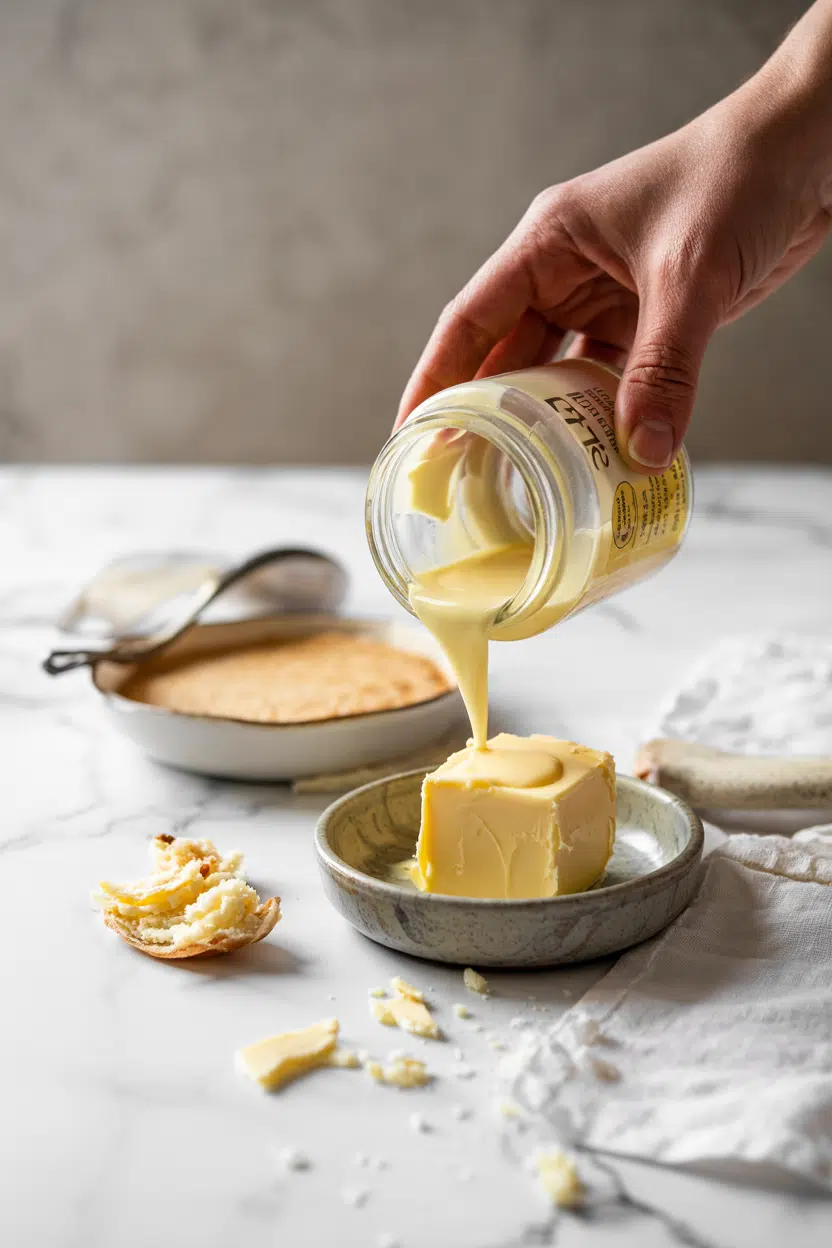
Butter extract tastes like browned butter stripped of its fat - a concentrated hit of warm, toasty dairy with faint caramel and cream-like undertones. It's noticeably less rich than real butter on the palate, since there's no fat to carry the flavor through, however the aroma does much of the perceptual work.
At moderate intensity, the extract reads as dairy-forward with a subtle sweetness - closer to beurre noisette than fresh churned butter.
Heat can dull the volatile top notes, so adding it off-heat or near the end of cooking preserves the fullest aroma.
When combined with actual fat - oil, coconut cream, or vegan shortening - the flavor perception deepens considerably.
The fat carries the lactone compounds across the palate the same way real butter would, which is why comparing vanilla extract vs vanilla powder options matters too: the carrier affects delivery.
How to Use Butter Extract
Restraint is the first rule. Start with ½ to 1 teaspoon per batch for most recipes, then taste before adding more - overdoing it produces a chemical, almost artificial aftertaste.
| Method | Best For | Tip |
|---|---|---|
| 🧁 Folded In | Buttercream, frostings, fillings | Add after creaming fat; taste before adding more |
| 🥣 Stirred In | Mashed potatoes, custards, pastry cream | Add near end of cooking to protect aroma |
| 🍞 Mixed into Batter | Quick breads, muffins, low-fat cookies | Combine with wet ingredients before folding into dry |
| 🫙 Blended into Oil | Popcorn, sautéed greens, finishing oils | Whisk thoroughly; glycerin-base blends more evenly |
Vegan and plant-based baking is where butter extract earns its clearest role. Paired with neutral oil or vegan shortening, it brings the dairy-adjacent warmth that makes cookies and scones feel less like compromises.
For richer complexity, pairing it with vanilla extract, brown sugar, or a pinch of salt sharpens the buttery perception noticeably.
Savory applications work too. Sautéed mushrooms, low-fat mashed potatoes, and pan sauces all respond well to a few drops stirred in at the finish.
Exploring using butter extract for creaminess in these contexts shows how a small amount can round out a dish without added saturated fat.
How to Buy and Store Butter Extract
Look for sealed glass bottles with a clear label specifying whether the product is natural or artificial and what the carrier base is - alcohol or glycerin. Avoid any bottle with visible cloudiness or separation, both signs of age or contamination.
Store the bottle in a cool, dark cupboard, cap tightly closed. Exposure to heat and light accelerates oxidation, which dulls the lactone compounds responsible for the warm, toasty aroma.
Full guidance on keeping butter extract fresh covers the shelf markers worth knowing, including when intensity loss crosses into unusable.
Unopened, expect 2-3 years of peak quality. Once opened, aim to use it within 6-12 months for fullest aroma, though it often remains usable beyond that window at reduced strength.
The role of using glycerin for creaminess matters here too - glycerin-base versions tend to hold their character slightly longer once opened than high-alcohol alternatives.
Where to Start With Butter Extract
Two applications stand out as the clearest entry points. Buttercream frosting shows the extract's strength immediately -
one teaspoon into a standard batch adds unmistakable aroma without breaking the structure. Vegan cookie dough is the second: a few drops alongside neutral oil closes most of the gap left by missing dairy fat.
- 🧁 First batch - use ½ teaspoon in buttercream, taste, then decide if it needs more
- 🌱 Vegan baking - pair with coconut oil or vegan butter for the fullest dairy-like result
- 🍿 Quickest test - stir into warm popcorn oil for an immediate, low-stakes tasting
Keep expectations calibrated. Butter extract signals butter; it does not replace its fat, richness, or structural role.
Used for what it actually does, it's a genuinely useful addition to any extract shelf.
Frequently Asked Questions
Artificial butter extract contains no dairy fat and is typically dairy-free. Natural versions may use milk-derived lactones as flavor compounds, so always read the allergen statement on the label before using in dairy-free recipes.
No - butter extract only provides flavor, not fat or structure. It can supplement or mimic butter's aroma in low-fat recipes, however it cannot replace real butter's role in emulsification, moisture, or texture.
Start with ½ to 1 teaspoon for a standard batch of cookies, frosting, or batter. Adding too much produces a sharp chemical note, so taste incrementally rather than measuring by feel.
Diacetyl is the primary flavor compound responsible for butter's characteristic aroma, occurring naturally in dairy and produced synthetically for artificial flavorings. At concentrations used in home cooking it poses no known risk, though industrial inhalation exposure is a separate occupational concern.
Yes, in small amounts. A few drops stirred into mashed potatoes, sautéed greens, or a pan sauce at the finish adds warm, buttery aroma without saturated fat. Use less than you would in baking - savory dishes amplify concentration.



