
Biscuits on a Tuesday night take about 12 minutes when there's a box of Bisquick on the shelf - no cutting cold butter, no sifting, no fuss over fat ratios the way scratch recipes demand.

That kind of speed is exactly why Bisquick has held shelf space in American kitchens since 1931, and why home cooks reach for it far beyond biscuits.
Understanding what it actually is - and what it genuinely tastes like - helps you decide when it earns that shelf space and when butter swaps that work or baking powder swaps that work might matter more to the final result.
Bisquick is a pre-mixed baking blend of enriched flour, leavening, salt, and fat. It tastes mild and slightly salty with a faint shortening note. Best for pancakes, drop biscuits, and dumplings. Opened boxes stay good for 3-6 months in an airtight container.
What Is Bisquick?
Bisquick is a prepared baking mix developed by General Mills and launched in the United States in 1931. It was originally created to make biscuits fast on dining cars, where consistency and speed mattered more than scratch technique.
Remember it later
Planning to try this recipe soon? Save it for a quick find later!
The core formula combines enriched all-purpose flour, baking powder, salt, and a fat - historically shortening, now partially replaced with vegetable oil depending on the variety.
That pre-blended fat is the key difference between Bisquick and plain flour: you skip the step of cutting cold fat into dry ingredients yourself.
Several varieties exist on the market today:
- 🟡 Original Bisquick - the standard blend, slightly salty, neutral fat base
- 🔵 Buttermilk Bisquick - adds dried buttermilk for slight tang; check for dairy allergens
- 🟢 Gluten-Free Bisquick - uses rice flour blend; labeled separately
- ⚪ Heart Smart Bisquick - reduced fat, lower sodium formulation
It goes by informal names like biscuit mix, pancake mix, or (less commonly) bizquick or Bis-quick, though those spellings are just phonetic shorthand. The brand is sometimes used interchangeably with generic store-brand biscuit mixes, which follow the same basic formula.
What Does Bisquick Taste Like?
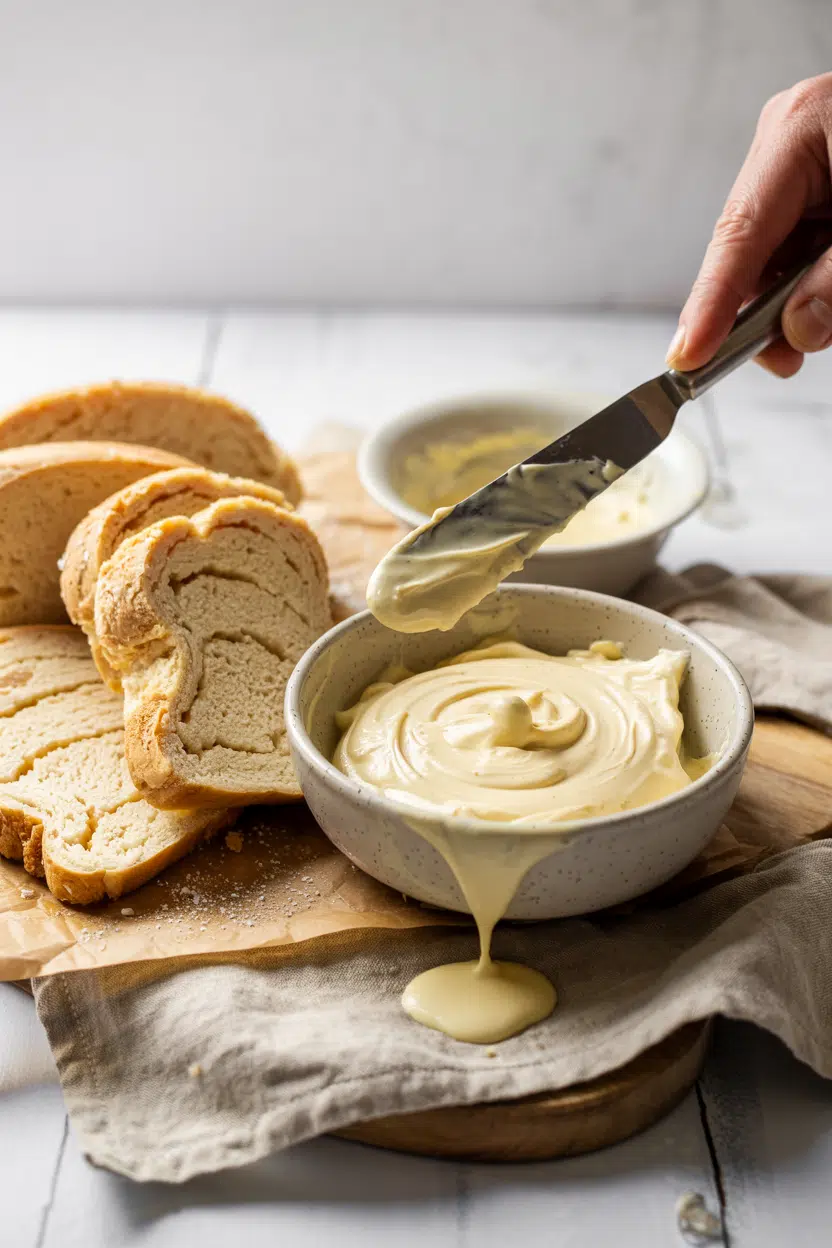
On its own, Bisquick tastes like mildly salted, neutral flour with a faint background note of shortening. There's no strong butter flavor, no tang, and no sweetness beyond what enriched flour naturally carries.
Compared to scratch biscuits made with cold butter, Bisquick-based baked goods taste cleaner and less complex. Butter builds a richer, slightly grassy flavor that the shortening in Bisquick doesn't fully replicate.
Heat does change things. Baked and griddle-cooked Bisquick develops a light toasted wheat note that's absent in the dry mix. Dumplings cooked in broth pick up savory flavors from the liquid, which does most of the flavor work.
How to Use Bisquick
Bisquick works across a wider range of dishes than most people initially try it in. The ratio changes by application, so following the box ratio for each dish matters more here than with flexible scratch recipes.
The mix pairs naturally with buttermilk or whole milk, eggs, and salted butter for both sweet and savory applications.
Maple syrup or fruit compotes round out pancakes; cheddar and chives shift it toward savory biscuits.
For rich dumplings, roasted chicken and gravy carry the whole dish.
If you don't have all your ingredients, knowing vegetable oil stand-ins or how long how long milk keeps can save a batch.
| Method | Best For | Tip |
|---|---|---|
| 🥞 Griddle | Pancakes, silver dollar cakes | Let batter rest 2 minutes before pouring - fluffier result |
| 🥐 Baked (drop) | Drop biscuits, cheese scones, coffee cake | Don't overmix - stir until just combined to keep crumb tender |
| 🍲 Simmered | Dumplings in chicken and dumplings | Drop by spoon onto simmering broth, cover tightly, don't lift the lid |
| 🍗 Pan-fried | Light coating for chicken or pork cutlets | Mix with seasoning only - no egg needed for a thin crust |
| 🥧 Baked (crust) | Pot pie topping, impossible pie | Pour over filling directly - it self-separates into a crust layer |
Bisquick fits squarely in American home-style cooking - Southern drop biscuits, Midwestern pot pies, and camping-friendly pancakes where a full kitchen isn't available.
It doesn't suit yeasted bread or any recipe needing long gluten development, and its pre-added leavening can throw off delicate emulsions.
When the mix isn't available, bisquick swaps that work or even self rising flour swaps that work can bridge the gap in most recipes.
How to Buy and Store Bisquick
Buy sealed boxes and check the best-by date printed on the carton end. Caked lumps inside the box signal moisture exposure - skip that one. If you're buying Buttermilk Bisquick for a dairy-free household, read the label carefully; it contains dried buttermilk.
Store an opened box in an airtight container in a cool, dry spot. The original box alone won't block moisture or pantry pests long-term.
Transferred correctly, opened Bisquick holds quality for 3-6 months.
For unopened boxes, bisquick's shelf life can stretch up to a year, though leavening potency does fade.
That degradation pattern mirrors what happens with raw flour - flour's shelf life follows a similar arc once the package is opened and exposed to air.
Start Here
If you've never used Bisquick before, start with drop biscuits - stir, drop by spoon onto a baking sheet, bake at 450°F for 10 minutes.
That single test tells you how the mix handles in your oven and whether the salt level suits your cooking.
From there, dumplings in a chicken broth base are the next move. Those two applications cover most of what Bisquick does well.
Frequently Asked Questions
Enriched all-purpose flour, leavening (baking powder), salt, and fat (shortening or vegetable oil). The pre-blended fat is what separates it from plain flour - you skip cutting fat in yourself.
Not exactly. Both contain flour and leavening, but dedicated pancake mixes often include added sugar and powdered milk. Bisquick is more neutral and works across savory applications where a sweet pancake mix would not.
Yes - drop biscuits are one of its core applications. They won't be as layered or rich as scratch buttermilk biscuits, but they bake in about 10 minutes with minimal effort.
About 3-6 months when stored airtight in a cool, dry place. The fat in the mix degrades faster than the flour, so a rancid or stale smell is the clearest sign it's past its best.
Only if you buy the specifically labeled Gluten-Free Bisquick, which uses a rice flour blend. Standard Bisquick contains wheat and is not safe for gluten-free diets.



