
That sharp, almost medicinal warmth hitting your nose when you open a jar of ground cloves - that's eugenol, the compound responsible for nearly everything distinctive about this spice.

A small pinch goes surprisingly far, which is why recipes rarely call for more than a quarter teaspoon at a time.
If you've ever reached for replacements for clove mid-recipe, you already know how hard it is to fake that particular heat.
Nothing else quite replicates it.
Ground cloves is a finely milled warm spice made from dried clove buds. It delivers intense spicy-sweet heat with a bitter, resinous edge. Use it in baked goods, spice blends, braises, and simmered drinks - in small amounts only.
What Is ground cloves?
Ground cloves is the finely milled powder of dried, unopened flower buds harvested from Syzygium aromaticum, a tropical evergreen native to the Maluku Islands of Indonesia.
Remember it later
Planning to try this recipe soon? Save it for a quick find later!
The buds are picked before they bloom, dried until dark brown, then milled into a uniform fine powder.
You'll also see it labeled clove powder, clove spice, or ground clove bud depending on the brand.
No significant variety differences exist the way they do with chiles or pepper - the spice is defined by its source tree and how recently it was ground. However, quality varies sharply with freshness.
Older powder loses its volatile oil content and turns flat well before the jar expires.
- 🌍 Origin - Maluku Islands, Indonesia; now also grown in Zanzibar, Sri Lanka, and Madagascar
- 🌸 Plant part used - Dried, unopened flower bud (not the stem or leaf)
- 🧪 Key compound - Eugenol, a phenolic compound that gives cloves most of their aroma and heat
- 📦 Category - Dried spice (ground flower bud), part of the warm spice family alongside nutmeg and allspice
What Does ground cloves Taste Like?
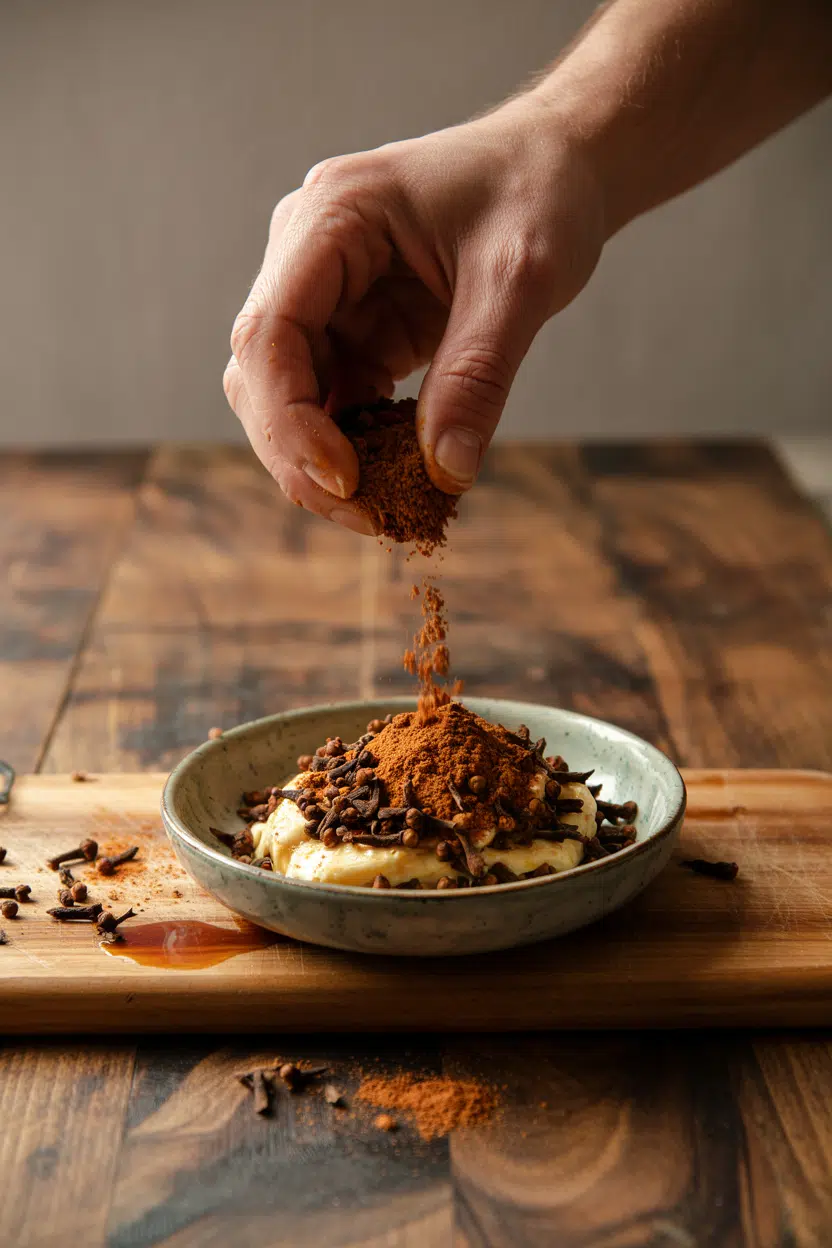
Ground cloves hits with warmly sweet heat up front, followed quickly by a bitter backbone and a faintly astringent finish.
That progression is eugenol doing its work - it creates a spicy sensation closer to pepper than to cinnamon, but with a floral, almost medicinal edge that neither pepper nor cinnamon has.
It tastes similar to nutmeg and cinnamon but sharper and more pronounced. Compared with nutmeg in particular, comparing fresh nutmeg vs ground nutmeg options shows how much subtler nutmeg's heat is next to cloves.
Heat amplifies ground cloves significantly - blooming the powder in hot fat deepens its resinous quality and rounds out the bitterness.
How to Use ground cloves
Ground cloves works best in small amounts, typically a pinch to a quarter teaspoon in most home recipes. Its eugenol content is intense enough that even a slight overuse can push a dish from warmly spiced to medicinal and bitter.
South Asian cooking relies on it as a core component of garam masala - if you ever need garam masala stand-ins, ground cloves is usually part of why those blends fall short.
Indonesian cooking uses it in savory rice dishes and braised meats.
European holiday baking - gingerbread, spice cookies, pumpkin pie - leans on it for depth.
North African spice blends add it in trace amounts for complexity.
Ground cloves pairs well with cinnamon, nutmeg, allspice, star anise, ginger, brown sugar, and apples. Keep it away from delicate floral herbs like basil, which it will simply overpower.
| Method | Best For | Tip |
|---|---|---|
| 🥣 Dry Blend | Pumpkin pie spice, garam masala, pickling brines, chai blends | Mix with other ground spices first to distribute evenly before adding wet ingredients |
| 🍳 Bloomed in Fat | Curry bases, braised pork or beef, savory rice dishes | Use 30 seconds max in hot fat - eugenol turns acrid if it scorches |
| 🧁 Stirred into Batter | Gingerbread, spice cookies, quick breads, muffins | Add with other dry ingredients; overmixing after adding won't dull the flavor |
| 🫖 Steeped in Liquid | Mulled wine, mulled cider, chai, poaching liquids | Add early in the simmer - 20+ minutes gives the liquid full extraction |
Mulled wine is one of the clearest showcases for steeped cloves, and planning sides for mulled wine around its spice profile means keeping the food warm-spiced and not competing.
How to Buy and Store ground cloves
Smell before you buy whenever possible. Fresh ground cloves releases an immediate, sharp, warm hit when the jar is opened. Flat, musty, or barely-there aroma means the volatile eugenol has already degraded - the powder will underperform in any recipe.
For keeping ground cloves fresh, an opaque, airtight container in a cool, dry pantry is the standard approach - away from the stove and direct light. Peak potency runs 6-12 months from the grind date.
The powder stays usable up to 2 years, however aroma and heat fade considerably in the second year.
- Grind date - Prioritize jars with a printed grind or pack date, not just a best-by date
- Container - Opaque glass or tin over clear glass; light degrades volatile oils
- Location - Cool, dry pantry shelf - not above the stove or beside the oven
- Clumping - Discard if moisture has caked the powder, regardless of date
Where to Start With Ground Cloves
Ground cloves rewards restraint.
If you're building a spice rack, add it specifically for pumpkin pie, gingerbread, or a homemade garam masala - those three uses cover most of what it does well.
For swapping out ground cloves in a pinch, allspice is the closest structural match, though swapping out allspice itself shows how much each warm spice carries distinct character.
Buy small.
Refresh annually.
Frequently Asked Questions
Most pumpkin pie recipes call for ¼ teaspoon or less per pie. Ground cloves is one of the strongest spices in pumpkin pie spice, so exceeding that amount easily tips the flavor toward bitter and medicinal rather than warm.
Yes, but the ratio matters: use ¾ teaspoon of ground cloves for every 1 teaspoon of whole cloves called for. Whole cloves also infuse slowly and can be removed, while ground cloves disperses fully and can't be taken back out.
Eugenol is the primary phenolic compound in clove buds, making up 70-90% of the spice's essential oil. It produces the characteristic sharp warmth and mild numbing sensation, and it's the same compound used in dental products for its mild anesthetic effect.
Yes - clove powder, ground clove bud, and ground cloves all refer to the same product. The naming varies by brand and region, but all are milled from the same dried flower bud of Syzygium aromaticum.
At normal cooking amounts, no interaction is expected. At concentrated supplemental doses, eugenol may affect blood-thinning medications like warfarin. Standard recipe quantities - a pinch to a quarter teaspoon - are far below any level of concern.



