
Coleslaw wouldn't be coleslaw without that faint bitter-green bite cutting through the mayo, and celery seed is often the reason why.

These tiny seeds - harvested from the flowering stalks of Apium graveolens - pack more celery flavor per pinch than a whole stalk ever could, which makes them a serious spice rather than an afterthought.
Their flavor sits close to the taste of lovage: sharp, green, and slightly resinous.
They also turn up in Bloody Mary mixes, though freezing bloody mary batches means that sharp seed flavor needs to stay punchy through the thaw.
Celery seed is a small, hard spice with a concentrated bitter-green, slightly peppery flavor. Used whole or ground, it seasons pickles, coleslaw, brines, and spice blends. Whole seeds last 3-4 years; ground seed fades in under a year.
What Is Celery Seed?
Celery seed comes from wild celery (Apium graveolens), a plant native to the Mediterranean and West Asia.
Remember it later
Planning to try this recipe soon? Save it for a quick find later!
The seeds are harvested from the plant's flowering stalks - not from the cultivated celery you buy at the grocery store, which rarely flowers under commercial growing conditions.
Each seed is tiny, brown, and slightly ridged, with a hard outer shell that holds concentrated volatile oils.
You'll find them sold whole or pre-ground, and sometimes blended with salt to make celery salt.
They go by several names - seleriac seed, smallage seed, or simply Apium graveolens seed - though "celery seed" is the standard term in most spice aisles.
Two forms matter for cooking:
- 🌾 Whole celery seed - retains oils longer, ideal for brines, braises, and any application with enough heat or liquid to extract flavor over time
- 🌿 Ground celery seed - dissolves into dressings and sauces instantly, but loses potency faster; [dill's shelf life](https://forkliftkitchen.com/dill-shelf-life/) follows a similar curve, fading quickly once processed
What Does Celery Seed Taste Like?
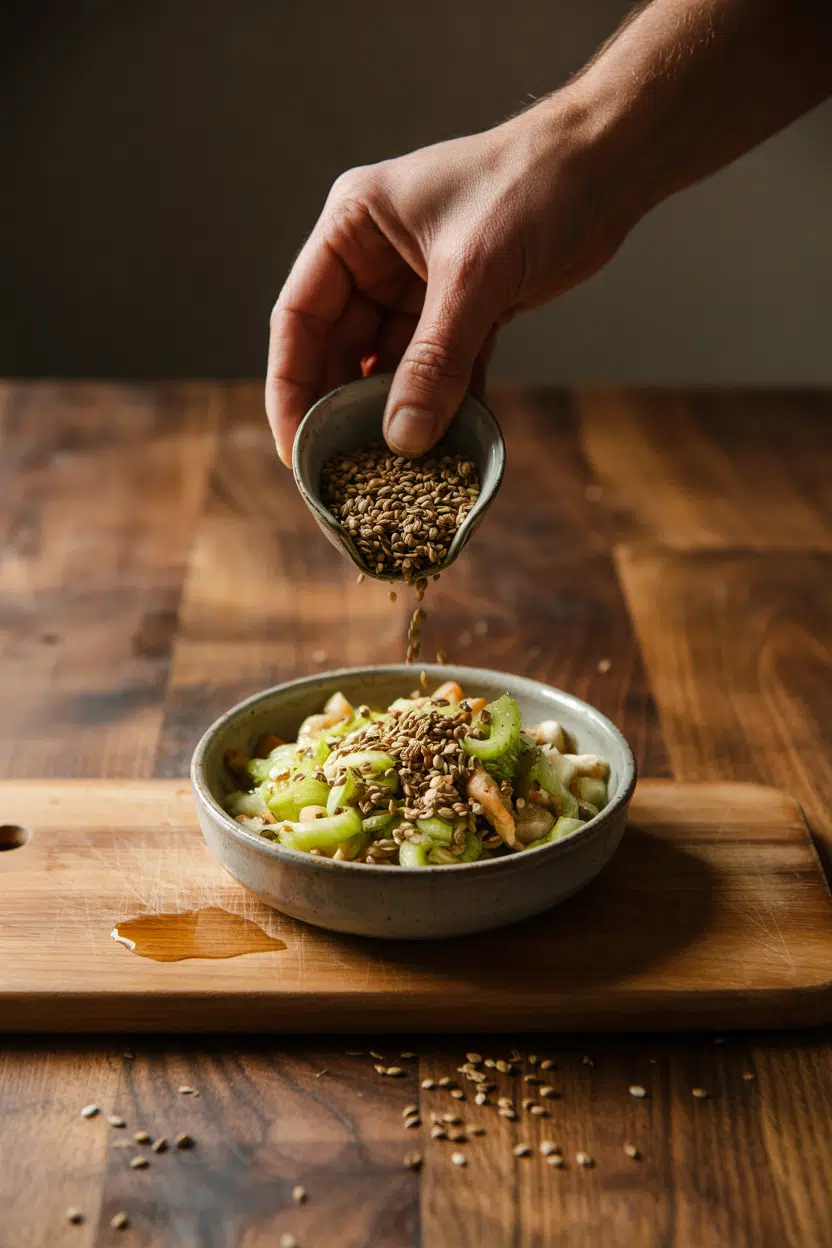
Celery seed tastes like fresh celery stalks taken several steps further - greener, more bitter, and with a resinous edge that fresh celery never quite reaches.
The flavor sits close to lovage, and if you've browsed alternatives to lovage, you'll know celery seed appears on that list for good reason.
Heat softens the bitterness slightly, making slow-braised applications taste rounder than raw uses. In dressings, the ground seed hits immediately and with full force, so less goes further than you'd expect.
How to Use Celery Seed
Celery seed works across a surprisingly wide range of applications, though it earns its keep most in American pickling and condiment traditions. Pickle brines are the classic home - whole seeds infuse dill-style and bread-and-butter pickles with a savory, slightly bitter backbone that complements both vinegar and sugar.
Eastern European recipes use the same logic in sauerkraut and fermented vegetable jars.
In coleslaw and potato salad dressings, ground celery seed dissolves directly into mayonnaise without leaving gritty texture - a technique that a creamy coleslaw dressing recipe uses to deliver raw celery flavor without the crunch of actual celery.
It pairs cleanly with mustard seed, dill, apple cider vinegar, and cucumber, and holds up against bold partners like chili and black pepper.
| Method | Best For | Tip |
|---|---|---|
| 🥗 Ground into dressings | Coleslaw, mayo-based salads, sauces | Use ground; add at the mixing stage for even distribution |
| 🫙 Infused in brine | Dill pickles, bread-and-butter pickles, krauts | Use whole seeds; they won't cloud the brine |
| 🍲 Added to braises | Slow-cooked meats, stocks, bean dishes | Add whole and remove if texture is unwanted |
| 🥂 Stirred into cocktails | Bloody Mary mix, rimming salt blends | Grind finely or use celery salt for even flavor |
Avoid celery seed in delicate floral desserts or fruit-only compotes - the bitter, savory edge clashes hard with those flavor profiles.
Brief toasting in a dry pan wakes the volatile oils before you grind or add whole seeds to a dish.
How to Buy and Store Celery Seed
Buy whole seeds whenever possible - ground celery seed loses its volatile oils faster and offers less control over flavor intensity. Look for small, uniform, brown seeds with a dry, clean aroma and no clumping inside the jar. Sealed opaque containers or tins protect the oils from light degradation.
Storage is straightforward.
Whole seeds go in an airtight container in a cool, dark cupboard and keep well for 3-4 years.
Ground celery seed degrades faster; store it in an opaque jar and refrigerate it to push toward the 12-month end of its 6-12 month window.
For clear guidance on what to look for as seeds age, check for celery seed spoilage signs before using older stock.
Where to Start With Celery Seed
Celery seed is worth keeping on hand if you pickle regularly, make coleslaw from scratch, or season Bloody Mary mixes. Start with whole seeds - they last longer and do the most work in brines and slow-cooked dishes.
If you run out and need a fast swap, celery seed stand-ins cover the most practical options.
For anyone building a spice blend, note that celery salt is not a straight swap - it adds sodium you may not want, and replacements for celery salt help navigate that distinction.
Keep the whole seeds, grind as needed, and use a lighter hand than you think the recipe requires.
Frequently Asked Questions
Yes, with adjustments. Celery seed delivers concentrated flavor but no water content or crunch, so it works in cooked dishes and dressings but won't replace fresh celery as a vegetable. Use roughly ¼ teaspoon of ground seed per medium stalk.
No. Celery salt is a blend of ground celery seed and table salt, typically in a 1:2 or 1:3 ratio. Using one in place of the other changes the sodium level of your dish significantly.
A spice grinder or mortar and pestle both work. Grind in small batches and use immediately - freshly ground celery seed is noticeably more aromatic than pre-ground product that's been sitting.
Whole celery seeds stay potent for 3-4 years in an airtight container away from light and heat. Ground celery seed is best used within 6-12 months before the volatile oils fade.
Yes. Brief dry-toasting warms the volatile oils and makes the flavor more pronounced and slightly nuttier. Keep the heat low - 30 to 60 seconds in a dry pan is enough before the seeds can scorch.



