
Ziti's real strength is structural - those smooth, hollow tubes hold chunky sauces, trap pockets of ricotta, and emerge from the oven with browned edges that no flat pasta can replicate.

While you might reach for a similar shape when making spicy sausage rigatoni skillet at home, ziti has a slightly softer profile that makes it the default choice for baked dishes.
Knowing how the shape works - and what it won't do - helps you use it well every time.
If you're working with dairy components, understanding cooking ricotta perfectly is just as important as picking the right pasta.
Ziti are smooth, straight tube pasta made from durum wheat semolina. They have a mild, wheaty flavor and a firm al dente bite that holds up in baked casseroles and chunky sauces. Best known for baked ziti, they suit Italian-American comfort cooking.
What Is Ziti Pasta?
Ziti are medium-length, straight pasta tubes from the dried semolina family, originating in Southern Italy - particularly Campania and Sicily. Each piece runs about 2-3 cm long with smooth outer walls and open blunt ends on both sides.
Remember it later
Planning to try this recipe soon? Save it for a quick find later!
That open-ended, hollow structure is the defining feature: sauce, cheese, and fat travel inside the tube during baking.
The name comes from the Italian word zito, meaning "bridegroom." Ziti were traditionally served at weddings in Southern Italian cooking, which is why the plural zite still appears on some Italian packaging.
In the United States, the shape became a cornerstone of Italian-American cooking, particularly in baked casseroles.
- 🌾 Dried ziti - the standard form, made from durum wheat semolina, sold in most supermarkets
- Ziti rigati - ridged ziti that grip sauce more aggressively on the exterior
- Whole-wheat ziti - nuttier, denser, with more fiber than standard semolina versions
- Fresh ziti - softer dough, shorter shelf life, less common outside specialty stores
Compared to other tube shapes, ziti sits between the smaller penne and the wider rigatoni in terms of diameter. The smooth walls set it apart from ridged alternatives and give baked dishes a cleaner, less textured surface.
What Does Ziti Pasta Taste Like?
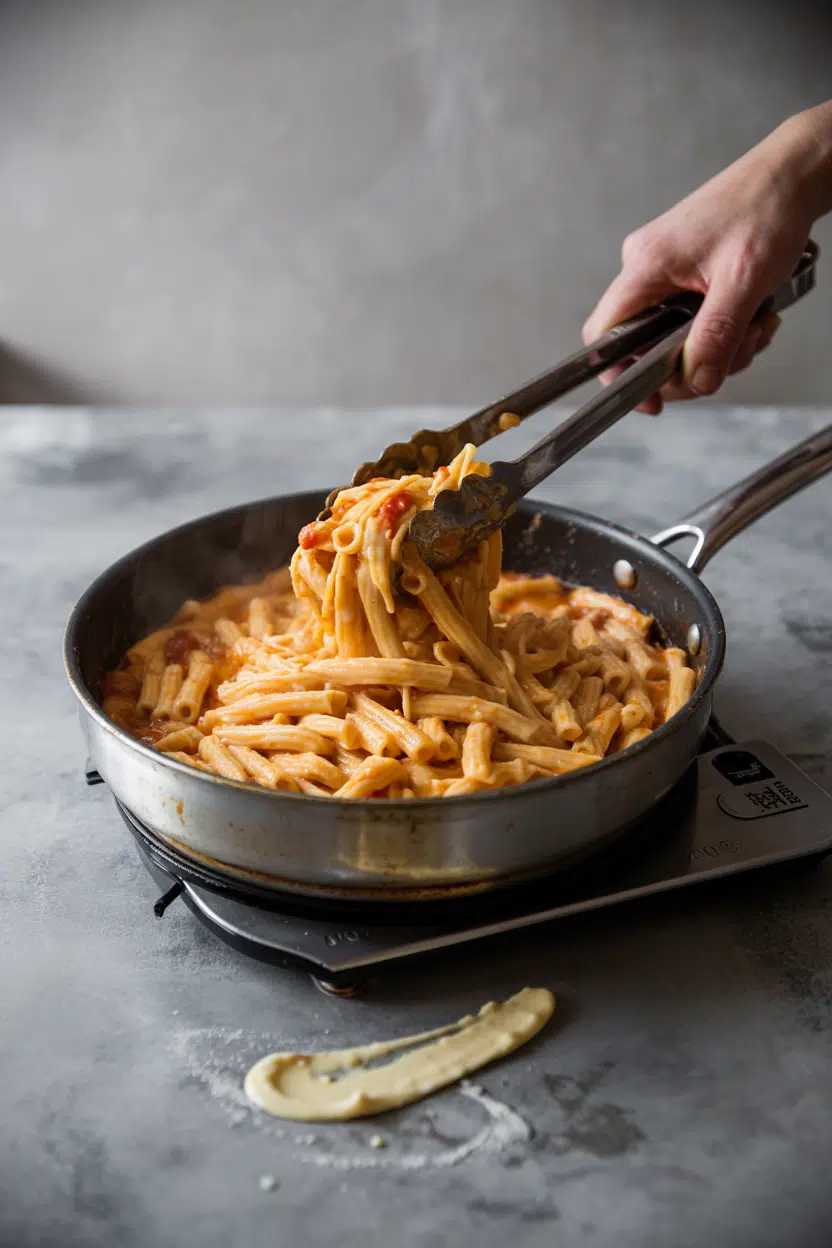
Ziti has a mild, wheaty flavor with a faint nuttiness from the durum wheat semolina. On its own, it's a neutral carrier - designed to let the sauce do the talking rather than compete with it.
That neutrality is a feature, not a flaw.
Cooked to al dente, ziti has a firm bite and a slightly chewy interior that stays intact under heavy sauces and oven heat. Overcooked, it softens quickly and loses that resistance.
In baked dishes, the exterior develops a lightly glossy surface from rendered cheese and sauce, and the edges that touch the pan can caramelize slightly.
Compared to penne, ziti is milder and less assertive - penne's angled cuts and ridges catch more sauce on the surface.
Ziti's smooth walls and blunt ends mean the flavor exchange happens primarily inside the tube, which makes the eating experience slightly different even when both shapes use the same sauce.
How to Use Ziti Pasta
Ziti performs best when the dish involves heat, fat, and time.
Quick weeknight pasta with light olive oil or broth won't showcase the shape - it's built for dishes that cook in the oven or simmer in a thick sauce.
Roasted or baked dishes also benefit from the way mozzarella in grain dishes melts into hollow tubes, creating pockets of cheese throughout the bake.
| Method | Best For | Tip |
|---|---|---|
| 🍳 Boil + Bake | Classic baked ziti, layered casseroles | Parboil 2 minutes under al dente - oven finishes cooking |
| 🥘 Boil + Toss | Chunky ragù, vodka sauce, sausage sauces | Reserve pasta water to loosen thick sauces |
| 🍳 Skillet Finish | Adding crust and texture before baking | Sear boiled ziti in a dry or lightly oiled skillet first |
| 🥗 Chilled Salad | Cold pasta salads with vinaigrette or mayo | Undercook by 1-2 minutes, rinse under cold water immediately |
Ziti pairs naturally with tomato-based ragù, ricotta and mozzarella, Italian sausage, ground beef, roasted eggplant, and cream or vodka sauces.
It also works well with parmesan or pecorino stirred in after cooking.
For a change of pace, the approach used in penne alla vodka in grain dishes translates almost directly to ziti - the tube shape handles the creamy tomato sauce just as well.
If you can't find ziti, a guide to replacements for ziti pasta covers the closest alternatives by shape and wall texture.
How to Buy and Store Ziti Pasta
Look for dry ziti with a uniform pale yellow color and no visible cracks or broken tubes through the packaging. The ingredient label should read 100% durum wheat semolina - this signals the firm texture that holds up in baked dishes.
Avoid bags with excess breakage, which affects both cooking consistency and appearance in the finished dish.
Dry ziti stores easily. Keep unopened bags in a cool, dry pantry - original packaging works fine, or transfer to an airtight container once opened.
Fresh ziti needs refrigeration and should be used within 2-3 days. For long-term planning, the same principles behind how long wheat keeps apply here: moisture and heat are the main enemies.
- Dry, unopened - up to 2 years in a cool pantry
- Dry, opened - 1-2 years in an airtight container away from humidity
- Fresh ziti - 2-3 days refrigerated, tightly wrapped
For cooked ziti, freezing ziti pasta extends its life significantly - baked dishes freeze especially well because the sauce protects the tubes during the freeze-thaw cycle.
Start With Baked Ziti
If you're new to this shape, baked ziti is the entry point - it shows exactly what smooth tubes do that other shapes don't. Parboil, layer with ricotta and tomato sauce, top with mozzarella, and bake until the edges brown.
From there, try a chunky ragù or a skillet finish for texture contrast. The shape rewards patience and heat.
Frequently Asked Questions
No. Both are tube pasta, however ziti has smooth walls, blunt ends, and a milder flavor, while penne has angled cuts and ridged walls that grip sauce on the exterior. They can substitute for each other, but the texture and sauce distribution differ.
Most dry ziti reaches al dente in 8-10 minutes in well-salted boiling water. For baked dishes, pull it 2 minutes early - the oven finishes the cooking and prevents mushy results.
Thick tomato-based sauces, chunky meat ragù, and vodka sauce work best. The tube structure holds these sauces inside each piece. Thin broths and delicate seafood sauces are poor matches - they don't cling or penetrate the hollow center.
Yes, in most recipes the swap is straightforward. Ziti's smooth walls mean slightly less sauce grip on the outside, however the hollow tube compensates by trapping sauce inside. Baked dishes and casseroles work especially well with either shape.
It cooks slightly faster and softens more quickly past al dente. Whole-wheat ziti also has a nuttier, more assertive flavor that shows through mild sauces - pair it with robust tomato or meat sauces rather than cream-based ones.



