
Maple syrup does something no other liquid sweetener quite manages: it carries the full flavor of its source - the sugar maple tree - into every dish it touches.

Where agave nectar stand-ins focus on mild sweetness and neutral flavor, maple syrup brings caramel depth, woody warmth, and a faintly smoky finish that changes the character of a dish.
That's not decorative.
It's functional.
Maple syrup is a tree sugar syrup made by boiling down sugar maple sap. It has a moderate-intensity caramel flavor with woody, buttery notes. Use it to sweeten, glaze, and finish - from oatmeal and vinaigrettes to pork glazes and baked goods.
What Is Maple Syrup?
Maple syrup is a tree sugar syrup made by collecting the watery sap of sugar maples (Acer saccharum) and related species, then boiling it down until roughly 40 liters of raw sap become 1 liter of finished syrup.
Remember it later
Planning to try this recipe soon? Save it for a quick find later!
Sap flows only during early spring, when freezing nights and warm days create the pressure differential that pushes liquid through the tree.
Production is concentrated in Quebec - which accounts for around 70% of global supply - and across New England states. It's also sold as pure maple syrup or sirop d'érable in French-Canadian markets.
Grade matters when buying. The current North American system uses a single "Grade A" designation across four color classes:
- 🟡 Golden, Delicate Taste - lightest color, subtle flavor, best for drizzling fresh
- 🟠 Amber, Rich Taste - the most common; balanced caramel and maple character
- 🟤 Dark, Robust Taste - stronger, more assertive; suits baking and glazing
- ⬛ Very Dark, Strong Taste - harvested late season; intense flavor, often used commercially
Understanding these grades helps you choose the right bottle for the right job - a topic worth exploring if you're also researching alternatives to maple syrup and want to match flavor intensity.
What Does Maple Syrup Taste Like?
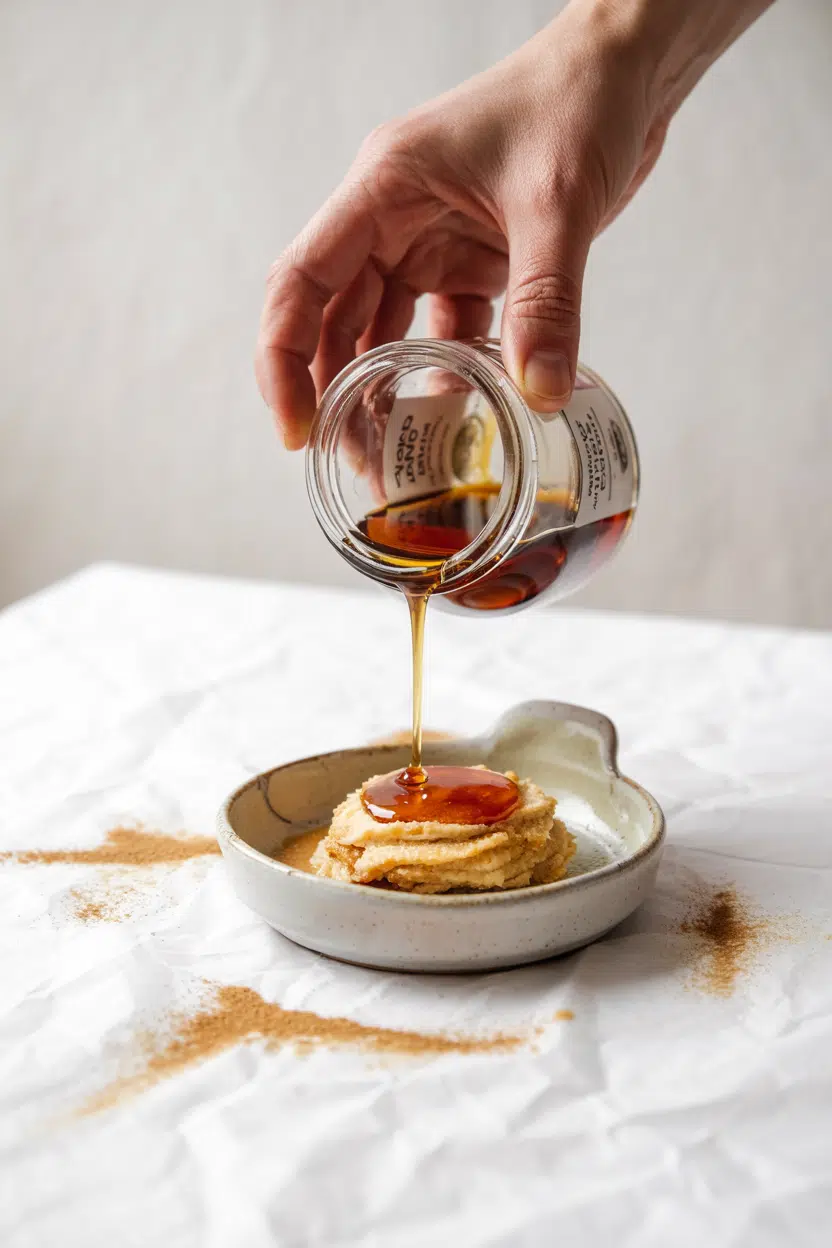
Maple syrup tastes like light caramel with brown-sugar depth and a woody undercurrent that reminds you it came from a tree, not a factory. It's less cloying than corn syrup, and less aggressively sweet than refined sugar dissolved in water.
Heat intensifies the caramel notes noticeably. Reduced into a glaze, the woody undertones concentrate and the syrup takes on a faintly smoky edge.
Darker grades amplify all of this; golden grades stay mild enough that the maple character almost disappears in complex recipes.
How to Use Maple Syrup
Drizzling is the most familiar use, but it's the least interesting one. Maple syrup earns its keep as a working ingredient across a wide range of preparations.
| Method | Best For | Tip |
|---|---|---|
| 🍯 Drizzle/Finish | Pancakes, oatmeal, yogurt, cheese boards | Use golden or amber grade to keep flavor clean |
| 🔥 Reduction/Glaze | Roasted carrots, parsnips, pork, duck | Dark grade stands up to high heat and savory fat |
| 🥐 Folded Into Batter | Cookies, quick breads, muffins | Reduce other liquids slightly - maple syrup adds moisture |
| 🥗 Vinaigrette/Sauce | Salad dressings, mustard-based sauces | Pair with cider vinegar and Dijon for balance |
Maple syrup anchors Québécois comfort cooking - think tourtière glazed with dark syrup or baked beans sweetened with it instead of molasses.
In New England and modern North American bistro cooking, it shows up in duck breast glazes, walnut vinaigrettes, and sweet potato preparations alongside thyme and butter.
It pairs well with bacon and smoked pork, walnuts and pecans, cinnamon and vanilla, and mustard.
Just as the role honeycrisp apple plays in a salad depends on balancing sweet and tart, maple syrup in a dressing works because the woody sweetness offsets sharp vinegar without flattening it.
Avoid pairing it with delicate white fish. The woody notes overpower mild protein rather than complementing it.
How to Buy and Store Maple Syrup
Always check the label first. Any bottle worth buying says "100% pure maple syrup" - nothing else. Skip anything labeled "pancake syrup" or listing high-fructose corn syrup as an ingredient; those are flavored corn syrups, not maple.
Color tells you flavor strength. Lighter amber bottles deliver milder flavor; darker bottles mean more robust, assertive taste.
Both are Grade A - the difference is when in the season the sap was tapped.
For storage:
- Unopened - keep in a cool, dark pantry for up to 2 years
- Opened - refrigerate immediately; stays good for about 1 year
- Unrefrigerated after opening - lasts several months, but check for mold regularly
Mold can grow on the surface of opened syrup left at room temperature. Knowing the maple syrup spoilage signs helps you catch problems early and avoid wasting a good bottle.
Where to Start With Maple Syrup
New to cooking with it? Start with amber grade - it's the most forgiving, with enough maple character to notice without overpowering a dish.
Try it first in a simple vinaigrette or as a glaze on roasted carrots. Both applications are short, controlled, and show you exactly how the caramel and woody notes behave with heat and acid.
From there, dark grade glazes for pork or duck are the natural next step.
Frequently Asked Questions
Not exactly. Sucrose is its main carbohydrate, but maple syrup also contains trace minerals - manganese, zinc, and calcium - that refined sugar lacks. It still has a high sugar content and should be used in moderation.
Producers tap sugar maples in early spring and collect the watery sap that flows from the trees. That sap is boiled down at a roughly 40:1 ratio - 40 liters of sap yields about 1 liter of finished syrup.
All retail maple syrup is Grade A, divided into four color classes: Golden (delicate), Amber (rich), Dark (robust), and Very Dark (strong). Color reflects harvest timing - earlier tapping produces lighter, milder syrup.
It's close, but not identical. Maple syrup has caramelized sugar notes alongside a woody, forest-like undertone that pure caramel doesn't have. That distinction becomes more obvious when you reduce it into a glaze.
Pure maple syrup has a simpler ingredient list and contains trace minerals absent from corn-syrup-based pancake syrups. Both are high in sugar, however, so neither qualifies as a health food - the difference is mostly ingredient quality.



