
Pico de gallo without a serrano pepper is just tomato salad.

That single pepper - small, glossy, tapered - is what makes the difference between something mild and something with real bite.
Cooks across Mexico have relied on it for centuries, reaching for it when a jalapeño would be too soft, too slow, or simply not sharp enough.
It shares shelf space with peppers like alternatives to poblano pepper and replacements for habanero pepper, but the serrano occupies its own lane - hotter than the former, more restrained than the latter.
The serrano pepper is a small, thin-skinned Mexican chili with sharp, clean heat and grassy vegetal flavor. Hotter than a jalapeño, it's used fresh in salsas, raw in ceviche, roasted into sauces, or pickled for tacos. Green serranos are common; red ones are riper and slightly fruitier.
What Is Serrano Pepper?
The serrano pepper (Capsicum annuum) originates from the Sierra Madre mountain range in central Mexico, where it has been cultivated for centuries as a staple fresh chili. Its name comes directly from the Spanish word for "from the mountains."
Remember it later
Planning to try this recipe soon? Save it for a quick find later!
Physically, it's easy to identify: cylindrical and tapered, usually 1-4 inches long, with a smooth, glossy skin that's thinner than a jalapeño's.
Most serranos are harvested green, though left on the plant they ripen to red, orange, or yellow - each stage bringing slight flavor shifts.
It goes by several names depending on region:
- 🌶️ Chile serrano - standard Spanish-language name
- Serrano chile - common U.S. grocery label
- Serrano chile pepper - full descriptor used in recipe writing
Unlike jalapeños, serranos are rarely sold dried or smoked. Their thin skin also means they don't need peeling after roasting - a practical advantage that makes them faster to work with.
If you need a stand-in, a guide to serrano pepper swaps that work covers the closest options by heat and texture.
What Does Serrano Pepper Taste Like?
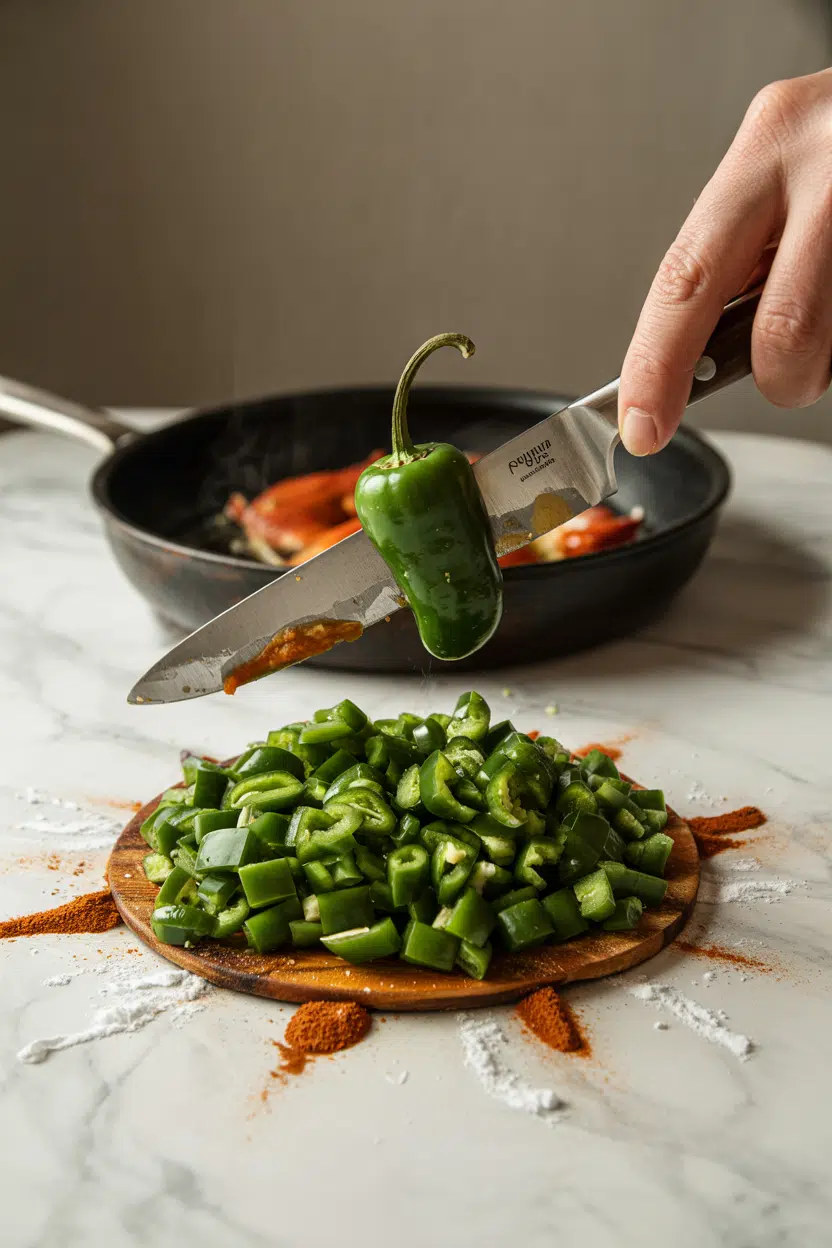
A raw serrano tastes similar to a jalapeño but sharper and more immediate.
The heat hits faster, with less of the slow build you get from a jalapeño, and there's a clean, grassy quality behind the spice that keeps it from tasting one-dimensional.
Green serranos carry the most pronounced vegetal character. Red serranos, ripened fully on the plant, develop a subtle fruitiness that softens the edge slightly without reducing the heat significantly.
Capsaicin concentration is higher in serranos than in jalapeños - typically 10,000-23,000 Scoville Heat Units versus a jalapeño's 2,500-8,000. That gap is noticeable on the palate. If you've been working with hotter peppers, comparing how scotch bonnet pepper in spice blends behaves can give useful reference points for building heat layers.
How to Use Serrano Pepper
Serranos perform across a wide range of preparations, from raw to roasted. Their thin skin and firm flesh make them one of the most adaptable fresh chilies in Mexican and Southwestern cooking.
| Method | Best For | Tip |
|---|---|---|
| 🥗 Raw | Pico de gallo, ceviche, guacamole | Remove seeds for less heat; keep them for full bite |
| 🔥 Roasted | Salsa verde, blended chile sauces | No need to peel - thin skin chars and blends smoothly |
| 🍳 Sautéed | Stir-fries, seared meats, vegetables | Add early for deeper heat, late for brighter punch |
| 🫙 Pickled | Tacos, tortas, sandwiches | Slice thin for escabeche; brine softens heat noticeably |
| 🫒 Infused | Chili oils, spiced vinegars | Halve before infusing to release heat faster |
In Mexican cooking, the serrano is the go-to pepper for fresh salsas and escabeche.
It's finely minced into pico de gallo alongside tomato, onion, cilantro, and lime - and if you want to understand the full structure of that dish, a closer look at pico de gallo in spice blends is worth the read.
Roasted and blended with tomatillos, it anchors a sharper, more assertive salsa verde than you'd get from a jalapeño.
Raw serrano pairs well with cilantro, lime, tomato, avocado, garlic, and onion. Fresh cheeses like queso fresco balance its heat without competing.
Avoid pairing it with delicate cream-based sauces where the sharpness will dominate without adding complexity.
One note: serranos don't need to replace jalapeños cup-for-cup. They're hotter, so use about half the amount if swapping - a guide to replacements for jalapeno pepper covers this substitution in more detail.
How to Buy and Store Serrano Pepper
At the market, skip any pepper with wrinkled skin, soft spots, or dark blotches. Those are signs of age or physical damage, and the heat and flavor degrade along with the texture.
At home, storage is straightforward:
- Whole, unwashed - place in a perforated plastic bag in the crisper drawer; lasts 1-2 weeks
- Sliced or chopped - store in an airtight container in the fridge; use within 3-5 days
- Cooked - refrigerate and use within 3-5 days; flavors intensify slightly as they sit
- Frozen - freeze whole or sliced on a sheet pan, then transfer to a bag; texture softens but heat holds
Wash them only immediately before use. Moisture on the skin accelerates breakdown in the fridge.
For more on timing, seasoning with serrano pepper covers how shelf life affects flavor and when to cut your losses.
Start Fresh, Add Heat Gradually
New to serranos? Start with one pepper, seeds removed, in whatever you're making.
If the heat is right but you want more pepper flavor without extra spice, add a second serrano with seeds discarded.
For cooks already comfortable with jalapeños but curious about stepping up, using making air fryer jalapeño poppers at home as a baseline recipe gives you a direct comparison point for how serrano's sharper heat performs in a cooked application.
Frequently Asked Questions
Serranos range from 10,000 to 23,000 Scoville Heat Units. That places them firmly above jalapeños and well below habaneros. Heat also varies by individual pepper - smaller serranos tend to run hotter.
Yes - consistently. Serranos average three to five times the heat of a jalapeño, and the heat arrives faster and sharper on the palate. Substituting one for the other at equal amounts will noticeably change the dish.
Yes, the seeds are edible. They carry concentrated capsaicin and add significant heat, so removing them is the simplest way to reduce spice level without changing the pepper's flavor profile.
Remove the seeds and inner white membrane - that's where most capsaicin concentrates. Pickling in a vinegar brine also softens the heat substantially while preserving the pepper's texture and flavor.
Red serranos are fully ripe versions of the same pepper. They develop a slight fruitiness that green ones lack, though heat levels remain similar. Most grocery stores stock only green serranos since they're harvested before full ripeness.



