
Preserved lemon does something no squeeze of fresh juice can - it pulls back the sharp brightness of raw citrus and replaces it with a deep, briny, almost savory complexity that holds its shape through hours of slow cooking.

Moroccan cooks have built entire pantry philosophies around a single jar of it, pairing it with couscous swaps that work or stirring the rind into sauces that rely on replacements for olive oil as a base.
It's concentrated, it's salty, and once you understand what it does, you'll reach for it constantly.
Preserved lemon is whole lemon cured in coarse salt and its own juices, producing a softened rind with deeply briny, tangy, umami-adjacent flavor. Use the rind as a concentrated condiment in tagines, dressings, and sauces - not as a fresh citrus substitute.
What Is Preserved Lemon?
Preserved lemon is a salt-preserved citrus condiment made by packing whole lemons - or lemon quarters - into coarse salt and sealing them in their own juice, sometimes with added water, olive oil, or spices like cinnamon and bay.
Remember it later
Planning to try this recipe soon? Save it for a quick find later!
The cure takes anywhere from three weeks to several months, during which the rind softens completely and the sharp citrus oils mellow into something rounded and complex.
It originates in North Africa, where it's been a pantry staple in Moroccan cooking for centuries, and appears across Mediterranean and Middle Eastern cuisines under various names - salt-preserved lemon, Moroccan preserved lemon, or occasionally (and incorrectly) pickled lemon.
That last label causes confusion, because preserved lemon is not vinegar-pickled.
There are two broad types worth knowing:
- 🍋 Whole preserved lemons - the traditional Moroccan style, cured with just salt and lemon juice, sometimes with spices
- 🫙 Commercial quick-cure jars - packed in a saltier brine, sometimes with citric acid added, and processed for a faster, more uniform result
We use only the rind in most recipes. The pulp is edible but intensely salty - it's occasionally blended into sauces or discarded entirely.
What Does Preserved Lemon Taste Like?
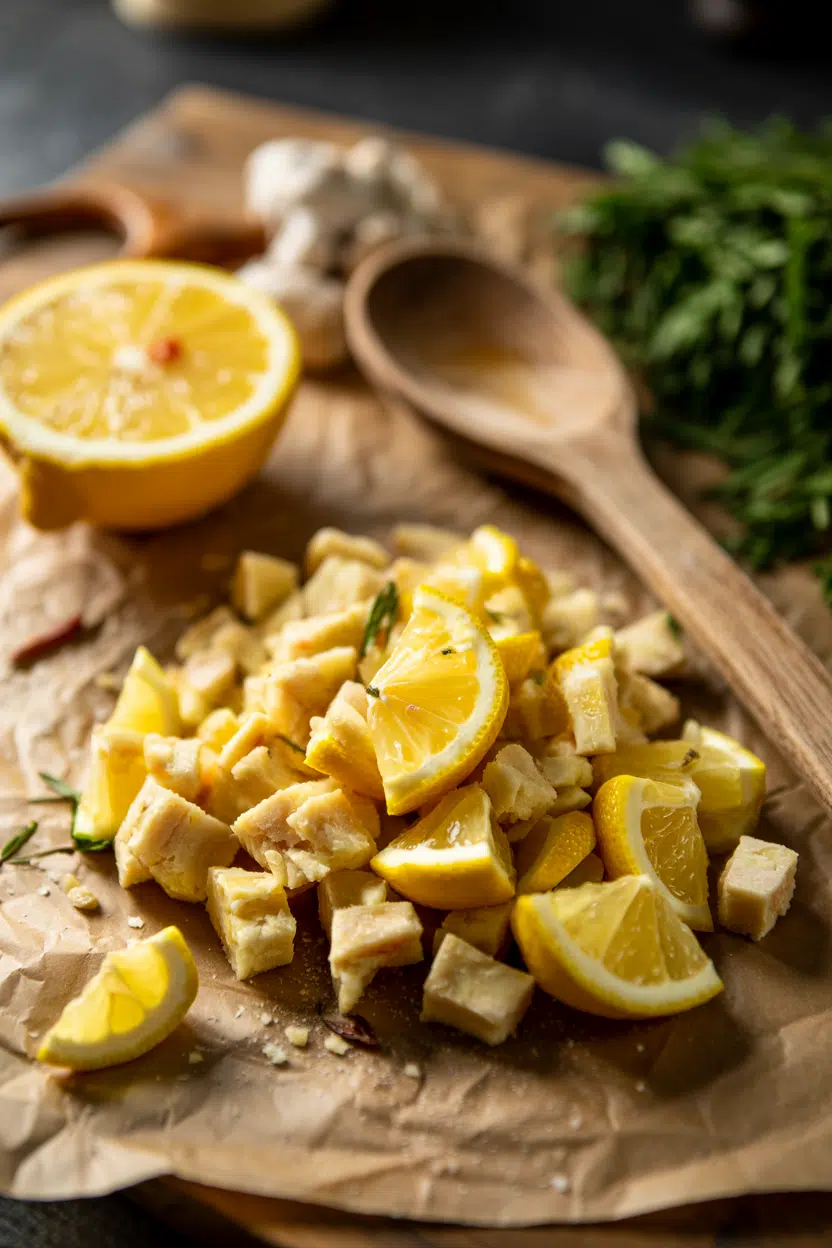
The flavor sits closest to lemon zest crossed with a brined olive - citrus-forward but salty, mellow rather than sharp, with a quiet umami-adjacent bitterness from the aged peel. Fresh lemon hits you immediately and fades.
Preserved lemon lingers.
Heat changes it further.
Added early to a slow braise, the rind dissolves into the sauce and contributes mostly salinity and a low background citrus note.
Added near the end as a garnish, it retains its bright preserved oil aroma and a more distinct lemony bite.
That difference in timing is one of the key decisions in cooking with it well.
How to Use Preserved Lemon
Rinse the rind first. A quick rinse under cold water removes excess surface salt without stripping the flavor. Then scrape or discard the pulp - unless you're blending the whole thing into a sauce - and finely chop, mince, or slice the rind depending on the application.
| Method | Best For | Tip |
|---|---|---|
| 🫕 Braised whole | Tagines, lamb stews, slow chicken braises | Add early - rind softens fully and melds into sauce |
| 🥗 Finely minced raw | Vinaigrettes, yogurt sauces, couscous, rice pilaf | Chop as fine as possible so it distributes evenly |
| 🍽️ Thin strips as garnish | Grilled fish, roasted chicken, braised greens | Add at the end - preserves the citrus oil aroma |
| 🧈 Blended into spreads | Compound butter, preserved lemon aioli, labneh dip | Blend pulp and rind together for a smoother result |
In Moroccan cooking, preserved lemon and olives appear together in the same braise so often they function almost as a unit - the brine of each reinforcing the other.
Outside that tradition, the rind works wherever you'd want concentrated citrus salt: whisked into a vinaigrette for grilled vegetables, folded into couscous with cumin and coriander, or stirred into yogurt alongside labneh.
Pairing it with cumin, coriander, and earthy root vegetables brings out its savory side. Pairing it with chicken fat, butter, or olive oil brings out the citrus oils.
Both directions work; they just produce different results.
If a recipe calls for it and you're out, there are a few preserved lemon swaps that work - though none replicate the fermented depth exactly.
How to Buy and Store Preserved Lemon
At the store, look for jars where the rinds appear glossy, pale yellow, and plump - not shriveled or discolored. A cloudy brine is fine and normal.
A filmy, off-smelling brine is not; that's a sign of spoilage.
Storage is straightforward once you know the rules:
- Unopened jars - store in a cool, dark pantry for up to 24 months
- Opened jars - refrigerate with rinds fully submerged in brine; lasts 6-12 months
- After removing pieces - press remaining rinds back under the brine and reseal tightly
Knowing the preserved lemon spoilage signs is worth a quick read before you work through an older jar - the indicators are specific and easy to check.
Where to Start With Preserved Lemon
New to it? Start with the rind in a vinaigrette. Mince a small strip finely, whisk it into olive oil and a little lemon juice, and taste the result before using it on anything - that's the fastest way to understand its flavor range.
From there, try it in a slow-cooked dish. A chicken tagine with apricots recipe puts the preserved lemon in the context it was designed for, where braise time and sweet fruit balance the salt.
Use less than you think you need. One-quarter of a preserved lemon, properly rinsed and minced, is enough to season a dish for four.
Frequently Asked Questions
Not exactly. The curing process is lacto-fermentation driven by salt, not active yeast cultures. Some microbial activity does occur, which contributes to the mellow, rounded depth - but preserved lemons are more accurately described as salt-cured than fermented.
Yes - the rind is the part most recipes call for. Rinse it briefly under cold water, scrape away the pulp if desired, and chop or slice as needed. The pulp is edible too but intensely salty, so it's usually blended into sauces rather than eaten directly.
Six to twelve months, refrigerated with rinds kept submerged in brine. The brine acts as a preservative, so the key is keeping the jar sealed and the rinds fully covered after each use.
A combination of lemon zest, a small amount of lemon juice, and a pinch of salt gets closest in a pinch. No single substitute replicates the fermented depth, but this combination covers the citrus-salt balance well enough for most cooked dishes.
A quick rinse is recommended to remove excess surface salt, especially in dishes where you control seasoning carefully. It won't wash away the core flavor - the brine has already penetrated the rind fully during curing.



