
Custard powder does one thing no other pantry powder quite replicates: it turns plain hot milk into a pourable, silky custard in under five minutes, no eggs required.

That speed and reliability explain why it has stayed on British kitchen shelves since Alfred Bird invented it in 1837, and why it became equally essential in South Asian home baking.
Understanding custard's shelf life and the dairy components you mix it with - milk, cream - matters too, since cream spoilage signs can affect the finished dish even when the powder itself is fine.
Custard powder is a cornflour-based blend of starch, sugar, and vanilla flavoring that thickens milk into a smooth, egg-free custard. Mild, sweet, and fast to prepare, it suits poured desserts, trifle layers, baked fillings, and quick puddings across British and South Asian cooking.
What Is Custard Powder?
Custard powder is a dry powdered blend built around cornflour (cornstarch) as its primary thickener, with sugar, vanilla or vanillin flavoring, and an annatto- or beta-carotene-based yellow color.
Remember it later
Planning to try this recipe soon? Save it for a quick find later!
Alfred Bird formulated the original version in Birmingham in 1837, specifically to create a custard his egg-allergic wife could eat - making it one of the earliest commercially invented food products in British history.
The powder sits in the category of dairy-free custard bases, meaning the powder itself contains no milk until you add it.
It goes by several names depending on the market: instant custard mix, vanilla custard powder, or simply custard mix on South Asian packaging.
Beyond Britain, it became a staple ingredient in Indian mithai-making and in Australian and New Zealand home baking, where it often replaces flour in shortbread-style biscuits.
There are a few subtypes worth knowing:
- 🟡 Standard custard powder - the classic Bird's-style blend; requires hot milk and stirring
- ⚡ Instant custard powder - pre-gelatinized starch that sets with cold or lukewarm milk
- 🌿 Natural-flavor varieties - use real vanilla extract instead of vanillin; slightly more complex aroma
- 🌾 Gluten-free labeled versions - cornflour-based but certified to avoid cross-contamination
What Does Custard Powder Taste Like?
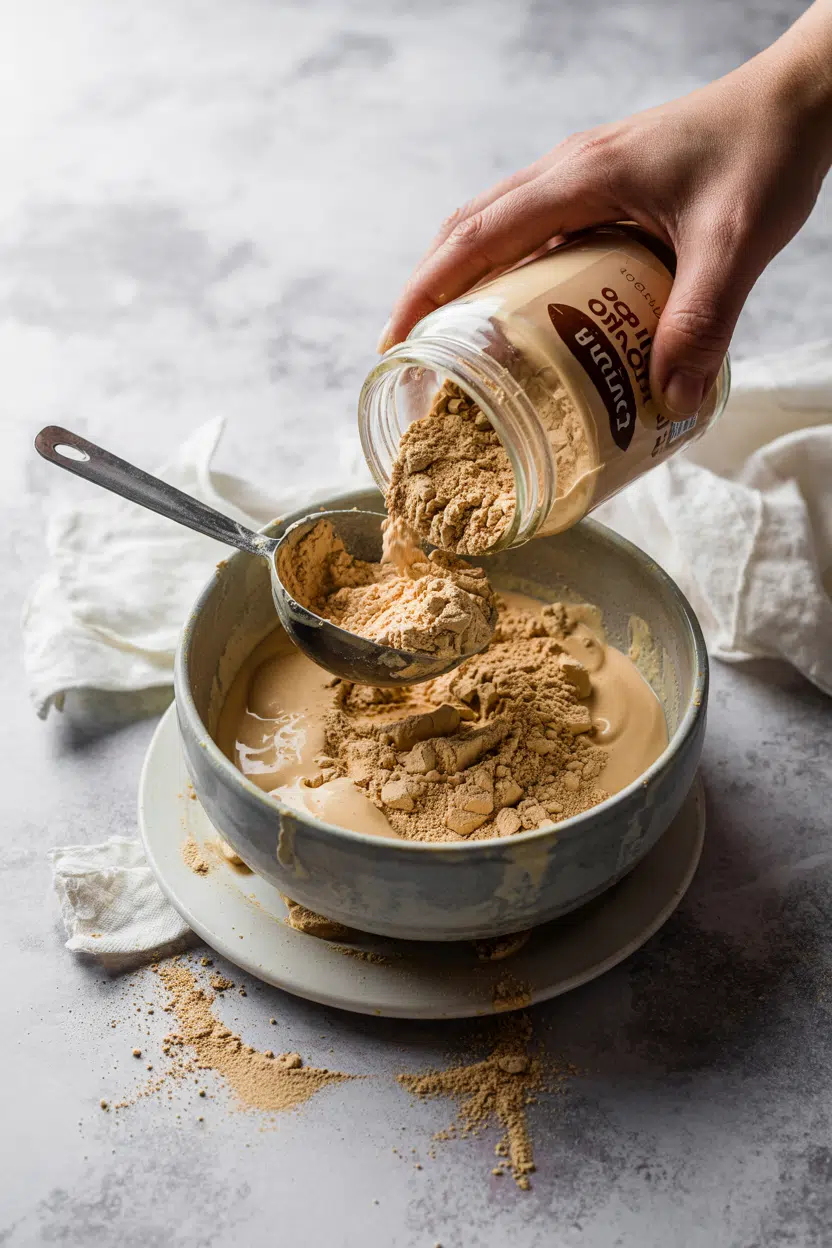
Custard powder on its own is gently sweet with a starchy, neutral base and a warm vanilla aromatic note that comes almost entirely from vanillin rather than real egg yolk.
Once cooked into milk, that starchy quality rounds out into something closer to a light vanilla pudding.
Compared to a true crème anglaise made with egg yolks, custard powder custard tastes noticeably less rich - the depth that fat-soluble egg compounds provide simply isn't there.
It's closer to a light pastry cream: smooth, mildly sweet, and reliable, without the custardy complexity that egg coagulation produces.
Chilling it firms the texture further, shifting it toward a set cream rather than a sauce.
How to Use Custard Powder
Custard powder's most common role is as a poured warm sauce over steamed puddings, bread pudding, and fruit crumbles - the kind of dessert where warm, flowing custard is the point.
For this, you mix the powder with a little cold milk to form a paste, then stir the paste into simmering milk until it thickens, which takes roughly two to three minutes.
Chilled, it becomes a setting medium for layered desserts.
A classic British trifle relies on a cooled custard layer to separate the soaked sponge from the whipped cream on top, and a strawberry shortcake trifles recipe shows exactly how that layering works when custard is the structural element.
The pairings that work best are those that contrast the mild vanilla base: fresh raspberries and strawberries cut through the sweetness, while caramel or butterscotch sauces deepen it.
| Method | Best For | Tip |
|---|---|---|
| 🍳 Stir into hot milk | Poured custard sauce over puddings | Make a cold paste first to prevent lumps |
| ❄️ Chill-set | Trifle layers, custard slice fillings | Press cling wrap to the surface to prevent skin |
| 🧁 Baked into dough | Shortbread biscuits, custard tarts | Replaces a portion of flour; reduces by about 20% |
| 🥄 Folded into cream | Quick custard mousse or trifle topping | Whisk into softly whipped cream before it stiffens |
In South Asian baking, custard powder flavors milk-based sweets and fillings, often combined with condensed milk for a firmer set.
Knowing what pairs with bread pudding also points to custard powder's natural role - it's frequently the warm sauce answer on that list.
If you don't have custard powder on hand, replacements for custard powder range from vanilla pudding mix to a cornstarch-and-vanilla combination.
How to Buy and Store Custard Powder
Look for tins or packets with a uniform pale yellow color and no visible clumping - clumps signal moisture exposure, which degrades both the starch and the flavor.
The ingredient list should lead with cornflour or cornstarch; avoid any product with an unusually strong artificial perfume, which often means low-quality vanillin.
Once opened, transfer the powder to an airtight container rather than leaving it in the original tin, which often doesn't reseal tightly.
Pantry storage in a cool, dry spot is ideal; the fridge is unnecessary and risks condensation.
Proper guidance on keeping custard powder fresh covers the full timeline, and similarly, storing milk correctly matters since milk quality affects the final custard even when the powder is fine.
- Unopened shelf life - 12 to 24 months from manufacture date
- Opened shelf life - 6 to 12 months in an airtight container
- Discard if - the powder smells off, has clumps that don't break up, or has a grey tint
Where to Start With Custard Powder
If you're new to custard powder, begin with a poured sauce: three tablespoons of powder, one tablespoon of sugar, and 500ml of full-fat milk produces a reliable, smooth custard on a first attempt.
Once you're confident there, try it as a baked ingredient - substituting 20-25% of the flour in shortbread with custard powder gives a noticeably softer, more fragrant biscuit.
For those already comfortable with both, the alternatives to cornstarch page is useful when you need to adjust a custard powder recipe that calls for extra thickening.
Frequently Asked Questions
No. Custard powder is a dry blend of cornflour, sugar, and flavoring - it requires milk and heat to become custard. The finished liquid is the custard; the powder is just the starting ingredient.
Not directly. Custard powder can replace eggs as a thickener in sauces and fillings, but it won't replicate egg coagulation, binding, or lift in baked goods. It works best as a flavor-and-thicken substitute, not a structural one.
Standard custard powder does - raw cornflour has a chalky, starchy taste that only disappears once heated. Instant custard powder varieties use pre-gelatinized starch and can set with warm or cold milk without full cooking.
Most standard custard powders are naturally gluten-free since cornflour contains no gluten. However, cross-contamination during manufacturing is possible, so look for a certified gluten-free label if you have coeliac disease.
The terms are often used interchangeably, but custard mix sometimes includes added milk solids or sugar pre-blended for a simpler one-step preparation. Check the label - pure custard powder typically just needs milk, while a mix may only need water.



