
Crack a pod of nigella seeds in your palm and the smell hits before the taste does - warm, herbal, faintly onion-like, with something almost baked underneath.
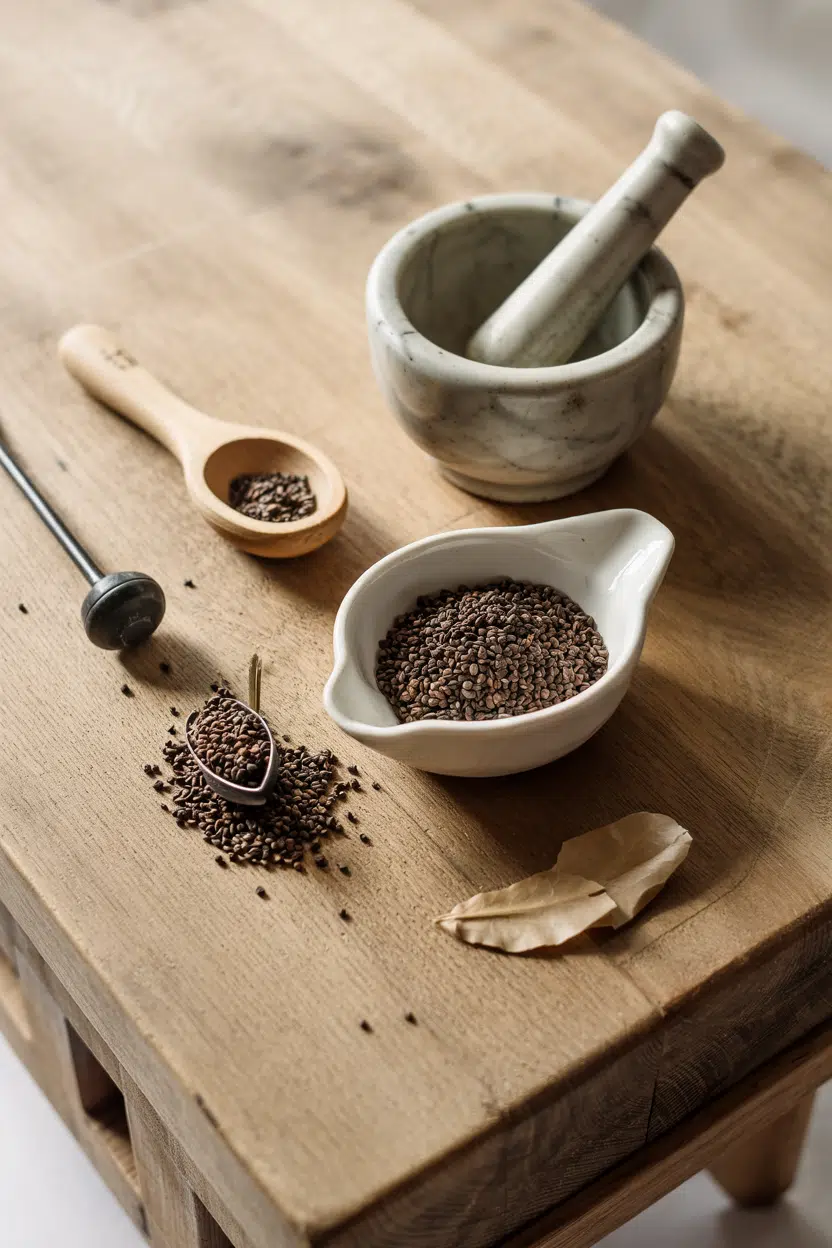
That aroma is the first clue to how this small matte-black seed punches above its size in the kitchen.
It shares a shelf with cumin in cooking but plays a different game entirely, bringing a sharper, slightly bitter edge that cumin never quite delivers.
Even ghee-rich dishes like the ones behind ghee rice's shelf life debates show how seriously South Asian cooking treats its seeds - and nigella is no exception.
Nigella seed - also called kalonji - is a small matte-black spice seed with a sharp onion-herb bite and mild peppery bitterness. Used whole in breads, tempering, and spice blends, it's a staple in North Indian, Pakistani, and Middle Eastern kitchens.
What Is Nigella Seed?
Nigella seed comes from Nigella sativa, a flowering plant native to Southwest Asia and the eastern Mediterranean. The seeds are tiny - roughly 1-2mm - tear-drop shaped, matte-black, and angular, with a surface that looks almost faceted under close inspection.
Remember it later
Planning to try this recipe soon? Save it for a quick find later!
The plant belongs to the buttercup family (Ranunculaceae), which surprises most people expecting a relation to cumin or pepper. Despite that, the seed has accumulated a long list of common names over centuries of trade routes and regional use.
Known across South Asia as kalonji, it also goes by black caraway, black cumin, and Roman coriander in various markets.
The black cumin label is the most persistently confusing - it's a different plant entirely from true black cumin (Bunium bulbocastanum), so checking botanical names when buying matters.
Two forms exist in most kitchens: whole seeds, used for tempering, breads, and finishing; and lightly crushed or ground, used in spice blends. Whole is the standard - grinding is typically done just before use.
- 🌿 Botanical name - Nigella sativa, unrelated to cumin or caraway despite shared common names
- 📍 Regional names - kalonji (India/Pakistan), habbatus sauda (Arabic), çörek otu (Turkish)
- 🔬 Active compound - thymoquinone, found in the seed's volatile oil, drives much of its aroma
What Does Nigella Seed Taste Like?
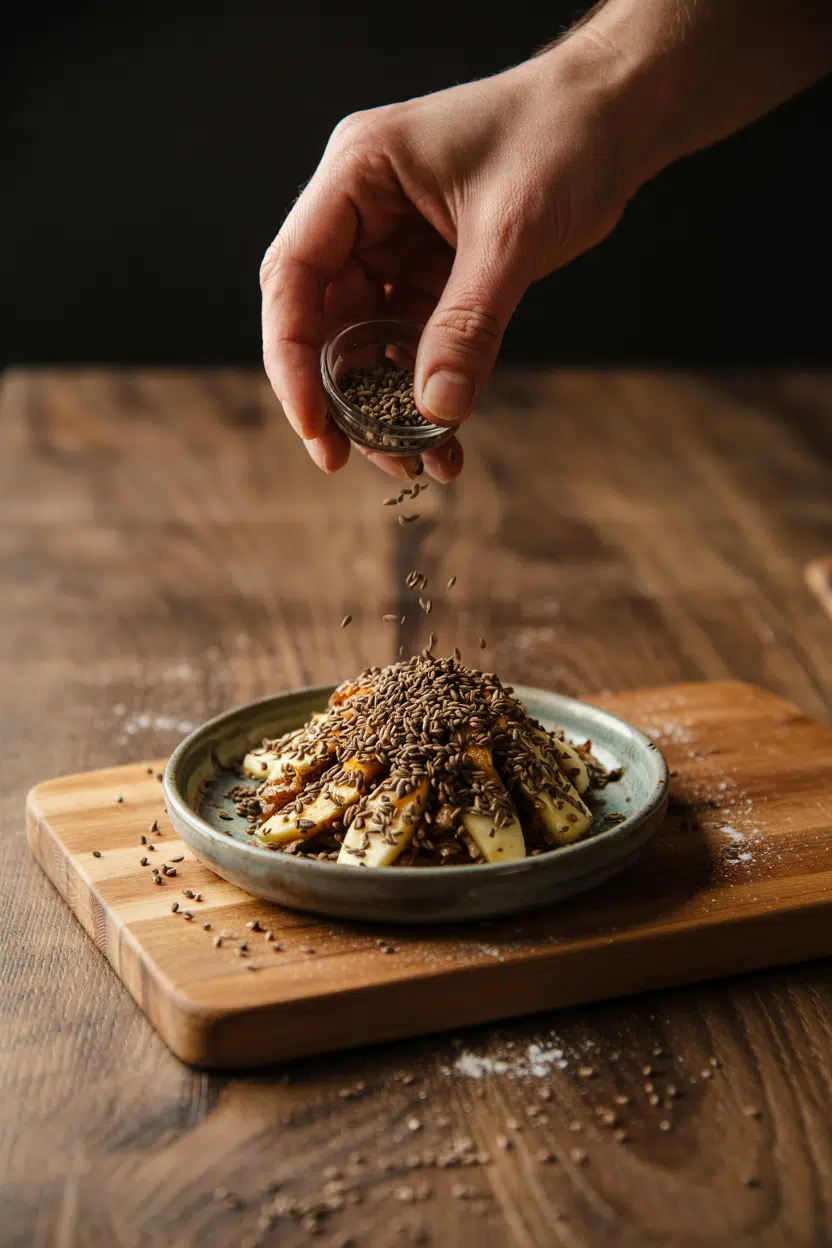
The closest single-ingredient comparison is a cross between raw onion, dried oregano, and a mild black pepper - sharp and herbal up front, with a slow, slightly bitter finish.
That combination is unusual enough that nigella has no true single-seed equivalent.
Heat changes everything. Raw seeds have a quieter, greener edge - pleasant but restrained.
Toasting or dropping them into hot ghee opens the volatile oils and turns that restrained note into something warmer, rounder, and more insistent.
The bitterness stays mild throughout cooking, rarely becoming harsh unless the seeds are burnt. That balance is what makes them so dependable in both bread doughs and oil-based tempering.
How to Use Nigella Seed
Nigella seed works in two fundamental modes: surface application and fat-based tempering. Both extract different qualities from the same seed.
On bread surfaces - naan, pita, Turkish çörek, Bengali shobji ruti - the seeds toast in oven heat and release their oils directly onto the dough crust. This is one of the most efficient ways to use them.
No prep needed, no grinding.
| Method | Best For | Tip |
|---|---|---|
| 🍞 Baked on dough | Naan, flatbreads, savory pastries | Press lightly into surface so seeds don't fall off |
| 🔥 Tempering in fat | Dals, curries, vegetable stir-fries | Use medium heat; crackle for 30-45 seconds max |
| 🥗 Added raw | Raitas, yogurt sauces, pickles | Add just before serving to keep crunch intact |
| 🧂 Ground into blends | Panch phoron, garam masala variants | Crush lightly - full grinding mutes the onion top-note |
In Bengali cooking, nigella is one of the five seeds in panch phoron, tempered whole in mustard oil before vegetables or fish are added.
That tadka method - crackling seeds in hot fat - is the backbone of how this spice integrates into North Indian and Pakistani dals.
Pairings worth knowing: eggplant and potatoes absorb the oniony bitterness particularly well; plain yogurt softens the sharp edge and makes nigella approachable as a finishing seed. Cumin and coriander both work alongside it without competing.
If a recipe calls for an onion-forward spice and you're out, the guide to alternatives to nigella seed covers the closest swaps.
Avoid pairing nigella with overtly sweet desserts or floral teas - the pungency clashes rather than contrasts.
How to Buy and Store Nigella Seed
Good nigella seeds are uniformly matte-black and tear-shaped, with no pale or grey seeds mixed in. Pale coloring signals age, exposure, or adulteration. Smell before buying when possible - fresh seeds have an immediate warm, herbal scent even before toasting.
Skip bulk open bins, where seeds sit exposed to air and light. Sealed glass jars or foil pouches from dedicated spice shops are the reliable choice.
Once home, store in an airtight container away from direct heat and sunlight. Whole seeds hold their aroma for 6-12 months under pantry conditions.
Toasted or ground seeds fade faster - use within 2-3 months. For long-term storage, freezing nigella seed preserves volatile oils well past the pantry window.
Where to Start With Nigella Seed
Nigella rewards a narrow entry point before you branch out. Start with bread - press a pinch onto naan or homemade flatbread dough before baking.
No technique needed, and the result is immediate.
If swapping out naan bread is already on your radar, adding nigella to the replacement dough still works.
Once you're comfortable with the flavor, move to tempering: a few seeds crackled in ghee before adding onions to a dal changes the base note of the whole dish.
From there, raitas and pickles are natural next steps - no heat, just crunch and contrast.
Frequently Asked Questions
No. Nigella seed is Nigella sativa; true black cumin is Bunium bulbocastanum, a different plant entirely. The shared name persists because both seeds are small and dark, but their flavor profiles are distinct - nigella has that onion-herb edge that black cumin lacks.
Yes, raw nigella seeds are safe and commonly eaten that way in raitas, yogurt sauces, and sprinkled over salads. The flavor is milder uncooked - the sharp onion-herb note sharpens noticeably once heat is applied.
Use a dry pan over medium-low heat and keep the seeds moving for 60-90 seconds. Pull the pan as soon as they become fragrant - nigella burns quickly and turns bitter well before it shows visual browning.
Kalonji appears in Bengali panch phoron spice blends, North Indian achar (pickles), naan bread, and Pakistani dals tempered in ghee. Middle Eastern and North African recipes also use it on savory pastries and seed-crusted flatbreads.
Nigella seeds contain unsaturated fats, dietary fiber, iron, and calcium, plus thymoquinone - a bioactive compound in the seed's volatile oil. Culinary amounts are small, so nutritional impact is modest compared to traditional medicinal doses.



