You spot a small jar of mustard seeds on the spice aisle and wonder which color to grab - yellow, brown, or black - and whether whole seeds will actually do anything useful in your cooking.
Each type behaves differently once heat or liquid gets involved, and that gap matters when you're deciding between a dal temper and a homemade condiment.
If your recipe calls for prepared condiment rather than seed, our guide to alternatives to dijon mustard covers that ground, and if the leaves are what you need, the mustard green swaps that work page is the better starting point.
This article is about the seeds themselves.
Mustard seed is a seed spice used whole, cracked, or ground. It ranges from mildly sharp to intensely pungent depending on color and preparation. Use it in tempering oils, pickling brines, dry rubs, and homemade mustard condiments.
What Is Mustard Seed?
Mustard seed comes from annual plants in two closely related genera - Sinapis and Brassica - and has been cultivated across the Mediterranean and South Asia for thousands of years.
Remember it later
Planning to try this recipe soon? Save it for a quick find later!
It sits at a useful crossroads between oilseed and spice, since the same seed pressed yields mustard oil and crushed yields the base for condiments.
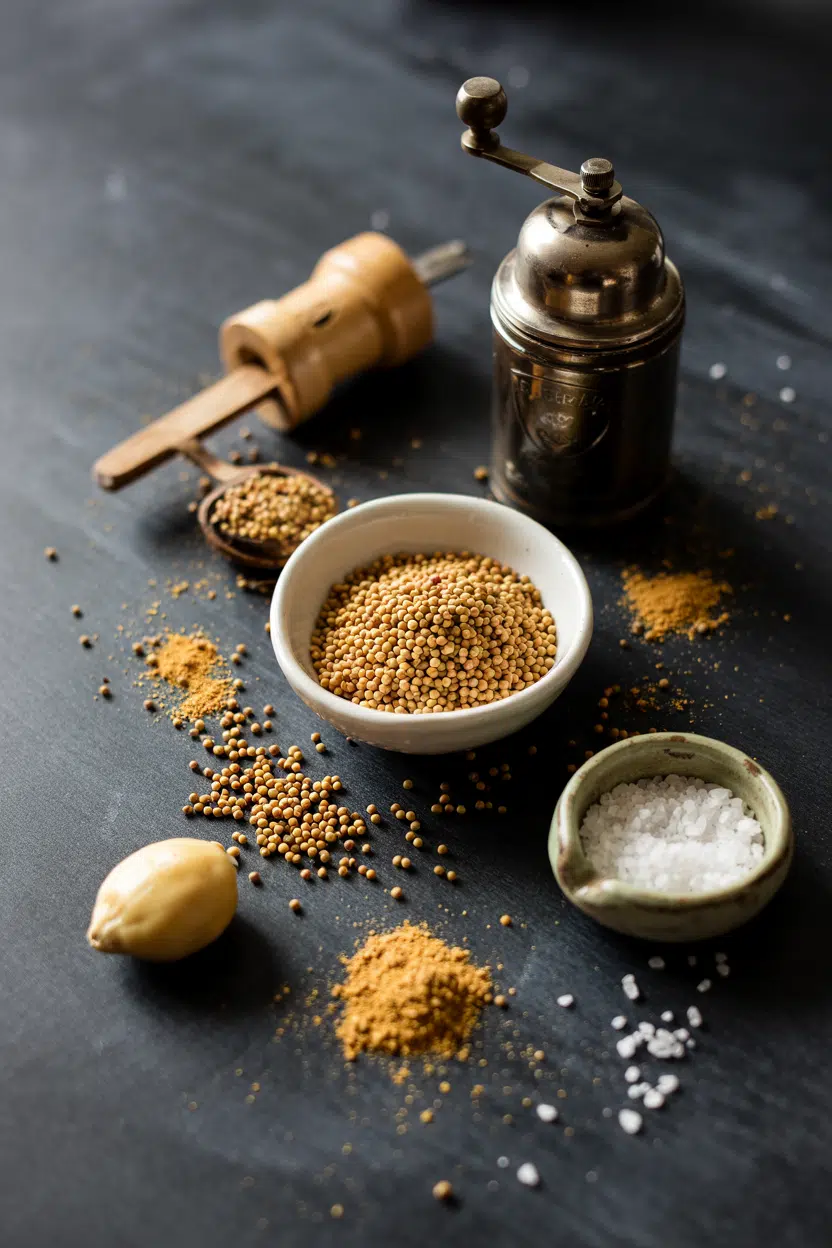
Three main varieties dominate the spice world. Yellow mustard seed (Sinapis alba) is the mildest and most common in North American and European condiment production. Brown mustard seed (Brassica juncea) carries more heat and is central to South Asian cooking -
particularly Bengali and Punjabi cuisines. Black mustard seed (Brassica nigra) is the sharpest, though it has largely been replaced commercially by brown seed because the plant doesn't mechanically harvest as easily.
Beyond the seed itself, the plant produces mustard greens and mustard oil, making the entire plant economically significant across cultures.
- 🟡 Yellow (Sinapis alba) - Mild, straw-colored; standard in American yellow mustard and pickling blends
- 🟤 Brown (Brassica juncea) - Medium-hot; used in Dijon-style mustards and Indian tadka
- ⚫ Black (Brassica nigra) - Sharpest variety; widely used historically, now rarer commercially
What Does Mustard Seed Taste Like?

Raw whole seeds are almost inert on the tongue - hard, faintly bitter, with little aroma. The real character only appears when enzymes inside the seed are activated by crushing, grinding, or contact with liquid.
Once activated, the sharpness resembles horseradish or wasabi: fast-hitting, sinus-clearing heat that fades relatively quickly.
Add acid - vinegar or wine - and that heat stabilizes into the rounded sharpness of a prepared mustard.
Skip the acid, and the heat is sharper but also more fleeting.
Toasting dry in a pan takes the flavor in a completely different direction: the pungency softens, and a nutty, almost sesame-like warmth comes forward instead.
How to Use Mustard Seed
Indian cooking relies on tempering - dropping brown or black mustard seeds into hot oil (a technique called tadka) and waiting for them to pop and crackle before adding other ingredients.
That popping signals the seeds have released their volatile compounds into the fat, flavoring the entire dish. Dals, potato sabzis, and chutneys all start this way.
Outside South Asia, ground mustard seed mixed with vinegar forms the base of nearly every prepared mustard, from a sharp Dijon to a coarse-grain country mustard.
The ratio of seed to acid and the temperature at which you grind determines the final heat level.
If you run short mid-recipe, knowing your mustard seed stand-ins keeps the dish on track, and a separate guide on swapping out ground mustard is worth bookmarking for condiment-based recipes.
Whole seeds add textural bite to pickling brines, sausages, and charcuterie. Crack them coarsely and mix with flaky salt for a finishing sprinkle on roasted carrots or parsnips.
Powdered mustard seed works well in dry rubs for pork and beef, where it helps form a crust during high-heat roasting.
| Method | Best For | Tip |
|---|---|---|
| 🫕 Bloomed in oil | Dal, vegetable dishes, chutneys | Wait for the pop - it signals the flavor has released |
| 🍳 Toasted dry | Spice blends, finishing sprinkle | Low heat only; seeds burn fast and turn bitter |
| 🥣 Ground with liquid | Prepared mustards, marinades, sauces | Use cold liquid for maximum heat; vinegar stabilizes it |
| 🫙 Whole in brine | Pickles, sausages, charcuterie | Black seeds hold up better in long brines than yellow |
Mustard pairs naturally with vinegar, pork, honey, and root vegetables. In spice blends, cumin and fenugreek are frequent companions.
Avoid adding whole seeds to delicate fruit salads - the sharpness once activated clashes with mild fruit.
How to Buy and Store Mustard Seed
Buy seeds that are uniformly colored - bright yellow, deep brown, or near-black depending on variety - with no visible moisture clumping or debris. Smell the jar if the store allows it; fresh seeds carry a sharp, clean bite, not a stale or dusty smell.
Sealed glass jars or airtight tin packaging keeps moisture out better than loosely sealed sacks.
Storage conditions split by form:
- 🫙 Whole seeds - Airtight container, cool dark pantry; stays viable for 1-3 years
- 🥄 Ground mustard powder - Pantry or fridge; best within 3-6 months before volatile heat compounds fade
- 🧴 Prepared mustard - Refrigerate after opening; good for 6-12 months, though heat softens over time
The question of freezing mustard seed comes up for bulk buyers - whole seeds tolerate freezing well without meaningful flavor loss.
If a recipe calls for mustard oil rather than seed, our page on replacements for mustard oil lists workable alternatives.
Where to Start With Mustard Seed
New to the spice? Start with yellow seeds and a simple pickle brine - low stakes, clear results.
Once you've seen how toasting changes the flavor, move to tempering brown seeds in oil for a dal. From there, grinding with vinegar for a homemade condiment is a natural next step.
Keep whole seeds in the pantry as your default. Ground mustard powder is worth stocking separately for dry rubs and quick sauces where texture isn't needed.
Frequently Asked Questions
Yes, but only when activated. Whole raw seeds have almost no heat until crushed or mixed with liquid. Brown and black varieties are significantly hotter than yellow once ground.
Yellow seeds (Sinapis alba) are milder and form the base of American-style mustard. Brown seeds (Brassica juncea) carry more heat and are preferred in Dijon-style mustards and Indian tempering.
Whole seeds work well in pickling brines, tempering oil, and sausages - no grinding needed. Grinding is only necessary when you want the heat to fully integrate into a sauce, paste, or condiment.
Brown or black seeds are dropped into hot oil at the start of cooking in a technique called tadka (tempering). The seeds pop and infuse the fat with flavor before vegetables, lentils, or spices are added.
Yes, mustard seeds are naturally gluten-free. However, mustard is itself a labeled allergen in the EU and Canada, so people with Brassicaceae allergy should still check before consuming.