
Farmers cheese earns its place in recipes not by melting or browning but by holding structure and contributing a quiet, milky tang that richer cheeses tend to overpower.
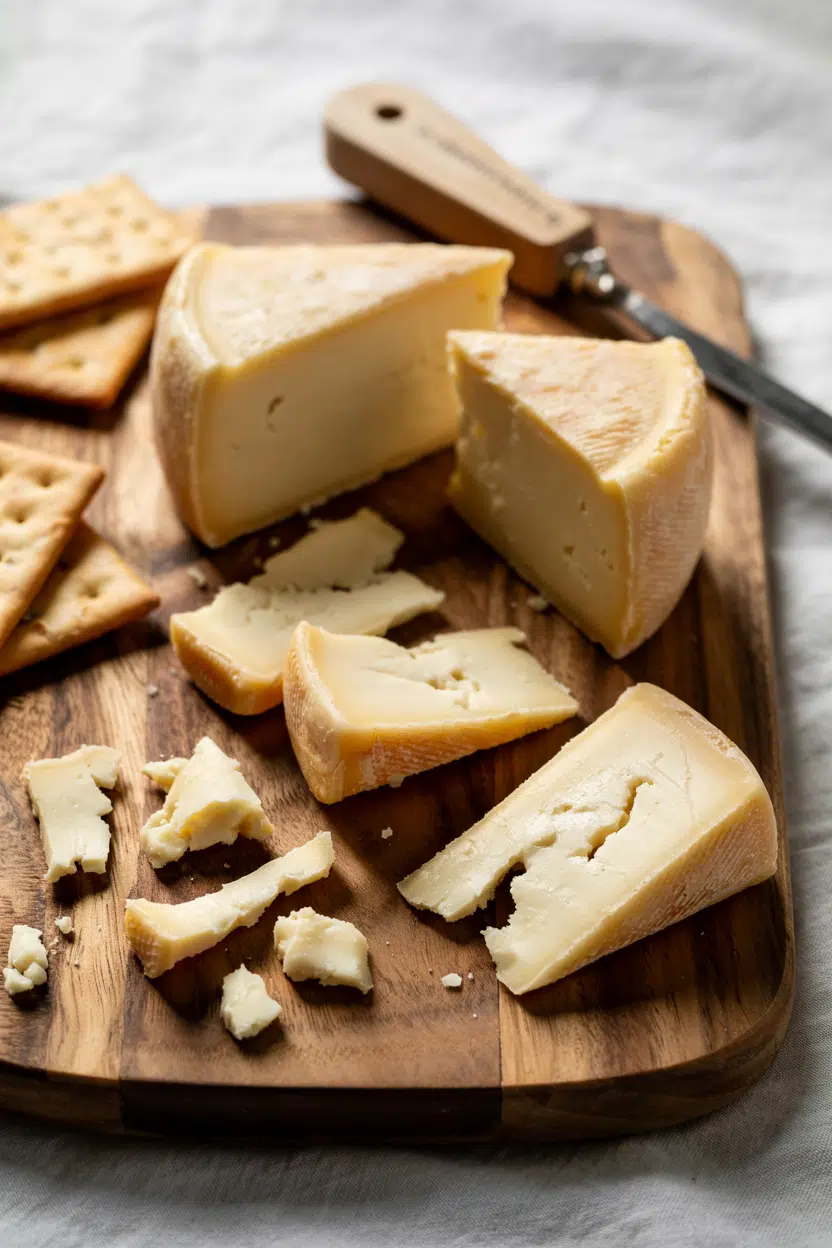
Unlike using ricotta for creaminess or leaning on cottage cheese for bulk, farmers cheese brings a distinct curd texture that survives heat, folds cleanly into fillings, and spreads without turning watery.
If you've noticed it in blintzes or on a bagel board and wondered what separates it from the rest of the fresh cheese category, this profile covers exactly that - and blintzes's shelf life is one reason the filling cheese matters so much.
Farmers cheese is a fresh acid-set curd cheese with a mild tang, moist crumbly texture, and clean milky flavor. It works cold as a spread or filling, holds shape when heated, and suits both sweet and savory applications across Eastern European and American cooking.
What Is Farmers Cheese?
Farmers cheese is a fresh acid-set cheese made by warming whole or part-skim milk, adding an acid or starter culture to form curds, then draining off the whey and pressing the result to varying firmness.
Remember it later
Planning to try this recipe soon? Save it for a quick find later!
The process is simple enough that home production is common - it predates industrial cheesemaking by centuries in both Eastern Europe and rural North America.
You'll find it sold as loose, spooned curds or as a pressed block depending on the producer. The block form slices cleanly; the loose form folds into fillings or spreads without extra work.
Tvorog (or twaróg in Polish) is the closest Eastern European equivalent, though regional versions vary in fat content and firmness. In American grocery stores it sometimes appears labeled as pressed cottage cheese, which is an accurate description of the production method if not the full identity.
- 🧀 Loose curd style - spooned from a container, higher moisture, best for fillings and blends
- 🧀 Pressed block style - firmer, sliceable, suits spreads and crumbling over dishes
- 🧀 Tvorog / twaróg - Eastern European equivalent; may be drier or fattier depending on country
The whey drained off during production is a byproduct worth noting - understanding about whey brine for feta shows how this liquid is used elsewhere in cheese production rather than discarded.
What Does Farmers Cheese Taste Like?
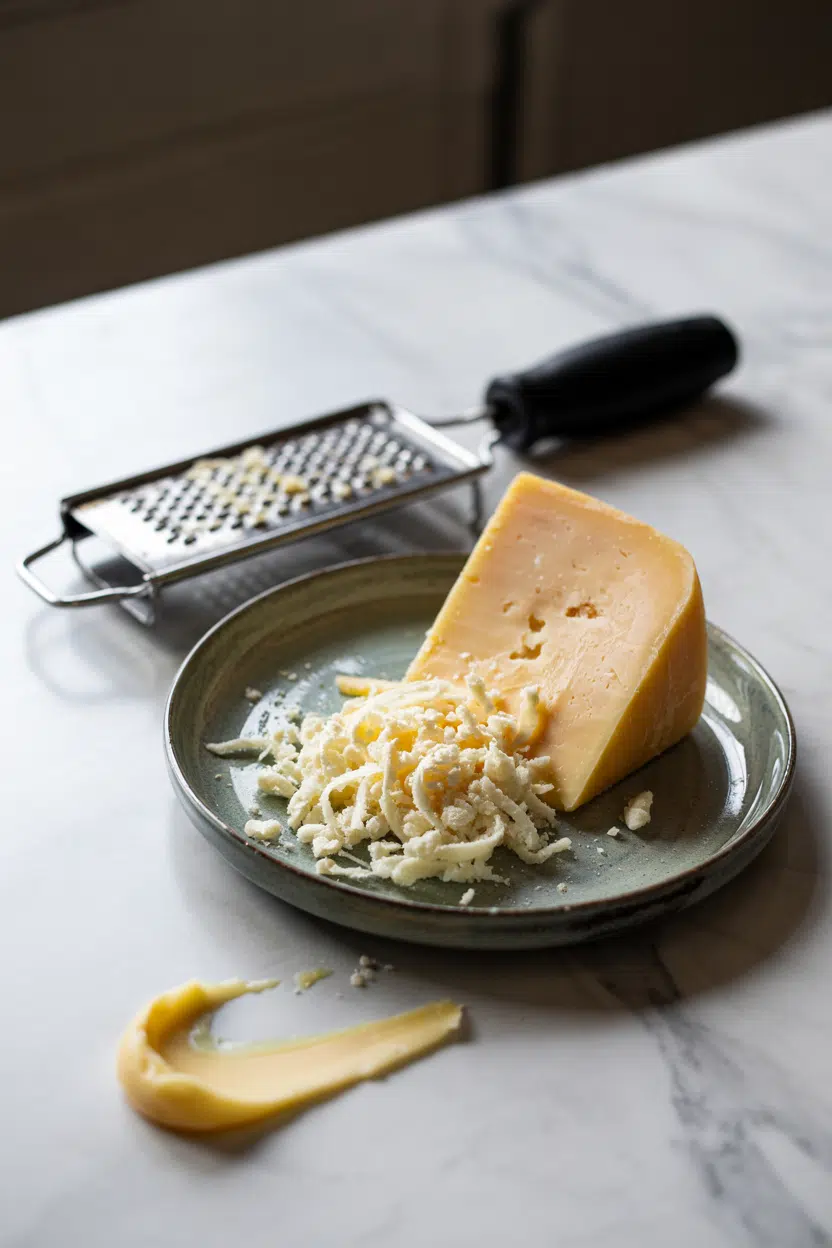
Farmers cheese tastes clean and milky with a mild lactic tang - sharper than fresh mozzarella but nowhere near the edge of a young chèvre. The saltiness is light, present mainly to balance rather than define the flavor.
Compared to cottage cheese, it tastes less watery and more concentrated - the drainage and pressing steps remove the liquid that dilutes cottage cheese flavor.
Ricotta is sweeter and smoother; farmers cheese has more textural definition and a noticeably drier finish on the palate.
Heat doesn't intensify the tang much. When baked inside a blintz or folded into a casserole, the flavor softens slightly and the curds become creamier without breaking down completely.
How to Use Farmers Cheese
Farmers cheese is most at home in Eastern European cooking, particularly in Polish and Ukrainian kitchens where it fills pierogi, vareniki, and uszka.
It also appears throughout Russian and Jewish Eastern European cuisine - in blintze fillings sweetened with sugar and lemon zest or in savory dumplings mixed with potato and onion.
For cold applications, it spreads directly onto rye bread or bagels, often mixed with chives, parsley, or smoked salmon.
The texture holds without turning paste-like, which makes it better for open-faced preparations than cream cheese when you want visible curd structure.
| Method | Best For | Tip |
|---|---|---|
| 🥗 Cold / Spread | Bagels, rye toast, open-faced sandwiches | Mix in fresh herbs and a pinch of salt before spreading |
| 🍳 Filling (heated) | Pierogi, blintzes, vareniki, stuffed cabbage | Drain any excess whey before mixing to avoid soggy dough |
| 🔥 Baked | Casseroles, savory pies, cheesecake-style desserts | Blend smooth first for uniform texture in sweet bakes |
| 🥣 Blended / Folded | Scrambled eggs, mashed potatoes, dips | Fold in at low heat to preserve curd texture and tang |
Sweet applications are worth separate attention. Blended with sugar, vanilla, and lemon zest, farmers cheese becomes a cheesecake-style filling that's denser than one made with cream cheese but lighter than a fully baked New York style.
It's a traditional base for Eastern European-style baked cheesecakes where the curd structure is intentional.
Pairing-wise, caraway seeds, chives, and roasted root vegetables anchor the savory side. On the sweet side, honey and fresh stone fruit balance the tang without overwhelming it.
For anyone working through farmers cheese in dairy recipes, understanding these pairings helps decide when a substitute will hold up and when it won't.
How to Buy and Store Farmers Cheese
Look for white to pale-cream curds with consistent moisture and no discolored spots. A pressed block should feel firm but not hard; loose curds should look moist without sitting in a pool of cloudy whey.
That cloudiness signals age - skip it.
At the store, give the container a quick smell through the seal if possible. Fresh farmers cheese smells clean and milky.
Any sour or ammonia edge means it's past its window.
Store it refrigerated in its original sealed container, or transfer to an airtight box with any excess whey pressed out.
For a full breakdown of timing and safe handling, storing farmers cheese correctly covers the specifics beyond the general guidelines here.
Opened portions last 5-7 days at best quality; unopened runs 2-3 weeks.
The same spoilage logic that applies to cottage cheese in dairy recipes holds here - once the whey turns cloudy and the smell shifts, it's done.
Start With the Filling
Farmers cheese rewards cooks who treat it as a structural ingredient first, a flavor ingredient second.
Its mild tang and curd texture do their best work inside something - a folded blintz, a pinched pierogi, a pressed sandwich.
Start there, and for making pierogi with sour cream at home, farmers cheese is the filling that keeps the dough from turning soggy.
If you've only used it cold on bread, try it once heated inside a folded egg. That's the version that shows what this cheese can actually do.
Frequently Asked Questions
No. Both start from acidified milk curds, but farmers cheese is drained and pressed further, removing more whey. The result is firmer, drier, and less watery than cottage cheese, with a more concentrated milky tang.
Yes, in most fillings and baked dishes. Farmers cheese is less sweet and more granular than ricotta, so the result will be slightly tangier and drier. For smooth baked fillings, blend it first to close the texture gap.
Unopened, about 2-3 weeks from the pack date. Once opened, use it within 5-7 days. Store in an airtight container with excess whey pressed out to slow spoilage.
Warm whole milk to around 185°F, add white vinegar or lemon juice, and let the curds form for a few minutes. Drain through cheesecloth, salt lightly, and press to your preferred firmness - looser for fillings, firmer for slicing.
Technically yes, but the texture changes significantly after thawing - curds become grainier and release more whey. Frozen-then-thawed farmers cheese is better folded into cooked fillings than used fresh as a spread.



