You spot it on the shelf - a small can or a slender tube, easy to overlook next to the larger jars of swapping out tomato puree or crushed tomatoes.

Tomato paste is the most concentrated form of tomato you can buy, and a single tablespoon does work that a cup of fresh tomatoes cannot.
Most home cooks underuse it or reach for it only as an afterthought, which is exactly where this guide comes in.
Tomato paste is cooked-down, strained tomatoes sold in cans, tubes, or jars. It delivers deep umami, balanced acidity, and subtle sweetness in small amounts. Use it to build sauce bases, enrich braises, and glaze roasted meats.
What Is Tomato Paste?
Tomato paste is a concentrated tomato product made by cooking fresh tomatoes for several hours, then straining out seeds and skins, and cooking the pulp again until thick.
Remember it later
Planning to try this recipe soon? Save it for a quick find later!
The result is dense, smooth, and far more potent than anything labeled tomato sauce or tomato purée.
It has roots in Mediterranean cooking, particularly Italian and Spanish kitchens where preserving summer tomatoes in concentrated form was both practical and necessary.
You'll also see it labeled as tomato concentrate or double-concentrated tomato paste - the latter contains about twice the solids of standard paste.
Three main formats exist on the market today:
- 🥫 Cans (small, 6 oz) - widely available and inexpensive, but require prompt use after opening
- 🧴 Tubes - resealable and fridge-ready; far less waste for recipes needing only a tablespoon or two
- 🫙 Jars - common in Middle Eastern and specialty stores, sometimes oil-packed for extended shelf stability
What Does Tomato Paste Taste Like?
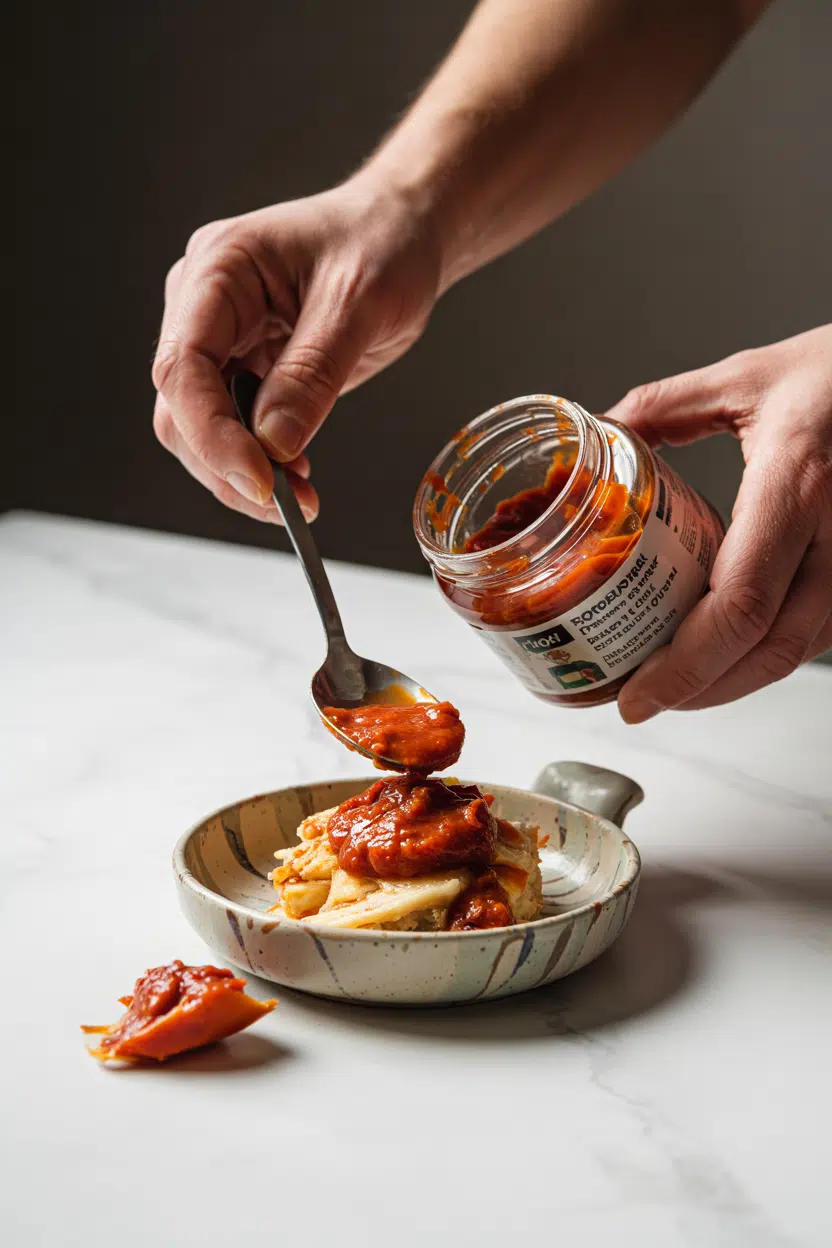
Raw from the tube, tomato paste hits hard - intensely savory, acidic, and slightly metallic in a way that signals it's not meant to be eaten straight. That rawness disappears quickly with heat.
Once sautéed in oil for even 60 seconds, the flavor shifts toward something roasted and caramelized. The sharpness softens, and the natural sweetness of the tomato becomes more pronounced.
Think of it as concentrated tomato sauce reduced to its boldest essence, with an umami depth closer to a long-simmered ragù than anything fresh.
How to Use Tomato Paste
Tomato paste earns its place early in cooking, not late. Frying it briefly in olive oil - a technique sometimes called "blooming" - strips out the raw, sharp edge and builds a caramelized base before any liquid enters the pan.
It's the foundation step in a proper Bolognese, and it's also what separates a flat tomato sauce from one with genuine depth.
Beyond pasta, the uses branch out considerably.
Italian ragù and Mediterranean braises both rely on paste for color and body.
American chili and sloppy joes use it to concentrate tomato flavor without adding liquid.
Mixed with honey or vinegar for balance, it makes a quick glaze for roasted lamb or pork.
Whisked into pan drippings with a splash of stock, it becomes an instant umami-forward sauce.
If you find yourself without any on hand, exploring alternatives to tomato paste is a useful detour - though most substitutes need more volume to match the intensity.
Pairings that consistently work well with tomato paste include onion and garlic, red wine or stock, basil and oregano, and any combination of beef, lamb, or pork.
The paste's natural acidity responds well to a pinch of sugar or a drizzle of honey, especially in long-cooked dishes.
Understanding red wine cooking methods helps when you're deglazing after browning the paste, since the wine lifts the fond and integrates with the tomato in a way plain stock doesn't.
| Method | Best For | Tip |
|---|---|---|
| 🍳 Sauté in fat | Sauce bases, ragù, Bolognese | Cook on medium heat, stirring constantly - 60-90 seconds max |
| 🥘 Braise liquid | Stews, short ribs, lamb shanks | Stir into liquid before adding to pot; it dissolves evenly |
| 🍯 Glaze base | Roasted meats, ribs, chicken thighs | Balance with honey or vinegar; brush on in the last 15 minutes |
| 🥄 Stir-in | Chili, bean dishes, meatloaf | Add directly to wet mixtures - no pre-cooking needed here |
How to Buy and Store Tomato Paste
Good tomato paste is deep brick-red, glossy, and uniform throughout the can or tube.
Avoid anything pale, brownish, or separated into an oily top and a chalky, dry base - those are signs of age or poor storage before it reached the shelf.
For buying format, tubes are the smarter choice for most home cooks.
A can forces you to use or store the remainder within days, while a tube seals after each use and keeps refrigerated for weeks.
When checking tomato paste's shelf life more closely, unopened cans stay shelf-stable for 12-24 months.
Once opened, transfer any leftover canned paste to an airtight container and refrigerate.
If you're out of paste and the recipe calls for olive oil as the cooking fat, knowing your olive oil swaps that work keeps the base intact while you improvise.
Frozen paste lasts up to six months with no meaningful flavor loss.
Start Here If You're New to It
New to cooking with tomato paste? Start with a simple pasta sauce - sauté one tablespoon in olive oil with minced garlic and onion, then build your sauce from there.
That single step will show you more about what this ingredient does than any recipe description can.
Once you're comfortable with the bloom technique, try working it into a braise or chili. Those dishes benefit from its color and depth even when it's playing a supporting role, not the lead.
Frequently Asked Questions
No. Tomato sauce is thin, lightly seasoned, and ready to use as-is. Tomato paste is cooked down much further - roughly three times the solids - making it far more concentrated in flavor and texture.
It's safe raw but tastes sharp and metallic straight from the can. Cooking it in fat for at least 60 seconds removes that rawness and unlocks its sweeter, roasted qualities.
One tablespoon of tomato paste approximates the flavor of about three medium fresh tomatoes, though it contributes no liquid. Add water or stock alongside it to compensate for the missing moisture.
Primarily as a flavor base - sautéed early to build depth in sauces, stews, and braises. It also works as a glaze binder for meats and as a quick umami boost stirred into gravies or chili.
Yes, with adjustment. Use about one-third the amount of paste and add water to reach the right consistency. The flavor will be more intense, so taste and correct seasoning before finishing the dish.