
Arborio rice does one thing better than almost any other rice on the market: it releases starch.

That steady starch release - driven by the grain's high amylopectin content - is what turns a pot of broth and wine into the silky, cohesive texture of a proper risotto.
Understanding rice's flavor and uses makes it clear why this specific grain gets its own category, and anyone who has watched a risotto come together knows that no long-grain substitute gets close.
For cooks focused on cooking risotto perfectly, arborio is the starting point, not a suggestion.
Arborio is a short-grain Italian rice prized for its high amylopectin starch content. It cooks into a creamy, slightly chewy texture and carries a mild, neutral flavor that absorbs broths, wine, and aromatics well. Best used for risotto, arancini, and rice pudding.
What Is Arborio Rice?
Arborio rice is a short-grain, starchy rice cultivated in the Po Valley of northern Italy, particularly in the Piedmont and Lombardy regions.
Remember it later
Planning to try this recipe soon? Save it for a quick find later!
The name comes from the town of Arborio in Piedmont, where the variety was developed and first commercially grown.
It belongs to the Oryza sativa japonica subspecies and is classified alongside carnaroli and vialone nano as a "superfino" grade - the highest classification for Italian risotto rice.
Carnaroli holds slightly more structure during cooking, while vialone nano is rounder and absorbs more liquid, but arborio is by far the most available internationally.
You'll see it labeled as riso arborio, arborio short-grain rice, or arborio risotto rice depending on the brand and country of sale. All refer to the same grain.
- 🌍 Origin - Po Valley, northern Italy; named after the town of Arborio in Piedmont
- 📐 Grain shape - Short, wide, and plump with a visible white chalky center called the "pearl"
- 🔬 Key property - Exceptionally high in amylopectin starch, which dissolves into cooking liquid and creates creaminess
- 🏅 Classification - Superfino grade, the top tier of Italian rice quality standards
What Does Arborio Rice Taste Like?
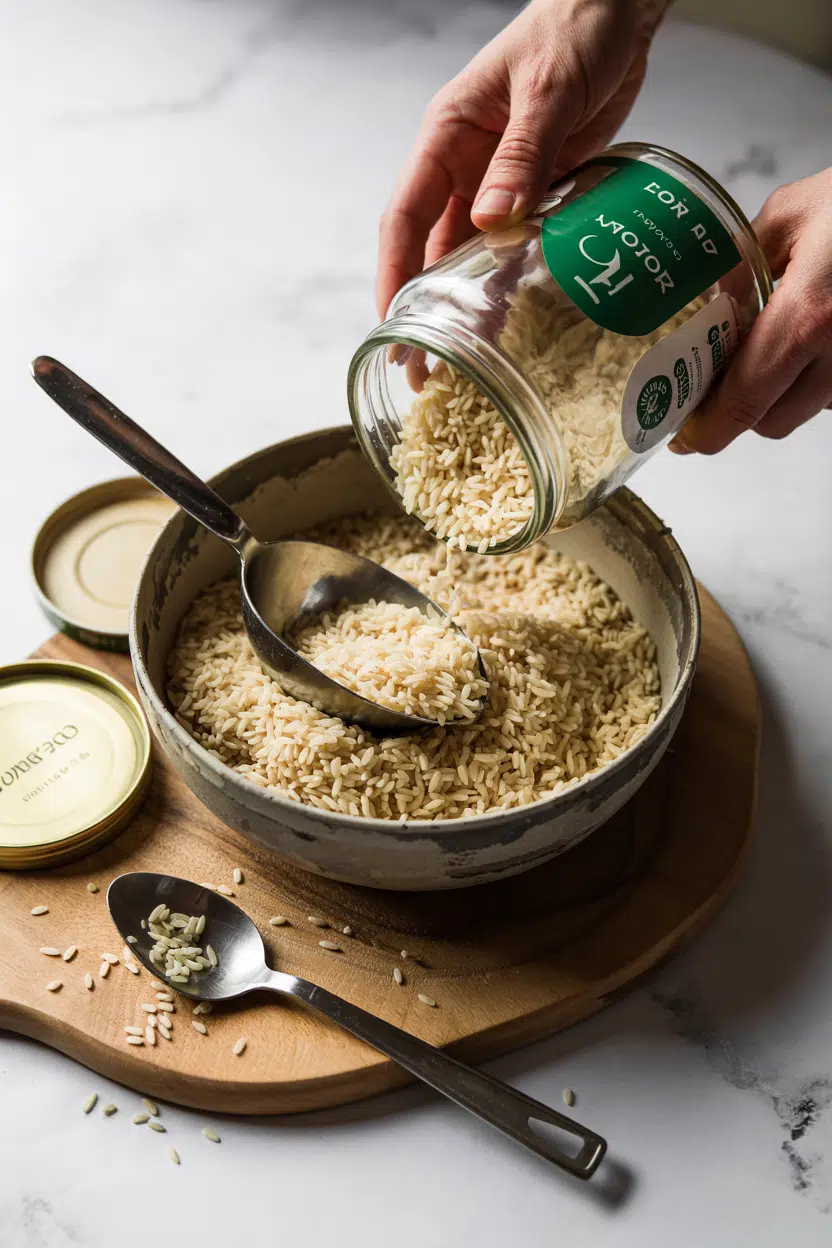
Raw arborio has almost no detectable aroma - just a faint, starchy, grainy scent that disappears entirely once heat is applied.
The flavor itself is mild: slightly nutty with a gentle sweetness and a neutral backbone that absorbs whatever it's cooked with.
That neutrality is the point. A finished risotto tastes like parmigiano-reggiano, dry white wine, and mushrooms - not like rice.
Arborio steps back and lets the cooking liquid, fat, and aromatics take the lead.
Texture is where arborio earns its reputation. Cooked al dente with constant stirring, it develops a creamy exterior from dissolved starch while keeping a firm, slightly chewy center.
Compared to sushi rice, arborio is less sweet and more neutral; compared to carnaroli, it's slightly softer and breaks down a little faster.
How to Use Arborio Rice
Arborio performs best in dishes that reward starch release.
The classic application is stovetop risotto: hot stock is ladled in gradually while the cook stirs continuously, coaxing starch from each grain into the surrounding liquid.
Italian cuisine - particularly from Lombardy and Veneto - built its risotto traditions around this exact method, pairing the rice with dry white wine, butter, and parmigiano-reggiano.
Beyond the stovetop, arborio works well in a pressure cooker. Timing is tighter and you lose some control over final texture, however the result is still recognizably creamy.
| Method | Best For | Tip |
|---|---|---|
| 🍲 Stovetop | Classic risotto, mushroom and wine preparations | Add hot stock in small increments and stir constantly for best starch release |
| 🔥 Baked | Baked risotto casseroles, set-and-slice arancini bases | Use a covered dish and reduce liquid slightly - oven heat is less controllable than stovetop |
| 🟠 Fried | Arancini rice balls made from cooled risotto | Chill risotto completely before shaping - warm rice won't hold its form |
| ⚡ Pressure Cooker | Weeknight risotto with shortened cooking time | Follow liquid ratios carefully - overcooking turns it mushy fast |
Seafood risotto with shrimp or scallops is a natural fit, as is the saffron-forward risotto alla Milanese. Cooled risotto repurposed into cooking air fryer arancini rice balls perfectly is one of the best uses for leftover batches.
Rice pudding also benefits from arborio - the starch release creates a thick, creamy base without needing cornstarch or heavy cream.
Avoid using arborio in dishes that need separate, fluffy grains. Long-grain pilaf and most stir-fried rice dishes rely on low-starch varieties; arborio turns sticky and clumped in those contexts.
How to Buy and Store Arborio Rice
Good arborio has a consistent look.
We look for short, plump, uniformly white grains with the visible chalky pearl at the center intact - that pearl is where most of the amylopectin starch is concentrated.
Avoid bags with broken grain halves, fine dust at the bottom, or any sign of moisture or insects.
A recent pack date is worth checking if the store rotates stock infrequently.
Storage is simple for a dry pantry staple. For general guidance on rice in grain dishes and how storage affects quality, the principles apply directly here.
- Unopened bag - Stays at best quality for 1-2 years stored in a cool, dry pantry
- Opened, airtight container - Use within 6-12 months for best cooking performance
- Freezer - Dry uncooked arborio freezes well for long-term storage; details on [freezing arborio rice](https://forkliftkitchen.com/arborio-rice-shelf-life/) cover the method fully
Start With Risotto
If you're new to arborio, one classic stovetop risotto is all you need to understand what makes it different from every other rice.
The starch release is visible - the liquid thickens as you stir, the grains swell, and the dish becomes cohesive without any added thickener.
From there, arancini and rice pudding are natural next steps.
For cooks who want to branch out, a look at alternatives to arborio rice covers carnaroli, vialone nano, and when each makes sense.
Arborio isn't the only option, however it remains the most accessible and reliable starting point for starchy Italian rice cookery.
The distinction between authentic parmigiano-reggiano and standard parmesan matters here too - understanding cooking parmesan vs parmigiano reggiano perfectly sharpens how you finish a risotto.
Frequently Asked Questions
Mildly nutty and slightly sweet with a very neutral backbone. On its own it has little presence, however it absorbs cooking liquids, fats, and aromatics readily, so the finished dish tastes primarily of those ingredients rather than the rice itself.
Not exactly. Arborio is the most common risotto rice, however carnaroli and vialone nano are also used and are considered superior by many Italian cooks. All three are high-starch, short-grain Italian varieties suited to slow, stirred cooking.
You can, with caveats. Traditional paella uses bomba or calasparra rice, which absorbs liquid without releasing starch. Arborio produces a creamier, stickier result - acceptable in paella-style dishes, however not authentic socarrat-forming paella.
Baked risotto works without constant stirring - combine arborio with hot stock in a covered oven dish and bake at around 375°F (190°C) for 25-30 minutes. The result is slightly less creamy than stovetop but still cohesive and fully cooked.
Yes, arborio rice is naturally gluten-free. Cross-contamination is possible if it's processed in a facility that also handles wheat, so those with celiac disease should check for a certified gluten-free label on the package.



