
You spot it on the baking aisle - a small tin or tub labeled meringue powder, tucked between the food coloring and the piping bags.
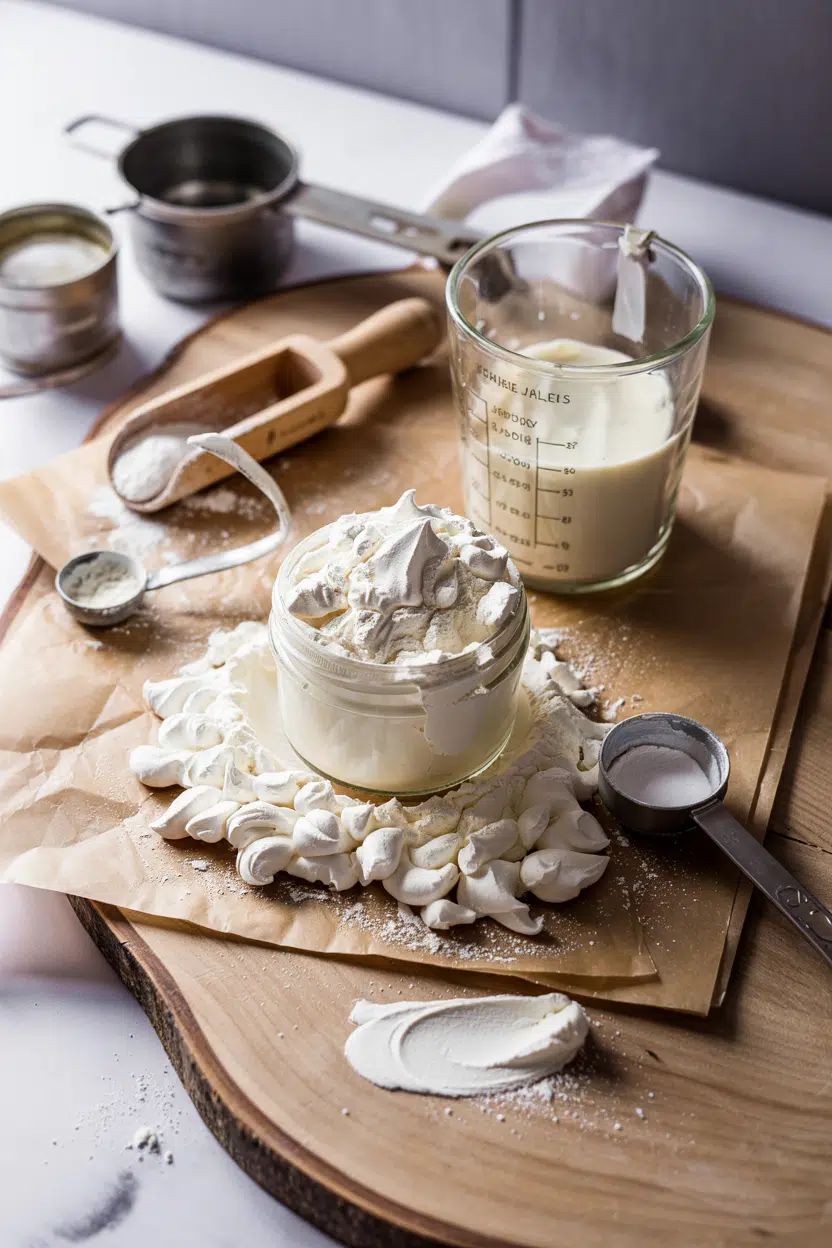
It's not an ingredient most home bakers reach for daily, yet it solves a specific problem: producing stable, food-safe whipped whites without cracking a single shell.
Just as understanding butter spoilage signs helps you avoid ruined frosting, knowing what meringue powder actually does makes it far easier to use correctly.
Whether you need royal icing that dries hard enough to stack, or a stabilized meringue that won't weep in humidity, this is the ingredient that handles it.
**Meringue powder** is a shelf-stable dried egg white blend used to whip meringue, make royal icing, and stabilize frostings without raw eggs. It has a mild, slightly eggy flavor that disappears once whipped with sugar and flavorings. Shelf life runs 12-24 months unopened.
What Is Meringue Powder?
Meringue powder is a dried egg derivative made primarily from pasteurized, spray-dried egg whites, with added stabilizers such as cornstarch, gum, or cream of tartar. Some commercial blends also include sugar, which matters when you're comparing labels.
Remember it later
Planning to try this recipe soon? Save it for a quick find later!
It's the same fundamental ingredient as fresh egg white - dried to a shelf-stable powder and treated for food safety.
You might also see it labeled powdered egg whites, dried egg albumen, or meringue mix, though these names aren't always interchangeable. Plain dried egg albumen contains no additives, while a true meringue powder blend includes the stabilizers already built in.
The ingredient was commercialized in the United States primarily as a food-safety solution.
Large-scale cake decorators, bakeries, and home bakers who work with royal icing or delicate meringue-based components all rely on it when raw egg whites pose a salmonella concern.
If you ever find yourself without it, a quick look at meringue powder stand-ins shows which alternatives hold up in icing versus which fall short under heat.
What Does Meringue Powder Taste Like?
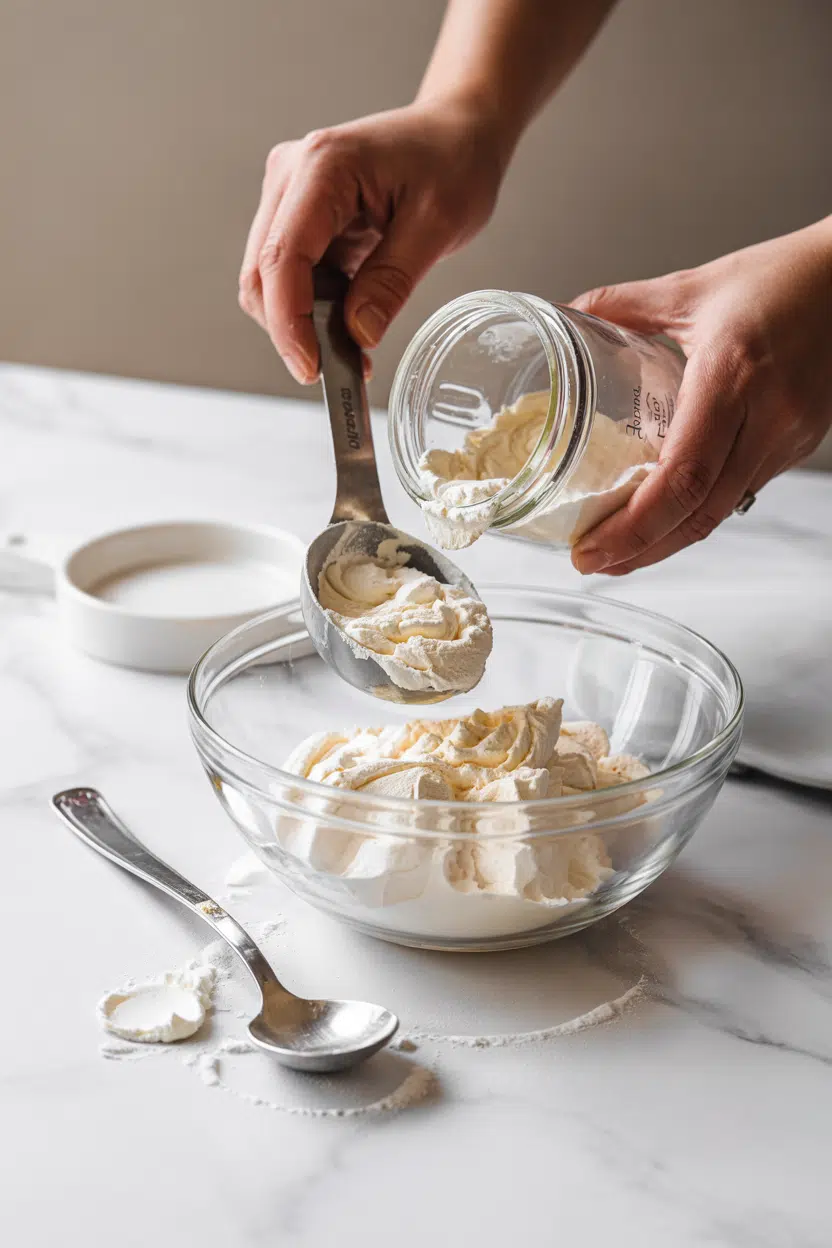
Straight from the container, meringue powder has a faint dried-egg note - mild and slightly chalky, not unpleasant, but noticeable if you taste it dry. Some blends carry a light sweetness from added powdered sugar in the mix.
Once whipped with water and sugar, that dried-egg note largely disappears. The result tastes much like fresh whipped egg whites: clean, lightly sweet, and neutral enough to carry vanilla, almond extract, or citrus without competing.
Heat doesn't dramatically change the flavor - baked meringue cookies taste the same whether made from powder or fresh whites.
How to Use Meringue Powder
Royal icing is the most common application, and meringue powder handles it reliably. Whisk one to two tablespoons of powder with water and sifted powdered sugar until the icing reaches stiff peaks - it dries hard, holds clean lines, and is safe at room temperature on finished cookies.
Beyond icing, the powder has several distinct roles in a baker's toolkit.
| Method | Best For | Tip |
|---|---|---|
| 💧 Whipped | Royal icing, meringue toppings, stabilized frostings | Use room-temperature water; cold water slows hydration |
| 🔥 Piped & Low-Baked | Meringue cookies, piped flowers, sugar decorations | Bake at 200°F / 93°C to dry out rather than brown |
| 🧈 Folded In | Stabilizing American or Swiss buttercream | Add dry powder directly - no need to rehydrate first |
| 🍬 Coating | Candied nuts, glazed fruit, glossy shells | Rehydrate lightly before tossing with nuts and sugar |
Stabilizing buttercream with a teaspoon or two of dry meringue powder is a trick that holds up especially well in warm rooms. It firms the peaks without altering the flavor.
Note that replacements for butter in buttercream can affect how well the meringue powder stabilizes the final texture - fat content matters.
Meringue powder is central to American cookie-decorating culture, British sugarcraft, and French-influenced patisserie components.
It pairs naturally with powdered sugar, vanilla or almond extract, cream of tartar for added peak stability, and food coloring for piped decorations.
Cornstarch - already present in many blends - helps prevent clumping and adds body.
Knowing the replacements for cornstarch is useful if you're working with a plain egg-albumen powder and need to add your own stabilizer.
How to Buy and Store Meringue Powder
At the store, look for a free-flowing powder with no hard clumps and a best-by date at least six months out. Check the ingredient list: "dried egg whites" should appear first.
If you need an unsweetened blend for controlling sugar levels yourself, confirm no powdered sugar is listed.
Store the sealed container in a cool, dry pantry, away from the stove or any steam source.
Unopened, most brands last 12-24 months.
Once opened, aim to use it within 6-12 months for reliable stiff peaks.
For guidance on keeping paired ingredients in good shape, both keeping meringue powder fresh and keeping sugar fresh affect whether your royal icing sets properly.
Start Here If You're New to It
First-time users should begin with royal icing - it's the most forgiving application and shows quickly whether the powder is still active. Mix one tablespoon of meringue powder with two tablespoons of warm water and one cup of sifted powdered sugar, then whip on medium-high until stiff and glossy.
If the icing sets hard and holds clean lines, the powder is performing correctly. From there, stabilizing buttercream and piped flower decorations are natural next steps.
Frequently Asked Questions
Yes, in most applications that call for whipped or stabilizing egg whites. Use one tablespoon of meringue powder plus two tablespoons of water to replace two large egg whites. It won't work where yolk function - emulsification or richness - is required.
Faintly, when tasted dry. Once whipped with water and powdered sugar, the dried-egg note is barely detectable. Vanilla or almond extract covers any residual egginess completely.
Yes. The spray-drying process used to produce commercial meringue powder pasteurizes the egg whites, eliminating salmonella risk. That food-safety advantage is the primary reason bakers use it over raw whites.
Six to twelve months, stored tightly sealed in a cool, dry pantry. After that window, the powder may still look fine but lose its ability to whip to stiff peaks reliably.
No. Meringue powder is made from dried egg whites, making it unsuitable for vegan diets. Aquafaba powder or commercially produced vegan royal icing mixes are the closest plant-based alternatives.



