
Roast turkey at the center of a holiday table is one of the most iconic images in American cooking, yet the bird itself often goes underappreciated until it's sliced and plated.
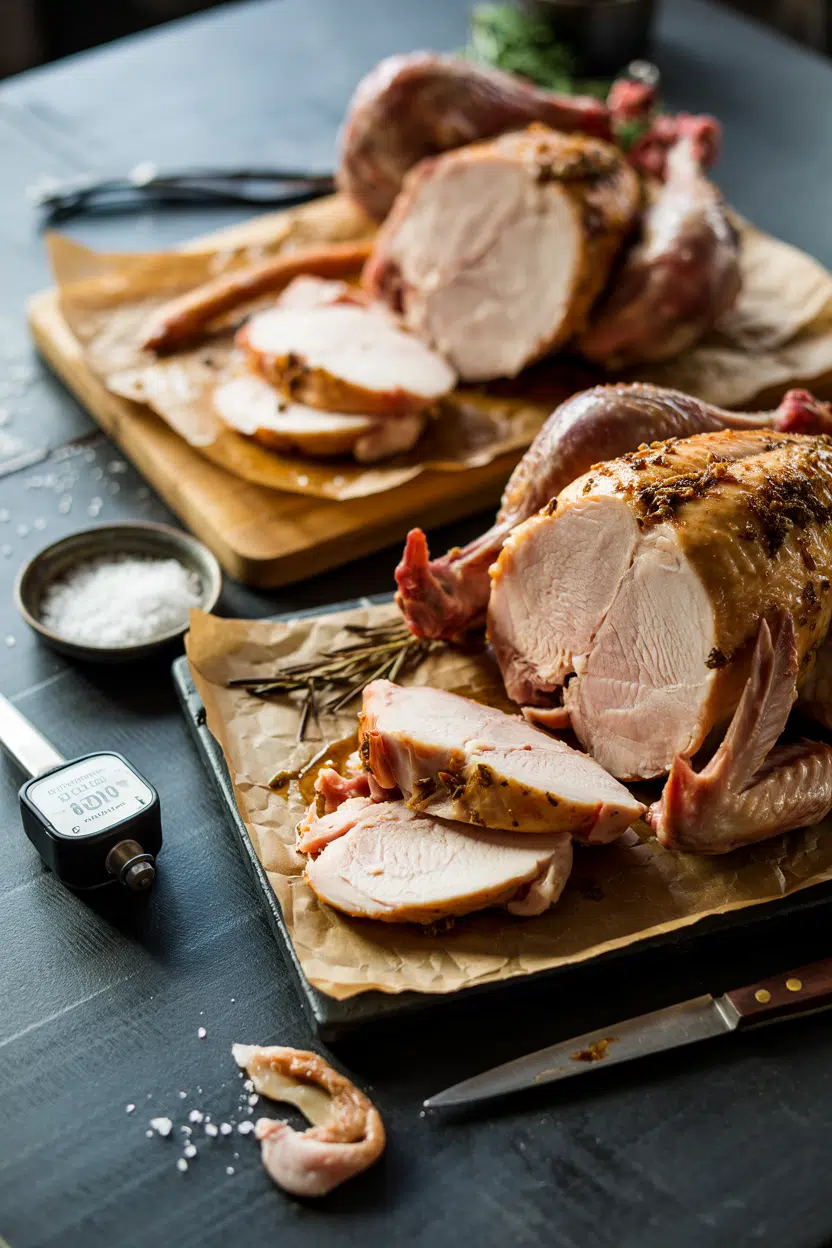
Many cooks treat it like an oversized chicken, reaching for the same techniques they'd use on a weeknight bird - and that's where things go wrong.
Getting turkey right means understanding how its white and dark meat behave differently, how brining changes everything, and why a properly cooked thigh tastes nothing like a dried-out breast.
If you're already thinking about what to pair with poultry, the sides for chicken drumsticks guide offers a useful reference frame, and cooking smoked turkey breast right is worth reading before you fire up a smoker.
Turkey is a large domesticated bird with mild, savory white meat and richer, iron-forward dark meat. It roasts whole as a holiday centerpiece, breaks down into parts for everyday cooking, and suits smoking, brining, and slow-cooking equally well. Raw parts keep 1-2 days refrigerated; cooked turkey lasts 3-4 days.
What Is Turkey?
Turkey (Meleagris gallopavo) is a large North American bird domesticated from wild stock and raised specifically for meat. It belongs to the poultry category alongside chicken and duck, though it's considerably larger than either.
Remember it later
Planning to try this recipe soon? Save it for a quick find later!
The bird is sold in several forms: whole for roasting, broken down into breasts, thighs, drumsticks, and wings, or ground for everyday cooking. Each cut carries different fat content, texture, and flavor character.
White meat - primarily the breast - is lean, dense, and mild. Dark meat from the thighs and drumsticks contains more fat and myoglobin, which gives it deeper flavor and a juicier finish.
Wild turkey is also eaten, though it's less common in retail. Expect darker, firmer flesh and a slightly gamey edge compared to the domestic bird most people cook at home.
- 🦃 Whole bird - sold fresh or frozen, typically 10-24 lbs for domestic breeds
- Breast - sold bone-in or boneless; the leanest, mildest cut
- Thighs and drumsticks - dark meat cuts, higher fat, more forgiving to cook
- Ground turkey - made from mixed light and dark meat or breast only
- Wild turkey - leaner and gamier; requires different timing and seasoning
What Does Turkey Taste Like?
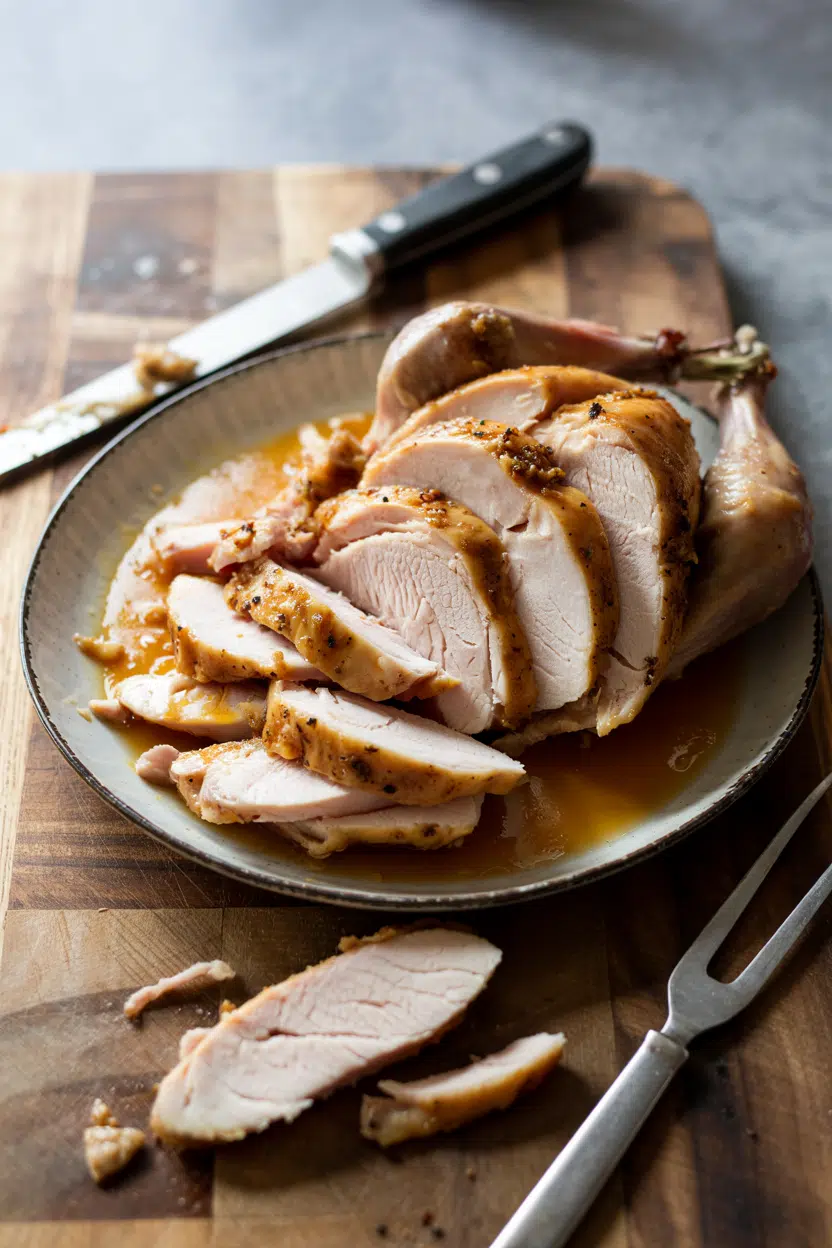
Turkey's flavor is mild and savory with a faint sweetness - closer to chicken than to duck, though not identical.
If you already know chicken's flavor and uses, turkey reads as a slightly firmer, less fatty version of that same profile.
White meat delivers lean umami with a clean, almost neutral finish. Dark meat has noticeably more richness, an iron-forward depth, and a juicy texture that stays moist even with aggressive cooking.
Heat changes turkey noticeably. Breast meat tightens quickly past 165°F, turning chalky and dry - a few degrees of overcooking makes a real difference.
Dark meat, by contrast, actually improves slightly with longer cook times, breaking down connective tissue into gelatin.
How to Use Turkey
Turkey's range goes well beyond the holiday roast. The whole bird, brined overnight in salt water with aromatics and roasted low-then-high, remains the classic treatment - but individual cuts give you more control on any weeknight.
| Method | Best For | Tip |
|---|---|---|
| 🔥 Oven Roast | Whole bird, bone-in breast | Brine first; tent with foil for first hour to slow surface browning |
| 🍖 Low-and-Slow Smoke | Legs, wings, whole bird | Apple or cherry wood keeps smoke flavor mild; pull legs at 175°F internal |
| 🥘 Braise / Slow Cook | Thighs, drumsticks | Works in stock, wine, or mole base; shreds cleanly for tacos and enchiladas |
| 🌡️ Sous Vide + Sear | Boneless breast | Cook at 145°F for two hours, then sear skin-side down for crust |
| 🧆 Ground | Burgers, meatballs, skillet meals | Add fat (olive oil or egg yolk) when using breast-only ground turkey |
| 🍲 Stock / Confit | Carcass stock, dark meat confit | Roast carcass before simmering for deeper stock color and flavor |
In American Southern cooking, smoked turkey legs appear in gumbo and bean pots as a flavoring base. Mexican-American kitchens slow-cook thighs for turkey tacos or simmer the whole bird in mole.
For pairing ideas beyond the basics, pairing ideas for smoked turkey breast covers the full range of sides and sauces that work well.
Turkey pairs naturally with sage, thyme, and rosemary. Cranberry provides a bright, acidic contrast to the mild meat, while butter-basted pan sauces and root vegetables round out a classic roast.
Avoid overly sweet glazes - they flatten the bird's natural savor rather than complementing it.
How to Buy and Store Turkey
Fresh turkey should look plump and even-colored, with no sour or ammonia smell.
For whole birds, check that the skin is intact and the cavity is properly closed. Packaged cuts should carry a USDA inspection stamp and a clear packing date - prioritize the freshest date you can find.
Store raw turkey on a tray in its original packaging, at or below 40°F, in the coldest part of your fridge. Use raw parts within 1-2 days.
Our full guide to keeping turkey fresh covers fridge, freezer, and thawing timelines in detail.
- Raw whole bird - 1-2 days refrigerated; up to 1 year frozen
- Raw parts - 1-2 days refrigerated; 9 months frozen for best quality
- Cooked turkey - refrigerate within 2 hours; use within 3-4 days
Start With Dark Meat
If turkey has let you down before, dark meat is the honest place to start. Thighs braised in stock or rubbed and slow-roasted are far more forgiving than breast, and they showcase the bird's best flavor without the risk of drying out.
Once you're comfortable there, move to a brined breast or a spatchcocked whole bird - both reward the extra prep time.
If you'd rather skip the bird entirely this season, the alternatives to turkey guide lays out the most practical swaps by cut and occasion.
Frequently Asked Questions
Turkey is milder and slightly firmer than chicken. White meat is leaner with a cleaner finish, while dark meat has more iron-forward depth than chicken thighs - closer to duck in richness.
Dark meat contains more intramuscular fat and connective tissue, which render during cooking and keep the meat moist. White meat has almost no fat buffer, so it dries out quickly if internal temperature climbs past 165°F.
Raw turkey parts last 1-2 days; a whole raw bird also keeps 1-2 days. Cooked turkey is safe for 3-4 days if refrigerated within two hours of cooking.
Brining adds moisture that the meat retains during roasting - even a simple overnight salt brine makes a noticeable difference. Sous vide at 145°F followed by a quick sear is the most reliable method for boneless breast.
They're close but not identical. Ground turkey is slightly firmer and has a mildly earthier flavor. Breast-only ground turkey is very lean and needs added fat in burgers or meatballs to stay moist.



