
You spot a slim bottle of dry vermouth on the shelf-wedged between the gin and the cooking wines-and wonder if it belongs in your glass, your pan, or both.
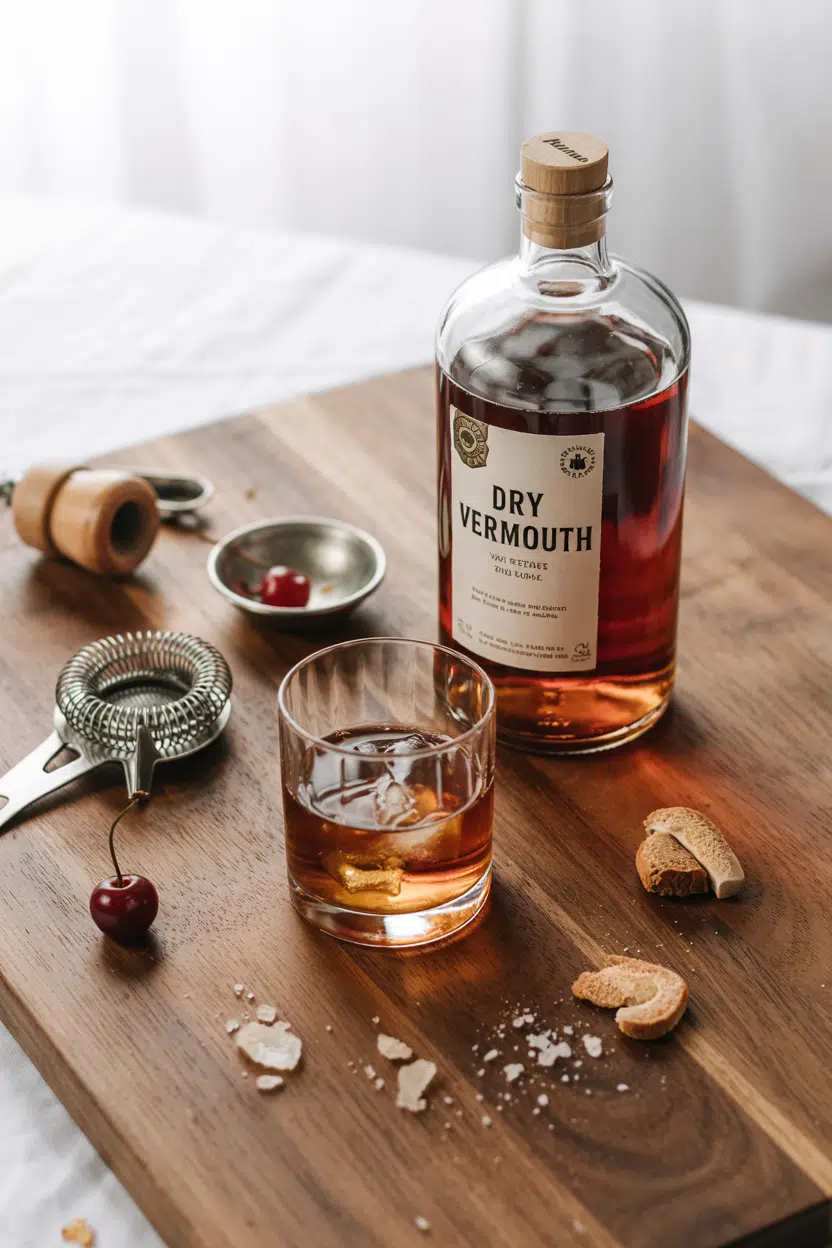
The answer is yes to each.
Dry vermouth sits at a useful crossroads: it's an the differences between aperitifs vs digestifs that also functions as a light cooking wine, bringing herbal depth and a clean, bitter edge that straight white wine simply doesn't have.
If you've been reaching for alternatives to sherry to finish a pan sauce, dry vermouth deserves a closer look.
Dry vermouth is an aromatized fortified wine flavored with botanicals-wormwood, citrus peel, chamomile, and herbs. It's dry, herbaceous, and lightly bitter, used in martinis and pan sauces alike. Once opened, refrigerate and use within a few months.
What Is dry vermouth?
Dry vermouth is an aromatized fortified wine-a base of white wine boosted with neutral spirits, then steeped with a proprietary blend of botanicals.
Remember it later
Planning to try this recipe soon? Save it for a quick find later!
Those botanicals typically include wormwood (the defining bitter ingredient), citrus peel, chamomile, sage, and various herbs depending on the producer.
It originated in two places: Turin, in northern Italy, and France, where the Noilly-style dry expression became the global benchmark.
The French and Italian traditions differ subtly-French dry vermouth (like Noilly Prat) tends to be more oxidative and savory; Italian dry vermouth leans slightly more floral.
You'll see it labeled as vermouth sec, dry vermut, or simply French dry vermouth. It's also worth distinguishing it from its sweeter cousin-the amaretto sweet vermouth guide explains how those styles diverge in flavor and use.
Dry vermouth has low residual sugar compared to its sweet counterpart, which gives it a clean, lean profile closer to a bone-dry white wine than a liqueur.
What Does dry vermouth Taste Like?

Think of dry vermouth as a floral Sauvignon Blanc crossed with a lightly bitter aperitif. The wormwood delivers a clean background bitterness-not sharp or medicinal, but present enough to notice.
On the palate it's dry and lean, with herbal mid-notes of thyme and chamomile and a bright citrus top. The mouthfeel is light-bodied with a faint botanical oiliness.
Heat changes things. When you cook with dry vermouth, the alcohol cooks off and the herbal notes concentrate, making the savory botanical character more pronounced in the finished dish.
That's useful in sauces, and it's why plain white wine doesn't replicate it exactly.
How to Use dry vermouth
Dry vermouth earns its place in both the bar cart and the kitchen.
It's the backbone of a classic dry martini-typically stirred with gin in a ratio that varies by preference, with the vermouth providing the herbal, floral structure that makes the drink more than just cold gin.
In the kitchen, it behaves like a sharper, more aromatic dry white wine. The most reliable cooking application is deglazing: a splash into a hot pan after searing fish or chicken lifts the fond and adds a herbal brightness that plain wine doesn't match.
Shallot-and-vermouth pan sauces finished with butter are a French bistro standard for a reason-they work.
| Method | Best For | Tip |
|---|---|---|
| 🍸 Cocktail | Dry martini, Gibson, Vesper riffs | Store opened bottle in fridge; stale vermouth ruins the drink |
| 🔥 Deglazing | Pan sauces for fish, chicken, scallops | Add off heat briefly, then return to reduce by half |
| 🦪 Steaming | Clams, mussels, shrimp | Swap 1:1 for dry white wine in the broth base |
| 🥗 Dressing | Vinaigrettes, marinades | Use sparingly-bitterness amplifies in acid-forward dressings |
| 🍐 Poaching | Pears, stone fruit, light desserts | Reduce with honey and thyme to build a syrup base |
Dry vermouth also works in steamed shellfish-clams and mussels opened in a vermouth broth pick up herbal and citrus notes that feel more complex than a standard white wine version.
If you don't have a bottle on hand, a guide to dry vermouth stand-ins covers which alternatives hold up in both cooking and cocktails.
Avoid pairing it with heavy chocolate desserts or strongly spiced curries. The botanical subtlety simply disappears against bold, competing flavors.
How to Buy and Store dry vermouth
Look for bottles labeled "dry" or "sec" with a pale straw color. Cloudy liquid or visible sediment are signs of poor storage or age-skip those.
Producers like Noilly Prat and Dolin offer consistent herbal balance and are widely available.
Before opening, store the bottle upright in a cool, dark place. After opening, seal it tightly and refrigerate immediately.
- 🌡️ Unopened: Cool, dark cupboard; stable for 2-3 years
- ❄️ Opened: Refrigerate upright; use within 1-6 months
- 🔍 Check before use: Flat or vinegary smell means it's past its best
A detailed breakdown of keeping dry vermouth fresh is worth reading if you only open bottles occasionally-bottle size and frequency of use both affect how quickly quality fades.
Start Here
New to dry vermouth? Buy a mid-size bottle of Noilly Prat, open it, and use it within a month. Start with a simple pan sauce-shallots, a splash of vermouth, butter, and lemon over sole or scallops.
That single dish will show you exactly what this ingredient does.
If cocktails are your entry point, a classic martini with a proper vermouth ratio is more educational than any recipe description.
For the bar side of things, making espresso martini cocktail at home shows how fortified wine elements interact with spirits-a useful contrast to the dry martini's restraint.
Dry vermouth rewards cooks and bartenders who treat it as a perishable ingredient, not a shelf staple.
Frequently Asked Questions
No. Dry vermouth is a fortified wine steeped with botanicals including wormwood, giving it a herbal, lightly bitter character that plain white wine lacks. It's also higher in alcohol and more aromatic, so it behaves differently in both drinks and sauces.
Sweet vermouth has significantly more residual sugar and a richer, darker flavor with notes of vanilla and spice. Dry vermouth is lean and herbaceous; they're not interchangeable in cocktails or cooking.
Yes, and it often improves the dish. Dry vermouth adds herbal complexity that white wine doesn't provide, and it substitutes 1:1 in most recipes. Reduce the quantity slightly if the dish is very delicate, as the botanicals concentrate with heat.
Refrigerated and tightly sealed, it holds well for 1-3 months; some bottles stay acceptable up to 6 months. Smell it before using-oxidized vermouth smells flat or faintly vinegary and will degrade any dish.
The dry martini is the most iconic, but dry vermouth also appears in the Gibson, the Tuxedo, and the Corpse Reviver No. 2. It's always used in smaller quantities than the base spirit, acting as an aromatic modifier rather than the main ingredient.



