Most people reach for lime without a second thought, but calamansi operates on a different register entirely - sharper, more floral, and with a citrus depth that lime simply doesn't carry.

Unlike the differences between lime vs lemon, which share a broadly similar flavor family, calamansi sits in its own category: intensely sour, highly aromatic, and impossible to fake with a standard citrus swap.
It's the fruit that anchors Filipino cooking, and once you understand what it actually does, you'll stop treating it as just another squeeze.
Calamansi is a small Southeast Asian citrus with intensely sour, floral juice and aromatic zest. It's the backbone acid of Filipino cooking - used in marinades, dipping sauces, soups, and drinks. Green fruits are sold unripe but still usable; ripe ones show an orange blush and slightly sweeter edge.
What Is calamansi?
Calamansi - also spelled kalamansi and sold under the name calamondin in some markets - is a small round citrus fruit native to Southeast Asia, most closely associated with the Philippines.
Remember it later
Planning to try this recipe soon? Save it for a quick find later!
Each fruit is roughly the size of a large marble, with thin, smooth skin that starts deep green and ripens to a yellow-orange.
The pulp inside is divided into small, seed-filled segments and produces a disproportionately large amount of juice for its size.
Botanically, calamansi sits between a mandarin orange and a kumquat in its family tree, which explains its unusual flavor profile. In the Philippines, it's simply called calamansi; in Malaysia and Indonesia, you'll see it labeled limau kasturi.
Green fruits are harvested and used before full ripeness - that's standard practice, not a sign of poor quality. Ripe orange-yellow fruits carry a slightly sweeter undercurrent, but both stages are culinarily valid.
- 🌿 Family - Rutaceae (citrus family), closely related to kumquat and mandarin
- 📍 Primary origin - Philippines, with wide cultivation across Southeast Asia
- 🔤 Alternate names - calamondin, kalamansi, Philippine lime, limau kasturi
- 🍊 Size and appearance - marble-sized, thin-skinned, green to orange-yellow at full ripeness
What Does calamansi Taste Like?
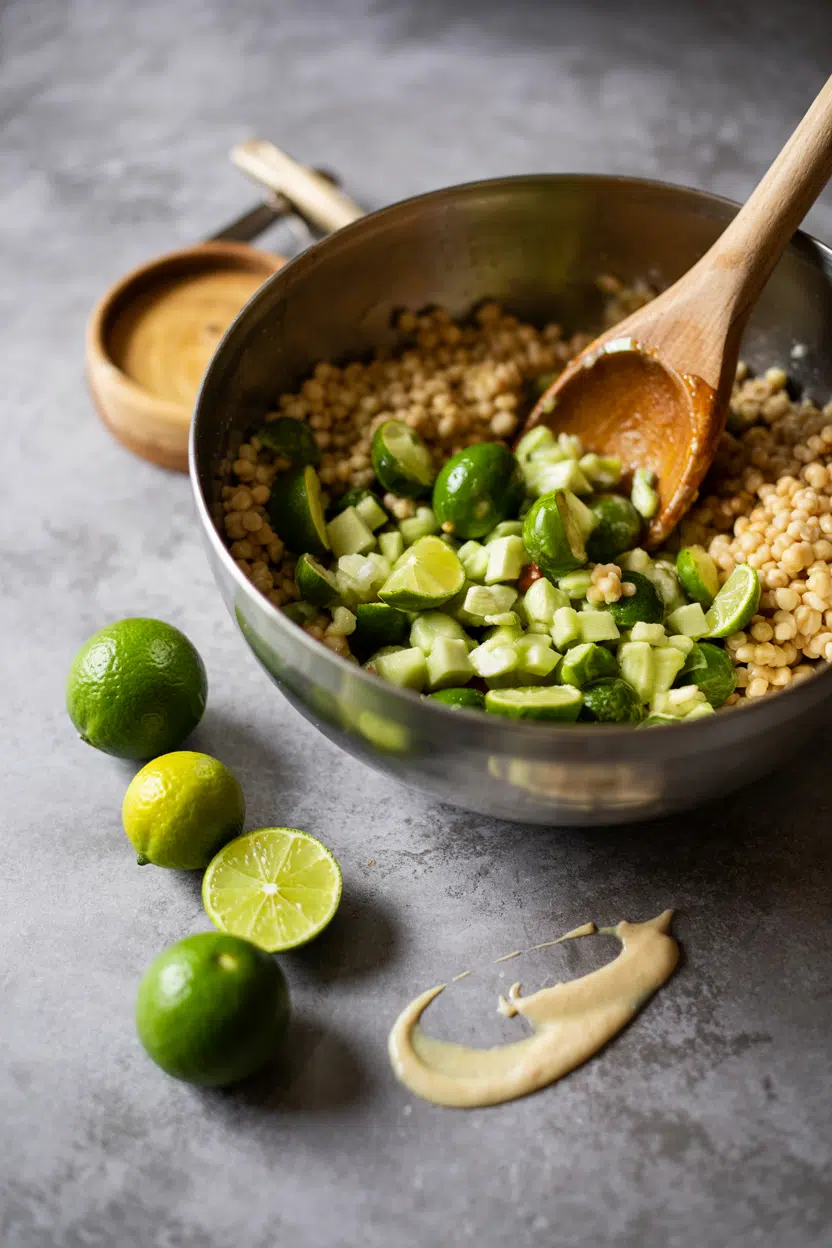
Calamansi juice hits with a concentrated, almost aggressive sourness - sharper than regular lime and with none of the slight oiliness you get from key lime.
Think of it as a tart lime crossed with tangerine: the citric punch is immediate, followed by a brief floral note and a faint tea-like bitterness that lingers.
That floral quality is what sets it apart. Regular lime is clean and sharp; calamansi adds an aromatic layer that changes the character of a dish, not just its acidity.
When comparing fruit fresh vs citric acid options for sour soups or marinades, fresh calamansi wins on complexity every time.
Heat softens the top-note sharpness but can amplify bitterness if the fruit cooks too long without sugar to balance it. Raw application - squeezed at the table or stirred in off heat - preserves its brightness best.
How to Use calamansi
Calamansi juice functions as a finishing acid first and a cooking acid second. In Filipino kitchens, it's squeezed raw over grilled fish, bangus, and shrimp at the table - letting its brightness hit before it can cook off. That same principle applies to noodle dishes, where a halved calamansi served on the side lets each person dial in their own sourness.
Soy-calamansi sauce is perhaps its most iconic application: a mix of soy sauce, fresh calamansi juice, and often bird's eye chilies (siling labuyo). It doubles as a dipping sauce for lumpia and grilled meats.
For a sinigang sour pork soup recipe, calamansi adds the sharp, clear acidity the broth needs alongside tamarind.
Beyond savory uses, calamansi juice and zest work well in drinks, marmalades, and baked goods. Iced calamansi juice - diluted with water and sweetened with sugar or honey - is a common Filipino refreshment.
The zest carries concentrated floral-citrus oils useful in curds and glazes for roasted pork or vegetables.
| Method | Best For | Tip |
|---|---|---|
| 🥗 Raw Squeeze | Finishing acid over fish, seafood, noodles | Squeeze at the table to preserve floral brightness |
| 🥗 Sauce/Dip | Soy-calamansi dipping sauce, marinades | Balance with soy ratio 1:1 to 2:1 soy-to-juice |
| 🍳 Simmered | Sinigang broth, reductions, glazes | Add sugar or honey to offset bitterness from heat |
| 🧁 Zest/Baked | Marmalades, curds, citrus glazes | Zest before juicing; use immediately for peak aroma |
| 🥤 Blended | Iced drinks, cocktails, concentrates | Sweeten with simple syrup; serve over ice within hours |
How to Buy and Store calamansi
Look for fruits that feel heavy relative to their size - weight signals juice content. Skin should be smooth, thin, and glossy with no soft spots or wrinkling.
Green fruits are standard and fully usable; an orange blush means the fruit has ripened further and will carry a slightly less aggressive sourness.
Store whole calamansi in the fridge crisper in a breathable bag.
For a full breakdown of how long calamansi keeps under different conditions, the shelf life differences matter more than most people expect.
Juice keeps 3-5 days refrigerated in a sealed jar.
If fresh calamansi isn't available, the alternatives to calamansi that hold up best are a lime-tangerine blend - though neither the floral notes nor the intensity will fully match.
- 🧊 Whole, refrigerated - 2-3 weeks in a breathable bag in the crisper drawer
- 🌡️ Whole, room temperature - several days; use quickly once removed from cold
- 🫙 Juice, refrigerated - 3-5 days sealed; freeze in ice cube trays for longer storage
Start With the Squeeze
If you're new to calamansi, don't start with a recipe that cooks it. Squeeze it raw over rice, grilled chicken, or even plain noodles with soy sauce.
That single move shows you exactly what it does - and why lime doesn't replicate it. Once you've tasted the difference, working it into marinades and soups becomes intuitive.
Those looking to expand into related Southeast Asian aromatics will find that replacements for kaffir lime leaf and replacements for tangerine round out a similar flavor world worth understanding alongside calamansi.
Frequently Asked Questions
Yes - calamondin is simply the common English name used in Western markets for the same fruit. The name calamansi (or kalamansi) is standard in the Philippines, while calamondin appears more often in horticultural and ornamental plant contexts outside Asia.
Lime works as a rough stand-in but won't replicate the floral notes or intensity. A mix of two parts lime juice to one part fresh tangerine juice gets closer - though the result is still less aromatic. Also check [kumquat swaps that work](https://forkliftkitchen.com/kumquat-substitutes/) for unusual but effective alternatives in certain applications.
Cut the fruit crosswise (not pole to pole) and press it cut-side down over a small juicer or squeeze directly with your hand. Rolling the fruit on the counter first loosens the pulp and increases yield from these small, seed-dense fruits.
It appears in sinigang (sour tamarind soup), as a table condiment for grilled fish and pork, in soy-calamansi dipping sauce for lumpia, and stirred into pancit noodles. Iced calamansi juice is also a staple beverage across the Philippines.
Refrigerated in a sealed jar, fresh calamansi juice holds for 3-5 days before losing brightness. Freezing extends that window significantly - frozen juice cubes stay usable for up to 3 months with minimal flavor loss.