
Enchilada sauce announces itself before it even hits the pan - that deep, smoky wave of toasted dried chiles and warm garlic filling the kitchen as it comes to a simmer.

Unlike making mexican salsa roja at home or a roasted tomatillo salsa verde recipe, this sauce is cooked down, strained smooth, and built specifically to cling to tortillas and brown at the edges during baking. Enchilada sauce is its own category - thinner than mole, more chile-forward than a standard tomato sauce, and more cohesive than a chunky salsa.
A cooked, strained chile-tomato sauce built on rehydrated dried chiles, tomatoes, and warm spices. Earthy, mildly smoky, and lightly acidic. Used primarily to coat and bake enchiladas, though it works well as a braising liquid and finishing sauce.
What Is Enchilada Sauce?
Enchilada sauce is a cooked, strained savory sauce from Mexico, with roots in central and northern regional preparations.
Remember it later
Planning to try this recipe soon? Save it for a quick find later!
It's made by rehydrating dried chiles - most commonly ancho and guajillo - then blending them with tomatoes or tomato paste, garlic, onion, cumin, and sometimes lard or vegetable oil before straining to a smooth, pourable consistency.
It's thinner and less complex than mole roja, and smoother than any chunky salsa or fresh table sauce.
The straining step is what separates it: seeds and skins are removed, leaving a cohesive sauce that coats tortillas evenly and browns during oven baking without breaking apart.
You'll also find it labeled salsa para enchiladas, red enchilada sauce, or enchilada gravy. Commercial versions vary widely - some are made with a tomato base and minimal chile, others lean harder on dried chile concentration.
Understanding replacements for adobo sauce is useful context here, since the two are sometimes confused despite having very different flavor profiles and applications.
- 🌶️ Ancho chiles - dried poblanos that contribute mild heat and a raisin-like earthiness
- 🌶️ Guajillo chiles - thin-skinned with sharper heat and brighter color
- 🧄 Aromatics - garlic and onion, either sautéed or blended raw into the sauce
- 🫙 Commercial versions - often contain added stabilizers, sodium, or sugars; check the label
What Does Enchilada Sauce Taste Like?
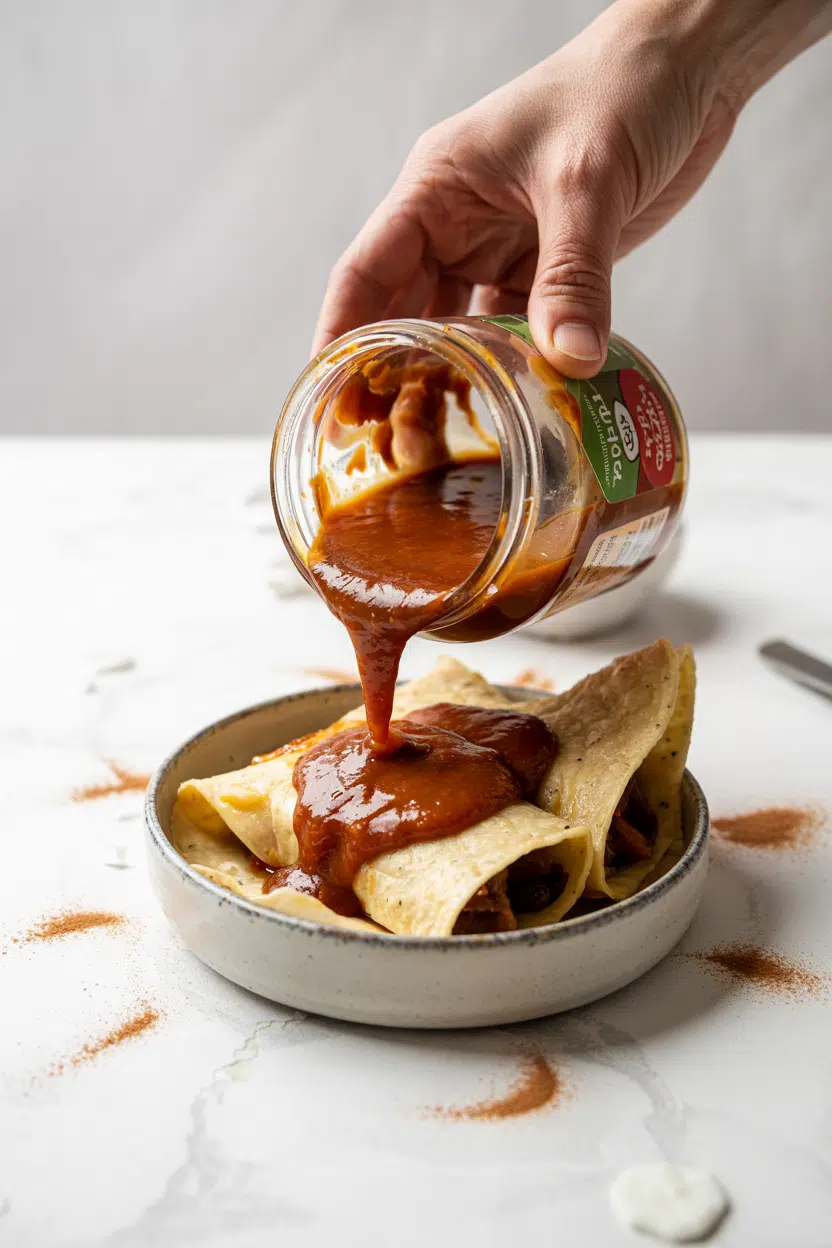
The dominant note is earthy, toasted chile - warm and slightly bitter in the way that good dark coffee is bitter, not harsh.
A secondary brightness comes from tomato or vinegar, which cuts through the heaviness of the dried chiles and keeps the sauce from tasting flat.
Cumin and garlic sit in the background, rounding the spice profile into something cohesive and savory.
The heat level is typically mild to moderate - present but not sharp - depending on the chile ratio and whether hotter varieties like árbol were added.
Compared to a thin mole roja, it lacks the nutty, chocolate-sweet layers that come from seeds, nuts, or dried fruit.
Think of it as a mole roja stripped back to its essential chile-and-spice structure - if you're drawn to that fuller complexity, making puebla mole poblano chicken at home shows how those extra layers get built.
How to Use Enchilada Sauce
The classic application is coating corn tortillas for baked enchiladas - dipping each tortilla in warm sauce before rolling it around a filling of shredded chicken, pork, or black beans, then pouring more sauce over the top to brown in the oven.
That browning step is where the sauce concentrates at the edges and develops its deepest flavor.
Beyond enchiladas, it pulls real weight as a braising liquid. Simmering shredded chicken or pork chunks directly in the sauce keeps the meat moist and seasons it from the inside out.
| Method | Best For | Tip |
|---|---|---|
| 🫕 Dipping & Baking | Classic rolled or stacked enchiladas | Warm sauce first; bake until edges bubble and brown |
| 🍗 Pan-Poaching | Shredded chicken or pork filling | Simmer on low; pull meat before sauce reduces too far |
| 🫙 Blending Into Fills | Bean, cheese, or sweet potato fillings | Add in small amounts to season and loosen the mix |
| 🥘 Braising Liquid | Meatballs, pork chunks, roasted vegetables | Thin with stock if needed; cover and braise low and slow |
| 🍳 Drizzling | Eggs, huevos rancheros, grain bowls | Use at room temperature or slightly warmed |
It pairs naturally with Monterey Jack, queso fresco, Mexican crema, pickled red onion, and corn tortillas. If a recipe calls for it but you're out, understanding swapping out enchilada sauce gives you workable options without losing the dish's core flavor direction.
Avoid using it with delicate seafood - the chile smoke overpowers mild fish almost immediately.
How to Buy and Store Enchilada Sauce
When buying canned or bottled versions, check the label for named chile varieties - ancho or guajillo listed as ingredients signal better flavor than a generic "chile powder" base.
High sodium counts and stabilizers are common in commercial sauces, so compare labels if you're watching salt intake. A good sauce pours smooth without watery separation in the can.
For homemade or fresh refrigerated versions, look for a deep red-brown color and a clean chile aroma when opened - no sour or fermented smell.
Opened cans and homemade batches both keep for 4-7 days refrigerated in a sealed container.
For a full breakdown, enchilada sauce's shelf life covers freezing timelines and signs of spoilage in detail.
Frozen sauce holds well for 2-3 months.
Where to Start with Enchilada Sauce
Start with a mid-range canned sauce made with ancho or guajillo if you're new to working with it - it gives you a reliable baseline before committing to a homemade batch.
Once you're cooking with it regularly, making your own from rehydrated dried chiles takes about 30 minutes and produces a noticeably deeper result.
If the sauce tastes flat from the can, simmer it for five minutes with a pinch of cumin.
The spice in most commercial sauces benefits from that brief reduction - knowing swapping out cumin can also help if your pantry is light on that spice.
Use it first in a baked enchilada, where the heat concentrates its flavor before you start experimenting with braising or breakfast applications.
Frequently Asked Questions
Most enchilada sauce is mild to moderate - ancho and guajillo chiles bring earthy warmth rather than sharp heat. Sauces made with árbol or chipotle run hotter. Check the label or chile list before cooking.
Enchilada sauce is cooked, strained smooth, and made from rehydrated dried chiles - it's designed to coat and bake. Salsa is typically fresher, chunkier, and served as a condiment rather than a cooking sauce.
In cooked dishes like casseroles or braised meats, yes - the swap works. In fresh applications like dips or pico-style toppings, enchilada sauce is too thin and smoky to substitute directly.
Simmer it uncovered over medium-low heat for 5-10 minutes - reduction is the cleanest fix. For a faster result, whisk in a small amount of tomato paste, which thickens without changing the flavor profile.
Ancho and guajillo are the most traditional base chiles - ancho adds earthiness and mild heat, guajillo contributes brighter color and slightly sharper flavor. Some regional recipes add mulato or pasilla for extra depth. Alternatives to [chili garlic sauce](https://forkliftkitchen.com/chili-garlic-sauce-substitutes/) won't replicate this; dried whole chiles are the right starting point.



