
Most people reach for mint or basil when they want fresh, herbal lift in a dish - and shiso is the herb they're unknowingly missing.
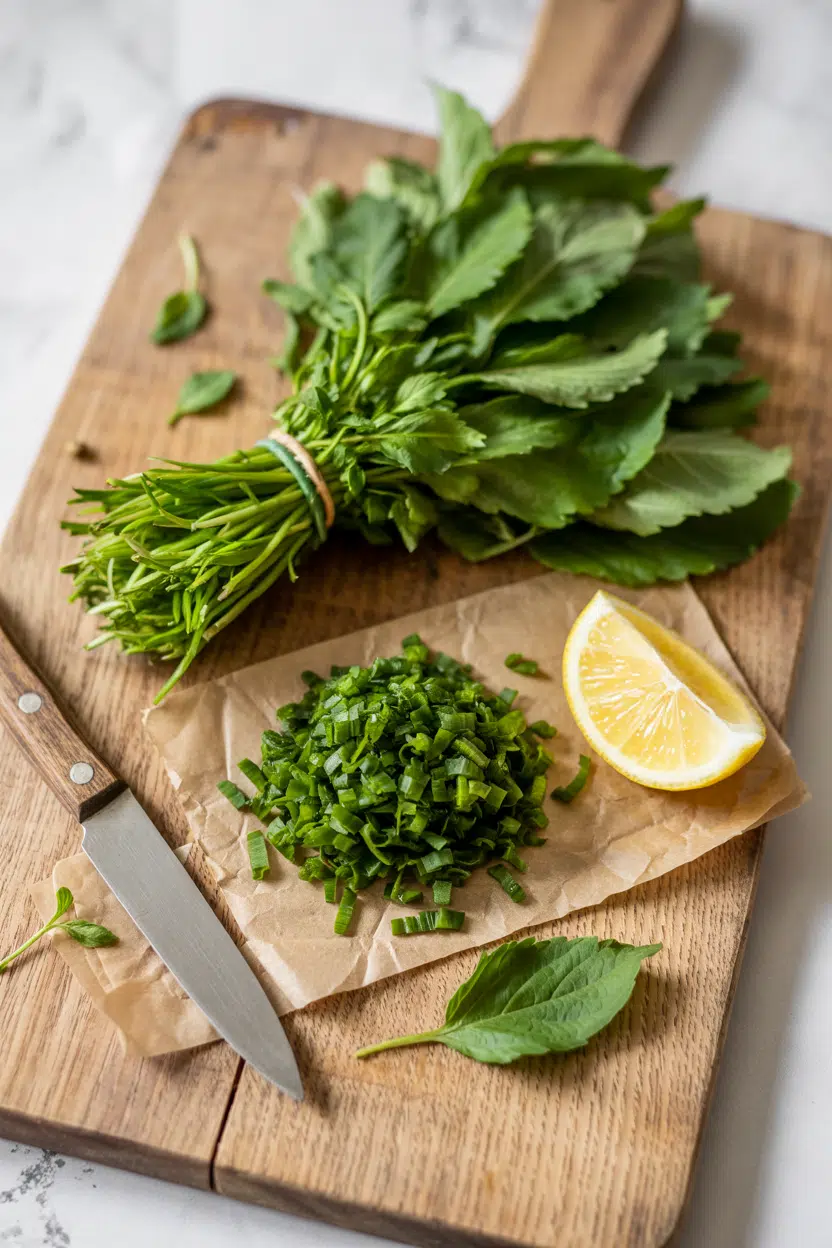
If you're looking for alternatives to mint that bring sharper, more complex character, shiso delivers something neither herb can fully replicate.
It wraps sashimi, stains pickles deep red, and fries into paper-thin tempura - often within the same meal.
Understanding what makes it distinct helps you use it intentionally, not just decoratively.
Shiso is a Japanese aromatic herb with a flavor profile crossing mint, basil, and mild anise. The green variety (ao-shiso) is used raw and cooked; the red variety (aka-shiso) colors pickles and brines. Fresh leaves last 3-7 days and work across raw, fried, and pickled applications.
What Is shiso?
Shiso (Perilla frutescens var. crispa) is a leafy aromatic herb native to East Asia, used most prominently in Japanese, Korean, and Vietnamese kitchens.
Remember it later
Planning to try this recipe soon? Save it for a quick find later!
It belongs to the mint family and grows serrated, oval leaves that range from bright green to deep burgundy depending on variety.
The two main types are ao-shiso (green shiso) and aka-shiso (red shiso), and they serve different purposes.
Ao-shiso is the variety you'll see wrapped around sashimi or folded into a onigiri rice balls recipe; aka-shiso is most famous for coloring umeboshi plums and pickling brines that vibrant red-purple.
You'll also find it sold under several other names - perilla, oba, Japanese basil, or simply shiso leaf. Calling it "Japanese basil" isn't wrong, but it undersells how different it tastes.
Its compound perillaldehyde is responsible for that signature minty-anise aroma and doesn't appear in basil at all.
- 🌿 Ao-shiso (green) - bright flavor, used raw as wrap or chiffonade, plus tempura
- 🔴 Aka-shiso (red) - earthier and more tannic, primary role in pickling and coloring
- 🌏 Other names - perilla, oba, Japanese basil, shiso leaf, perilla frutescens var. crispa
What Does shiso Taste Like?
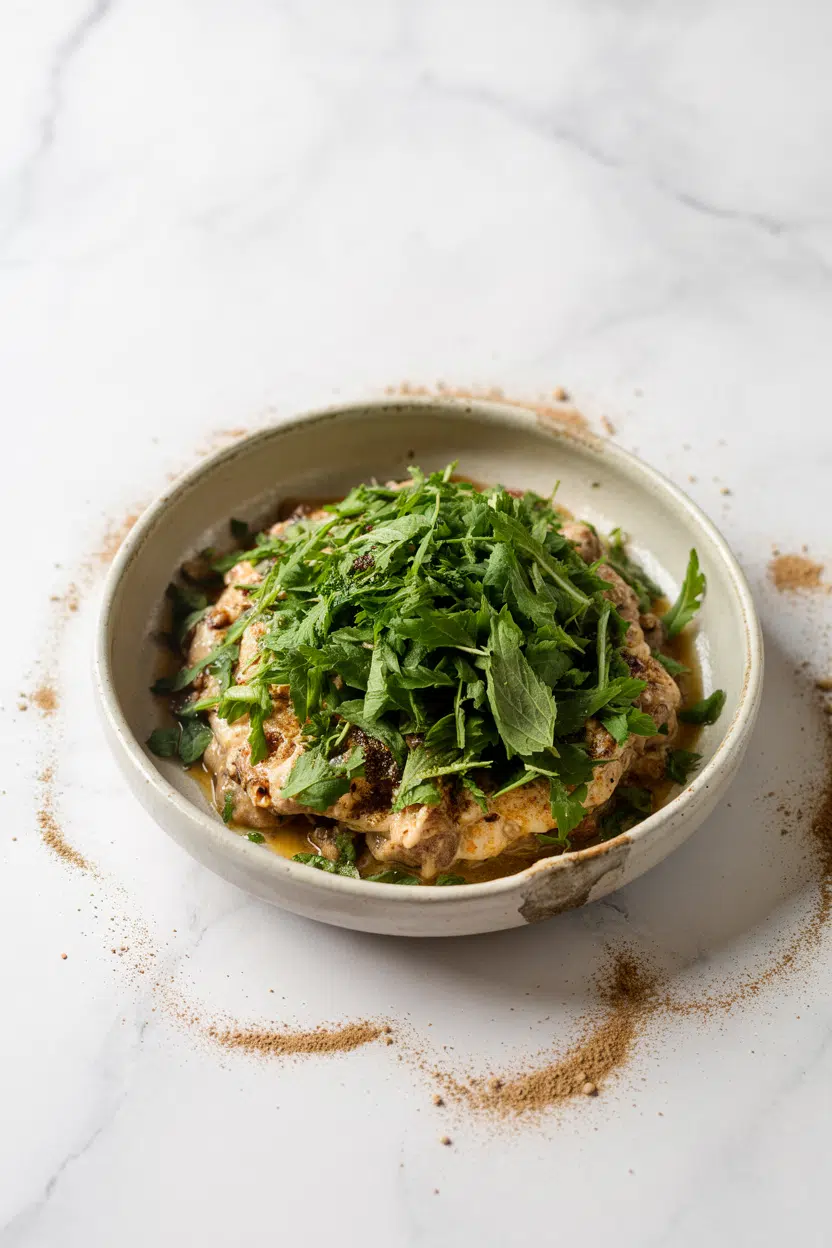
Shiso tastes like what you'd get if mint, basil, and a mild anise seed crossed paths. The mint element is real but restrained - it's fresh and cool without the sharp menthol edge you get from peppermint.
The anise undertone is subtle and slightly sweet, and citrus-like brightness lifts the whole profile without any actual sourness. A faint pepperiness lingers at the back of the palate, especially in younger green leaves.
Heat changes things noticeably.
A raw shiso leaf in sashimi delivers its full herbaceous punch; the same leaf wilted in a warm sauce loses its brightness quickly and turns slightly grassy. Aka-shiso reads earthier and more tannic than green - less mint, more iron-like depth - which is why it's used for flavor in brines rather than eaten fresh.
How to Use shiso
Raw shiso is where the herb shows best.
Whole ao-shiso leaves work as a natural wrapper for sashimi, adding herbal contrast to fatty fish without overwhelming it.
Thin julienne - chiffonade-cut into fine ribbons - works scattered over cold soba, rice bowls, or salads, and it's one area where swapping out shiso is genuinely difficult because nothing else delivers that exact flavor combination.
For cooked applications, tempura-battered shiso is a classic: the whole leaf is dipped and fried for roughly 60-90 seconds, producing a crisp, translucent shell that preserves much of the aroma.
If you're experimenting with batter options, checking replacements for tempura flour gives you workable alternatives.
Shiso also infuses well - steep leaves in rice vinegar or light oil for 24 hours for a dressing base with genuine herbaceous depth.
Aka-shiso earns its place in pickling. It gives umeboshi their red color and contributes a distinctly tannic, mineral note to the brine. The same approach scales to cucumber or ginger pickles where color and savory depth both matter.
Shiso pairs naturally with soy sauce, ponzu, yuzu, sesame oil, and raw fish - and swapping out ponzu sauce in those pairings shows how central its citrus-acid element really is.
For grilled applications, shiso blended with sesame oil and soy makes a quick, no-cook sauce for chicken or pork.
| Method | Best For | Tip |
|---|---|---|
| 🥗 Raw (whole) | Sashimi wrap, onigiri, garnish | Use within hours of slicing for full aroma |
| 🥗 Raw (chiffonade) | Cold noodles, rice bowls, salads | Cut just before serving to prevent blackening |
| 🍳 Tempura | Appetizers, bento, side dishes | Fry 60-90 seconds max; drain immediately |
| 🫙 Infused/Pickled | Dressings, umeboshi brine, vinegar | Red shiso for color; green for milder infusions |
How to Buy and Store shiso
At the market, reach for leaves that stand upright and show no yellowing or sliminess. Ao-shiso should be a clear, saturated green; aka-shiso should show deep burgundy with no brown edges. Snap a stem - it should break cleanly, not bend.
When you can, smell the leaf; fresh shiso gives an immediate minty-citrus signal.
At home, wrap leaves loosely in a damp paper towel, slip them into a perforated bag or loosely sealed container, and refrigerate.
Fresh shiso's shelf life sits around 3-7 days - notably shorter than something like basil's shelf life under the same conditions.
For a full breakdown of what affects freshness and when to discard, see the details on shiso's shelf life.
Pickled or dried shiso keeps far longer and is a practical option when fresh supply is inconsistent.
Start Here if You're New to Shiso
Buy green shiso first. It's more widely available, easier to use raw, and shows the herb's flavor most clearly.
Lay a whole leaf under sashimi or slice a few ribbons over rice - both approaches let you understand what the herb actually contributes before getting into pickling or infusions.
Red shiso is a second step. It's less about eating fresh and more about building color and depth into brines.
Once you've tasted what it does to umeboshi or a simple cucumber pickle, its role makes immediate sense.
Both varieties reward what pairs with sashimi thinking - the herb is almost always part of a composed pairing, not a solo act.
Frequently Asked Questions
Shiso is a variety of perilla - specifically Perilla frutescens var. crispa. Broader "perilla" covers several related plants used across Asian cuisines, some with flatter leaves and milder flavor than Japanese shiso.
Yes - raw is actually the preferred preparation for green shiso. Its flavor is brightest uncooked, which is why it's used as a wrap for sashimi and scattered over cold noodles without any heat applied.
Green shiso (ao-shiso) is brighter, mintier, and eaten raw or fried. Red shiso (aka-shiso) is earthier and more tannic, used mainly to color umeboshi and pickling brines rather than as a fresh eating herb.
It adds a clean, herbal contrast to fatty fish - the mint-anise note cuts through richness without the sharpness of wasabi. Most people notice it as a fresh, slightly cooling layer that lifts the overall bite.
The most reliable method is salting or pickling - layering leaves with salt or submerging in rice vinegar keeps them usable for weeks. Drying is also an option, though it dulls the minty-citrus notes considerably.



