
Most people assume angostura bitters is something bartenders use and cooks ignore - a cocktail accessory with no place beyond the bar.
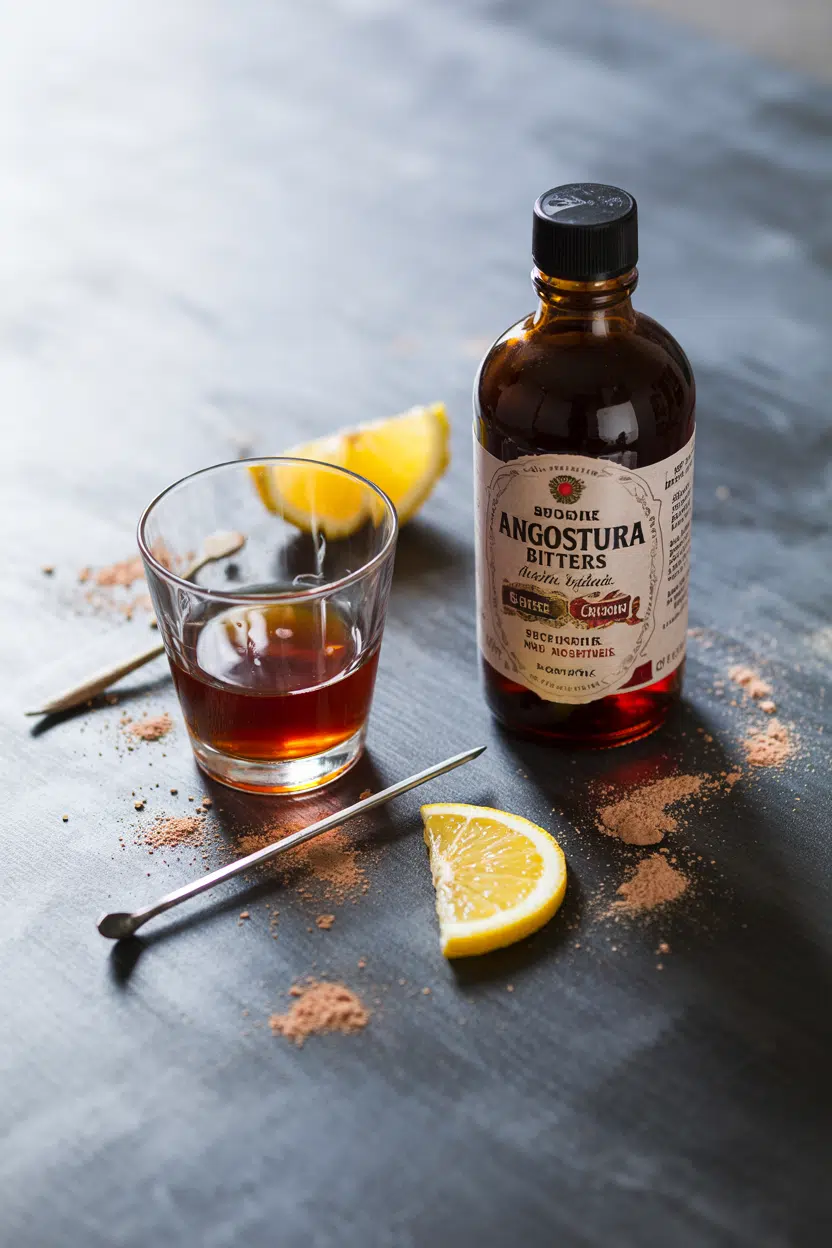
That assumption costs you a lot of depth.
A single dash can sharpen a butter sauce, anchor a braise, or do what making classic manhattan cocktail at home confirms: two drops in the right glass changes the entire balance of a drink.
Angostura bitters is a concentrated alcoholic tincture of gentian root, bark, and warm spices. Used by the dash, it adds bitter-spiced depth to cocktails, sauces, and braises. A sealed bottle lasts years.
What Is Angostura Bitters?
Angostura bitters is a concentrated aromatic tincture - dark brown, roughly 44.7% ABV - made from gentian root, bark, and a proprietary blend of herbs and spices.
Remember it later
Planning to try this recipe soon? Save it for a quick find later!
It was developed in the 1820s by a German physician named Johann Siegert in Venezuela, later produced in Trinidad where the House of Angostura still operates today.
The bottle is unmistakable: an oversized paper label on a small glass bottle with a dasher cap that meters drops rather than pours. That cap is intentional - this is an ingredient measured in dashes, not teaspoons.
It sits in the category of cocktail bitters, which are botanical extracts used as flavor concentrates. Where orange bitters lean citrus-forward, angostura bitters goes deeper into root and bark territory.
You may see it listed as "Angostura aromatic bitters" or misspelled "angustora bitters," but one product dominates: the Trinidad-made original.
- 🌍 Origin - Developed in Venezuela, now produced in Trinidad by the House of Angostura
- 🧪 Base ingredient - Gentian root, a powerfully bitter botanical, drives the flavor
- 🍶 Format - Dispensed in single-drop dashes from a dasher cap or dropper
- 📋 Common misspelling - "Angustora bitters" refers to the same product
What Does Angostura Bitters Taste Like?
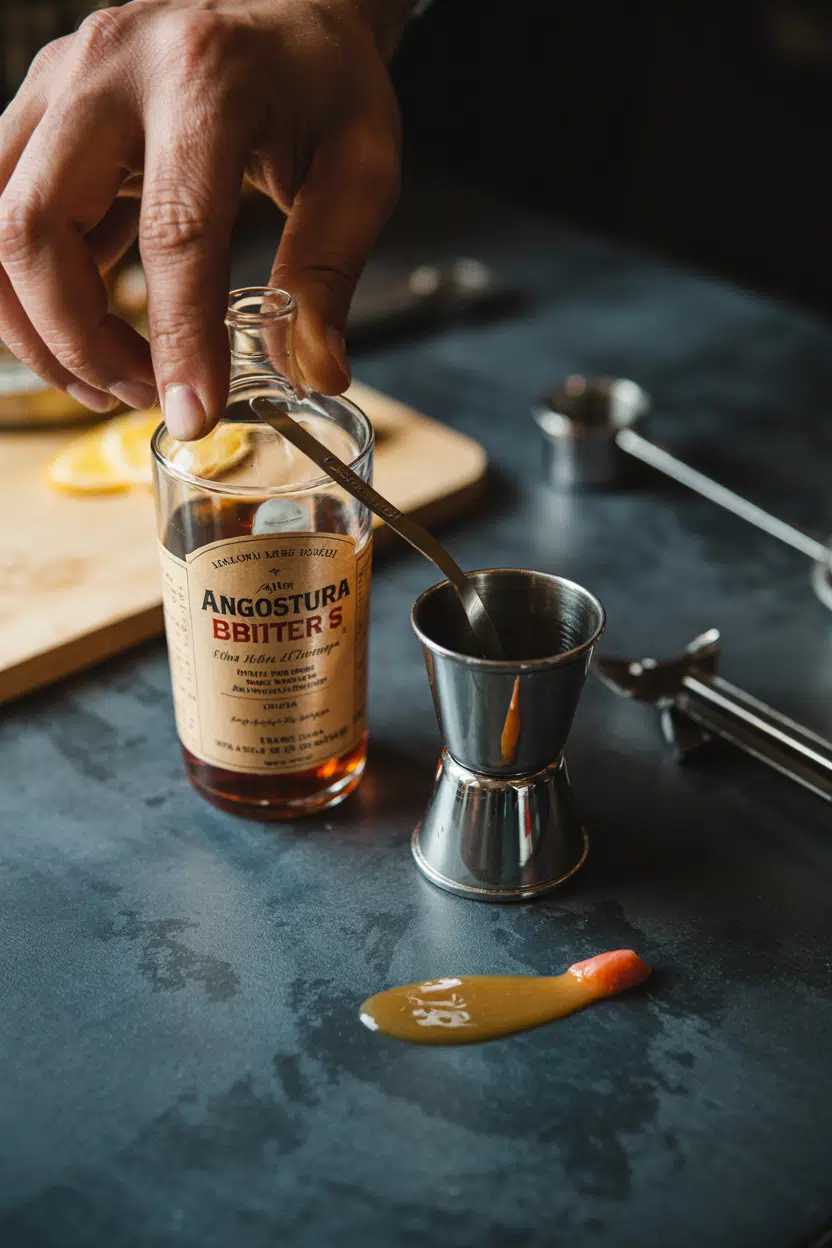
Think of very concentrated black tea steeped with warm spices, then given a tonic-like bitter finish. That's the closest shorthand.
The gentian root drives a clean, root-driven bitterness - not acrid, not harsh, but present and structural.
Layered on top of that bitterness are cinnamon, clove, and cardamom-adjacent notes - not a single identifiable spice, but a composite warmth. The aroma opens with bright citrus peel top-notes before settling into bark and dried spice.
In cooking, heat softens some of the top-note brightness while the bitter backbone stays in place. Add it too early in a sauce and you lose the citrus lift; finish with it and both registers come through.
How to Use Angostura Bitters
Cocktails are the home ground. Two dashes in an Old Fashioned sharpen the bittersweet edge of rye or bourbon without announcing themselves. A Manhattan takes one or two drops to add woody spice and lengthen the finish. If you're ever swapping out orange bitters in a recipe, angostura bitters can step in - though the result reads darker and less citrus-forward.
In the kitchen, the applications are more surprising.
A few drops folded into béarnaise or butter sauces cut through fat and add aromatic lift at the finish.
Chocolate and caramel sauces gain a bitter-sweet depth from a single drop stirred in off heat.
Red meat marinades benefit from one or two dashes added alongside acid - the aromatic bitterness works against the richness the same way a bitter green would.
| Method | Best For | Tip |
|---|---|---|
| 🍸 Dashing | Old Fashioned, Manhattan, shrubs, savory cocktails | 1-2 dashes max; taste before adding more |
| 🍳 Finishing | Butter sauces, béarnaise, braises | Add after heat is off to preserve aroma |
| 🍫 Infusing | Chocolate glazes, caramel sauces, simple syrups | One drop at a time - it concentrates quickly |
| 🎂 Baking | Cake batters, glazes, fruit compotes | Pair with orange zest to echo the citrus top-note |
Steer clear of delicate dishes. Light fish courses and fresh green salads don't have the weight to carry angostura's bark-and-spice profile - it doesn't blend in, it takes over.
How to Buy and Store Angostura Bitters
Buy a sealed dark glass bottle with an intact dasher cap - the small plastic top that meters drops. Check the neck for sticky residue, which signals past leakage and potential aroma loss.
A full bottle with a clean neck and the "Angostura" stamp on the label is the right starting point.
Store the bottle upright in a cool, dark pantry or liquor cabinet. Heat and direct sunlight break down the volatile aromatic compounds faster than anything else. Keep the cap tight between uses to prevent evaporation.
Shelf life is generous. If you want to know what actual angostura bitters spoilage signs look like, the short answer is aroma fade rather than anything visible - a flat-smelling bottle has lost its edge even if it looks fine.
Where to Start With Angostura Bitters
Start with one dash in your next whiskey cocktail, then stop. That's the fastest way to understand what it does before applying it anywhere else.
- 🥃 New to bitters - Add one dash to bourbon over ice, taste, then try two
- 🍳 Kitchen use - Start with a butter sauce or chocolate glaze before bolder applications
- 🔄 Need a substitute - See our guide to [replacements for angostura bitters](https://forkliftkitchen.com/angostura-bitters-substitutes/) for the closest options
- ⚠️ Avoiding alcohol - Skip it in recipes for children or strict alcohol-free diets; heat doesn't reliably cook off all the ABV at dash volumes
One bottle handles both bar and kitchen duties for years. That's a reasonable ask for something this concentrated.
Frequently Asked Questions
Yes - Angostura aromatic bitters is approximately 44.7% ABV, making it stronger than most spirits. However, a standard dash adds only a fraction of a milliliter to a drink, so total alcohol contribution per serving is negligible in cocktails.
One to two dashes is the standard range for most classic cocktails. A single dash from the dasher cap is roughly 0.6 ml - enough to shift balance without dominating the drink.
Yes, and it works well in butter sauces, chocolate desserts, braises, and marinades. Add it at the end of cooking when possible - early heat strips the citrus top-notes and leaves only the bitter base.
Yes, in practical terms - the botanical extract contains no animal products. The proprietary recipe isn't fully disclosed, but no dairy, gelatin, or animal-derived fining agents are listed or reported by the manufacturer.
Orange bitters lead with dried citrus peel and have a lighter, brighter profile. Angostura bitters goes deeper - gentian root and bark give it a darker, woodier character that reads more bitter than fruity.



