
That first crack when you snap a fresh baguette - the crust shattering into brittle shards, the steam still rising from the open crumb - is the whole point.
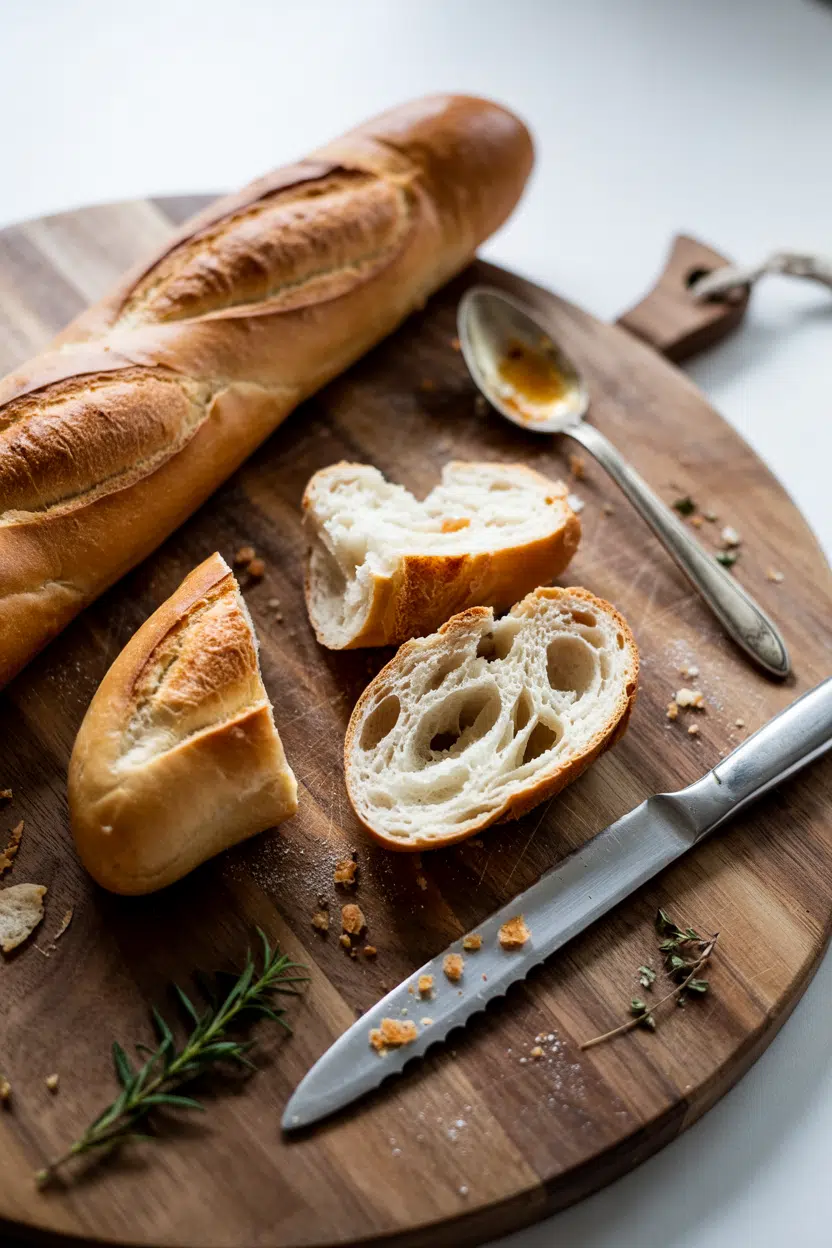
Few breads hit that contrast so cleanly: a thin, crackly shell wrapped around a pale, chewy interior with an open, irregular hole structure.
Whether you're reaching for one to serve alongside alternatives to ciabatta at a dinner table or slicing it thin for a classic jambon-beurre, understanding what makes a baguette tick helps you use it at its best.
A baguette is a long, thin French loaf with a crackly golden crust and an airy, chewy crumb. It has a mild wheaty sweetness with a light lactic tang from fermentation. Best eaten fresh within a day or two, it works for sandwiches, crostini, soups, and table bread.
What Is a Baguette?
A baguette is a long, thin loaf of leavened wheat bread originating from Parisian bakeries in the Île-de-France region. The name translates loosely to "wand" or "stick" in French - an apt description of its narrow, elongated shape.
Remember it later
Planning to try this recipe soon? Save it for a quick find later!
It's also called pain long, baton, or baguette tradition, depending on the bakery and country. The baguette de tradition française is a protected designation in France, requiring specific flour, no additives, and hand or minimal-machine shaping.
At its core, a baguette uses four ingredients: wheat flour, water, salt, and yeast. The dough undergoes a slow fermentation, which develops both structure and flavor.
High-heat baking with steam in the oven's early minutes sets the crust and allows that signature crackle to form.
- 🥖 Baguette tradition - additive-free, hand-shaped, flour-dusted, sold at artisan bakeries
- 🏪 Industrial baguette - machine-formed, softer crust, more uniform crumb, shorter fermentation
- 🌾 Baguette complète - made with whole wheat flour, denser crumb, nuttier flavor
- 🧀 Ficelle - a thinner, lighter version with an even crispier crust-to-crumb ratio
What Does a Baguette Taste Like?
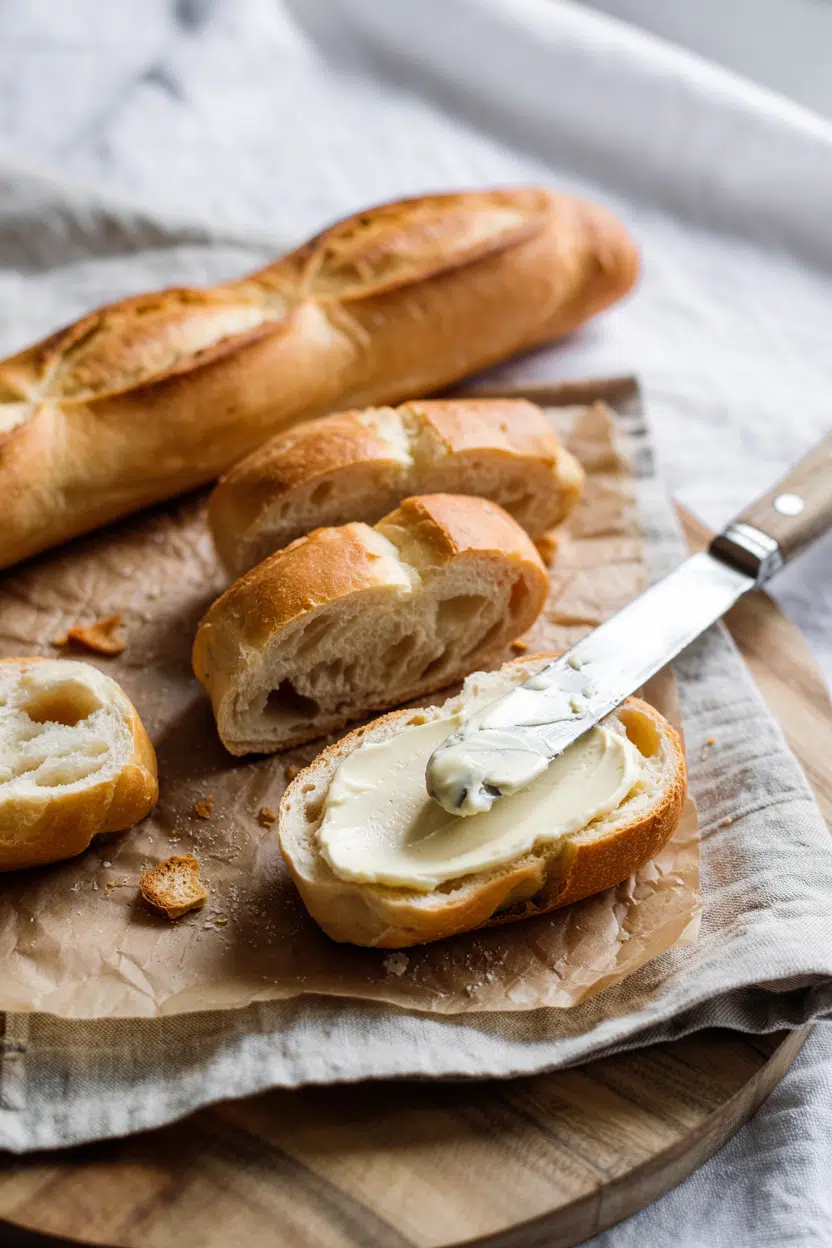
A fresh baguette has a mild wheaty sweetness at its core, lifted by a light lactic tang that comes directly from the fermentation process.
The crust adds toasty, slightly caramelized notes - the part most people eat first and remember longest.
Compared to sourdough bread and its flavor, a baguette is noticeably gentler on acidity and less dense in texture. It's closer to a plain country loaf, however with a far crispier shell and a more open, irregular crumb structure.
Flavor shifts noticeably as the loaf ages. Within hours of baking, the crust softens as moisture migrates from the crumb outward.
By day two, the crumb firms and the wheat flavor flattens - which is why bakers say a baguette is a same-day food.
How to Use a Baguette
A baguette's neutral, mild base means it works across an unusually wide range of preparations without competing with other ingredients. French and European bistro cooking lean on it hardest, however Mediterranean-influenced menus use it just as freely.
| Method | Best For | Tip |
|---|---|---|
| 🥗 Sliced Raw | Jambon-beurre, ham-and-cheese, table bread | Cut on a bias for longer surface area |
| 🔥 Broiled/Toasted | Crostini with tapenade, ricotta, or roasted veg | Brush with olive oil before broiling for even color |
| 🍳 Pan-Fried | Garlic bread, buttered breakfast toast | Use day-old slices - fresh bread absorbs too much butter |
| 🍲 Torn for Dipping | French onion soup, bouillabaisse, potage | Tear rather than slice to create more surface for dipping |
| 🍞 Cubed and Baked | Croutons for salads, pain perdu (bread pudding) | Stale baguette works best - it crisps without burning |
Pairings tend to follow a simple logic: mild, fatty, or acidic ingredients complement the bread's restrained flavor without drowning it.
Unsalted or cultured butter is the most common pairing, however soft cheeses like brie and camembert work just as well.
Cured meats, including jambon and saucisson, pair with it in French tradition - understanding meat's flavor and uses helps clarify why fatty, salt-cured cuts balance the baguette's subtle acidity.
If you want to try a baguette-based appetizer, a tomato basil burrata crostini recipe shows exactly how toasted slices hold up under fresh toppings.
How to Buy and Store a Baguette
At the bakery or grocery counter, tap the loaf on the bottom - a hollow sound means the crumb is properly open and the crust has set.
Avoid loaves with a pale, matte crust or a soft exterior at purchase time; that's a sign of underbaking or humidity exposure.
Store at room temperature in a paper bag or loosely wrapped - not sealed in plastic, which traps moisture and ruins the crust within hours.
For anything beyond two days, slice the loaf first and freeze the pieces flat; frozen slices go directly into a toaster oven without thawing.
Tracking baguette's shelf life more closely helps if you're buying in bulk or planning meals ahead.
- Same day - Best crust texture and full flavor; eat as-is or serve at the table
- Day two - Crust softens; ideal for toasting, pan-frying, or making croutons
- Day three+ - Crumb firms significantly; use for pain perdu or discard
Starting Points for a Better Loaf
A baguette rewards simplicity. If you're new to eating or cooking with one, start with just butter - it reveals the bread's wheat and fermentation character without distraction.
For replacements for butter when dairy isn't an option, a drizzle of good olive oil works just as well on a sliced baguette.
If you already know the basics and want to branch out, try it toasted for crostini or torn into a bowl of French onion soup. Those two uses expose entirely different sides of the same loaf.
For situations where a baguette isn't available, knowing the alternatives to baguette keeps your recipe on track without sacrificing too much in texture or crust character.
Frequently Asked Questions
Four ingredients: wheat flour, water, salt, and yeast. A baguette de tradition française adds the requirement of no additives or improvers, relying entirely on slow fermentation for flavor and structure.
Sourdough uses a wild-yeast starter and has a stronger, more acidic flavor. A baguette uses commercial yeast, ferments for a shorter time, and produces a much milder, lighter loaf with a thinner crust.
One to two days at room temperature before the crust softens and the crumb dries. Sliced and frozen, it keeps for up to three months with no meaningful quality loss.
Yes, but slice it first. Freezing a whole loaf makes it harder to portion later, and the crust shatters when thawed. Frozen slices go straight from freezer to toaster oven at 375°F for three to four minutes.
Use a serrated bread knife and cut on a diagonal bias. Angled cuts produce longer, wider slices with more surface area - useful for crostini or open-faced sandwiches where topping coverage matters.



