
Most cooks treat poppy seed as a garnish - something you sprinkle on a bagel and forget about.

That assumption undersells a seed used for centuries in Central European pastry traditions, Indian curries, and spice-cured fish alike. Poppy seed brings a mild nuttiness, a faint bitter edge, and a satisfying crunch that deepens significantly once heat enters the picture.
Understanding how it actually behaves in cooking changes what you reach for it to do.
Tiny kidney-shaped oilseeds with a mild nutty flavor and subtle bitterness. Used whole on baked goods or ground into sweet paste fillings. A staple in Eastern European and Indian cooking. Store refrigerated once opened to prevent rancidity.
What Is Poppy Seed?
Poppy seed comes from Papaver somniferum, the opium poppy, harvested from dried seed capsules once the plant has flowered and died back.
Remember it later
Planning to try this recipe soon? Save it for a quick find later!
The seeds themselves contain only trace opiate compounds - far below any psychoactive threshold - and have been eaten safely across cultures for thousands of years.
They are classified as an oilseed, meaning a significant portion of their weight is fat, which is why ground seeds turn paste-like so readily and why whole seeds can go rancid.
Depending on origin and variety, the seeds appear blue-grey or black (European varieties) or creamy white (Indian and Middle Eastern types, sold as khus khus).
In Bengali cooking they're called posto, and whole dishes are built around them as a primary ingredient rather than a garnish.
The European tradition treats them differently - pressed into poppy seed oil for dressings, or ground with milk and sugar into the dark filling at the heart of Polish makowiec and Czech kolaches.
- 🌍 Blue-grey/black seeds - standard in Eastern European baking; stronger flavor
- 🌿 White seeds (khus khus) - milder, preferred in Indian curries and gravies as a thickener
- 🫙 Poppy seed oil - cold-pressed from European seeds, used in dressings and finishing
What Does Poppy Seed Taste Like?
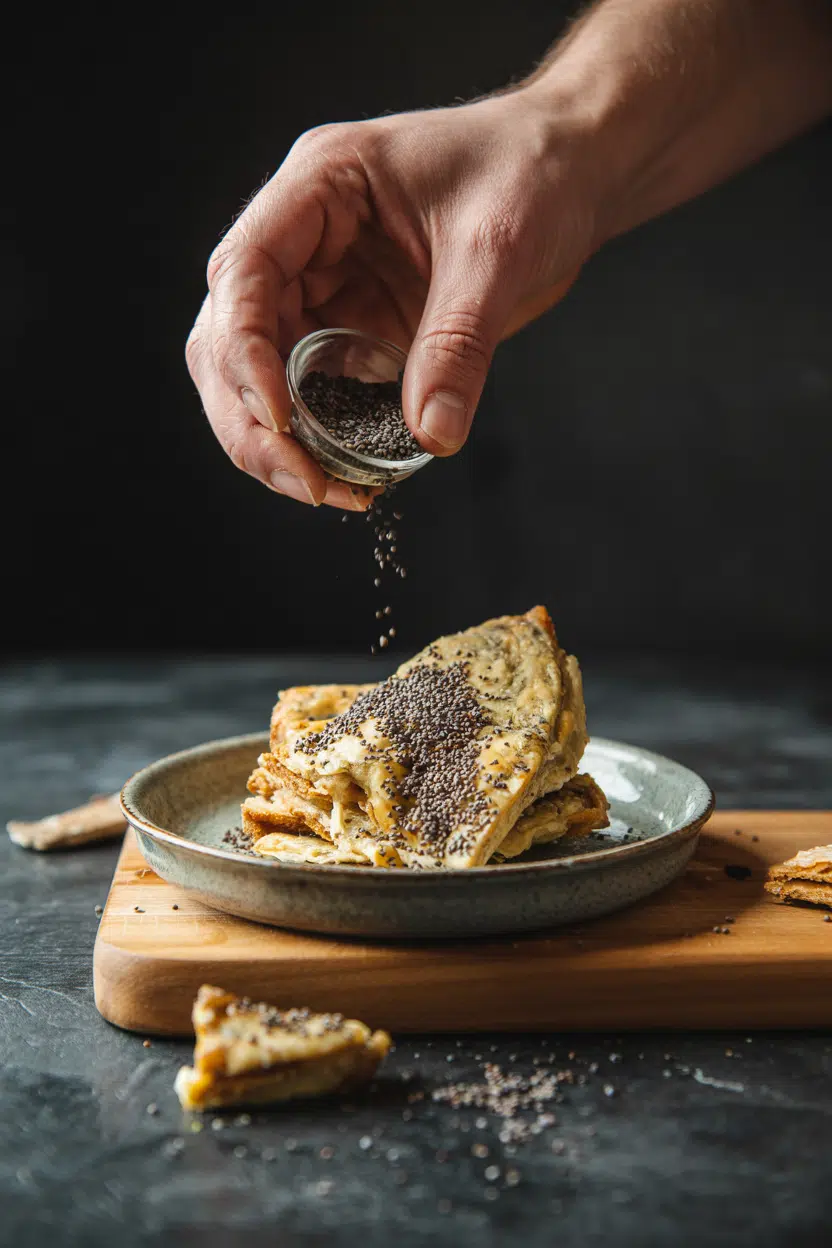
Raw, poppy seed tastes close to sesame - mildly nutty and slightly oily - but milder and with a faint bitter undertone that sesame doesn't carry.
That bitterness is subtle enough not to read as unpleasant; it functions more as a counterweight that keeps the nuttiness from feeling flat.
Heat changes things noticeably. Toasting in a dry pan pushes the floral undertone forward and deepens the nuttiness into something closer to roasted sesame, though still more restrained.
Ground and cooked into a paste with milk and honey, the bitterness nearly disappears, leaving a rich, earthy sweetness that explains why it anchors so many Central European desserts.
How to Use Poppy Seed
The most common use in Western kitchens is whole seeds scattered on dough before baking - bagels, Kaiser rolls, and rye loaves all rely on this application.
The seeds toast lightly in the oven, which is why baked goods carry more flavor than raw seeds suggest.
Ground poppy seed filling is the ingredient's most labor-intensive form and its most rewarding. Grinding the seeds fine and cooking them with sugar, butter, and milk or cream produces the dense, dark paste used in makowiec, strudel, and hamantaschen. It takes volume - typically half a cup or more per pastry - to register properly.
| Method | Best For | Tip |
|---|---|---|
| 🥗 Raw/Whole | Salad dressings, vinaigrettes, yogurt toppings | Add just before serving to preserve crunch |
| 🍞 Baked | Bagels, rolls, muffins, crackers | Press lightly into dough so seeds adhere after baking |
| 🍳 Ground into paste | Strudel, kolaches, makowiec, hamantaschen | Cook paste with milk and sugar until thick before filling |
| 🔥 Toasted | Spice rubs for pork and fish, pickling blends | Toast until fragrant - 2 minutes max in a dry pan over medium heat |
Pairing logic is straightforward. Lemon cuts the oiliness and brightens the nuttiness. Honey and butter amplify richness without drowning the seed's character.
Caraway is a natural partner - both share an earthy, slightly anise-adjacent note that works well in rye bread and deli preparations.
In Indian cooking, white poppy seeds (khus khus) are soaked and blended into curry gravies as a thickener and fat source rather than a topping.
This is a different application entirely from the European tradition, and it's worth noting when recipes reference "poppy seed" without specifying type.
If you rely heavily on this ingredient and ever need a workaround, understanding swapping out poppy seed is useful - the right stand-in depends entirely on whether you're using it whole, ground, or as a thickener.
How to Buy and Store Poppy Seed
Fresh poppy seed smells faintly nutty and oily - not sharp, not flat. Avoid bags with visible oil stains on the packaging or seeds clumped together, both signs of moisture exposure or age.
For ground poppy filling sold in cans (common in Eastern European grocery stores), check that the aroma is clean and not sour.
Store whole seeds in an airtight container away from heat and light. Once opened, refrigeration slows rancidity considerably.
Ground paste must stay refrigerated in a sealed jar and should be used within a few weeks. For a full breakdown of timelines, knowing how long poppy seed keeps under different conditions will help you avoid wasting a batch.
- Room temp (unopened) - several months if stored away from light and heat
- Refrigerated (opened) - 6-12 months for whole seeds; 1-3 months for ground paste
- Freezer - whole seeds freeze well in a sealed bag for up to a year
Starting Points Worth Knowing
New to poppy seed? Begin with the simplest application: toast a tablespoon in a dry pan, then stir it into plain yogurt with honey and lemon zest.
That single step shows you what heat and acid do to the seed's character before you commit to a full pastry project.
If the flavor appeals but you're baking something that calls for sesame, the two seeds are closer than most guides admit - reading up on swapping out sesame seed shows where that substitution holds and where it breaks down.
Frequently Asked Questions
Yes, in significant quantities. Poppy seeds carry trace morphine and codeine from the plant and can trigger a false-positive opiate result on urine screenings. A single bagel is unlikely to cause a problem, but consuming a large poppy seed pastry before a test carries real risk.
No. The seeds contain only trace residues of opiate alkaloids from the seed capsule - not enough to produce any drug effect. Food-grade poppy seeds are washed and processed, which removes most surface residue before sale.
Black (blue-grey) seeds are the European variety - stronger flavored, used in baking and fillings. White seeds (khus khus) are the Indian type, milder in taste and used primarily as a curry thickener rather than a topping or filling.
Yes, raw poppy seeds are safe to eat. Their flavor is milder untoasted - a light nuttiness without much depth. Toasting or baking unlocks noticeably more aroma and intensifies the nutty character.
Whole seeds add a fine, consistent crunch throughout muffins and cakes without altering structure. Ground into paste and used as a filling, they contribute density and moisture - which is why poppy seed pastries tend to feel heavier than plain dough versions.



