
Risotto alla Milanese barely needs finishing - a handful of finely grated Grana Padano stirred in off the heat binds the starchy rice into something glossy and cohesive, the kind of result that makes you understand why northern Italian cooks reach for this wheel before almost anything else.

It earns that instinct, and it works far beyond risotto.
Much like discovering that replacements for tamarind puree can shift a whole recipe, understanding what Grana Padano actually brings to a dish changes how you stock your fridge.
Grana Padano is a hard, aged Italian cow's-milk cheese with a grainy texture, mild nutty-savory flavor, and DOP-protected origin in the Po Valley. It grates, shaves, and melts well, making it a reliable finisher across pasta, grains, and salads.
What Is Grana Padano?
Grana Padano DOP is a hard, partially skimmed cow's-milk cheese produced in the Po Valley of northern Italy, where it has been made since at least the 12th century. "Grana" refers to the granular, slightly sandy texture you feel when the paste crumbles between your fingers.
Remember it later
Planning to try this recipe soon? Save it for a quick find later!
Production follows strict PDO rules - the milk, the aging environment, the timing, and the wheel dimensions are all regulated. Wheels are aged a minimum of nine months, though many reach 16 months or more before sale.
Three broad age categories shape what you bring home:
- 🧀 Grana Padano (9-16 months) - paler paste, moist crumb, milder flavor, melts most smoothly
- 🧀 Grana Padano Oltre 16 Mesi (over 16 months) - deeper gold paste, more concentrated savory notes, firmer grind
- 🧀 Grana Padano Riserva (over 20 months) - the most complex category, drier and most crystalline
Every authentic wheel carries a dotted diamond pattern stamped into the rind alongside the DOP mark - that rind stamp is the quickest authentication check at the counter.
If you ever need a stand-in, our guide to grana padano stand-ins covers the closest options by age and use.
What Does Grana Padano Taste Like?
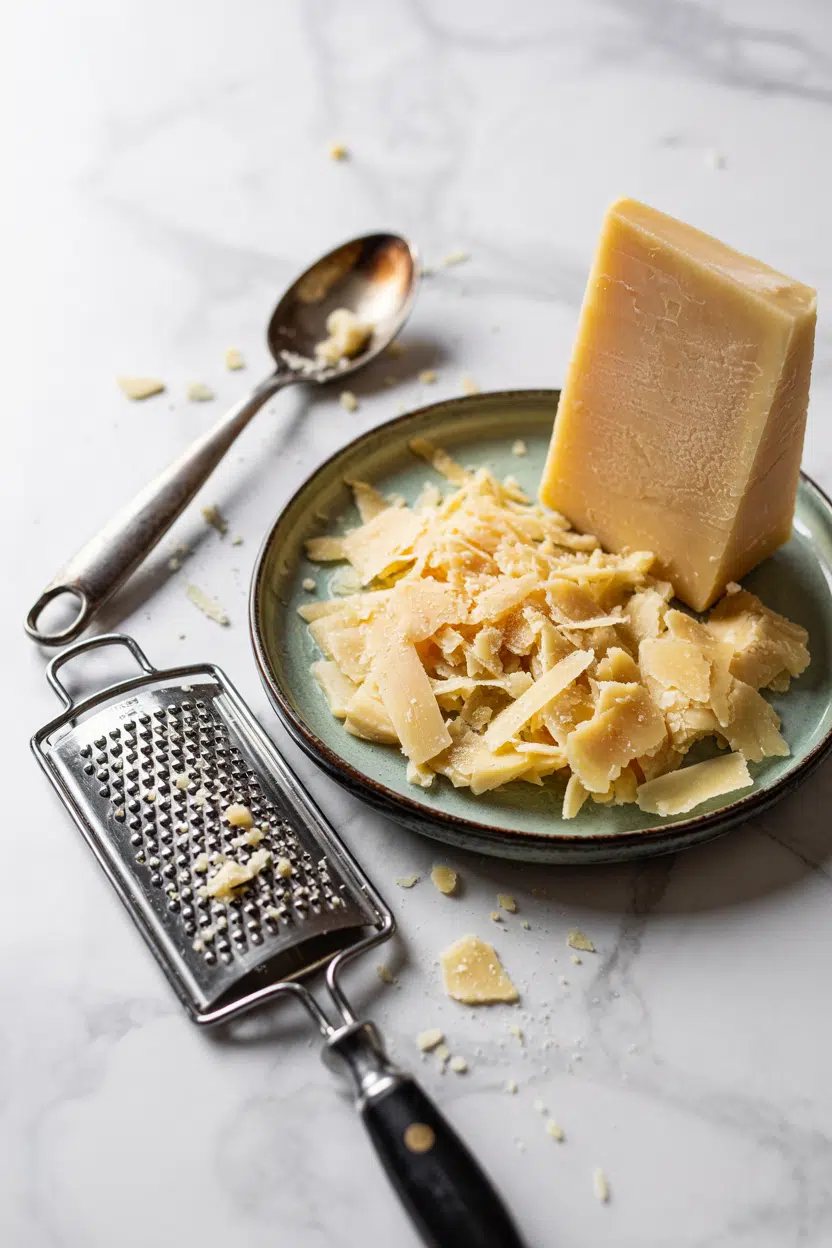
Grana Padano lands in moderate-intensity territory - present and savory without the sharper, more assertive bite that a long-aged Parmigiano-Reggiano delivers. The baseline flavor is umami-forward, with a clean buttery quality and faint fruity notes underneath.
The crunchy white specks scattered through an older wheel are tyrosine crystals - an amino acid that forms during extended aging. They signal a well-aged cheese and add a subtle mineral crunch distinct from salt.
Heat mellows the tangy finish and pulls the buttery notes forward, which is why stirring it into hot risotto or polenta tastes richer than eating the same amount cold off a board.
How to Use Grana Padano
Grana Padano earns its keep across a wider range of applications than most hard cheeses.
Northern Italian cooking built entire categories of dishes around it - risotto alla Milanese being the most iconic, where it binds and enriches in the final stir.
| Method | Best For | Tip |
|---|---|---|
| 🥗 Shaving raw | Arugula and pear salads, cheese boards | Use a vegetable peeler for wide, thin curls |
| 🍳 Grating to finish | Pasta, polenta, roasted vegetables | Add off-heat to prevent graininess |
| 🫕 Rind simmering | Minestrone, broths, bean soups | Rinse rind first; remove before serving |
| 🥘 Melting into grains | Polenta, baked gratins, stuffed vegetables | Younger wheels melt cleaner than Riserva |
Pairing the cheese well sharpens every application. A glass of Lambrusco or another dry sparkling red cuts through the fat and lets the umami register cleanly. Aged balsamic vinegar drizzled over a wedge on a board is a five-minute course on how acidity and salt interact.
Fruit pairings - ripe pears, crisp apples - work because their natural sugar contrasts the salty-tangy finish without masking the crystals. Walnuts and hazelnuts echo the nutty mid-notes already present in the cheese.
Avoid pairing Grana Padano with overly sweet glazes or syrups. They drown the savory complexity that makes the cheese worth using in the first place.
How to Buy and Store Grana Padano
At the counter, check for the DOP stamp pressed into the rind - that diamond dot pattern confirms authenticity. The paste should run pale straw to deep gold depending on age, with visible white crystalline specks and no sticky or slimy surface.
An ammonia smell means it's past its window.
Once home, wrap wedges in breathable cheese paper or parchment, then loosely in plastic. Store in the vegetable drawer, where humidity is slightly higher than the main shelf.
A cut wedge at proper age lasts three to six weeks - for more detail on keeping it at its best, grana padano's shelf life covers the full window by age category.
Starting Points for New Buyers
Two decisions simplify your first purchase. Go younger (9-16 months) if you plan to melt or stir the cheese into hot dishes - the paste is more cooperative and the flavor integrates without dominating.
- For melting and stirring - standard Grana Padano (9-16 months), any reliable fromagerie or good supermarket deli counter
- For grating or shaving - Oltre 16 Mesi gives noticeably more depth on a finished plate without the price of a full Riserva
- For a cheese board - crack off irregular shards rather than slicing; the crystalline texture reads better than a clean cut
Anyone comparing Grana Padano's value against similar aged wheels will find comparing parmesan vs parmigiano reggiano options a useful reference point for price-to-flavor trade-offs.
Frequently Asked Questions
No. Both are hard Italian cow's-milk cheeses, however Parmigiano-Reggiano has a stricter production zone, longer minimum aging, and a sharper, more complex flavor. Grana Padano is milder, creamier, and considerably less expensive.
A cut wedge properly wrapped in cheese paper keeps three to six weeks in the vegetable drawer. Older, drier wheels tolerate the longer end of that range better than younger ones.
Often, yes. Extended aging breaks down most of the lactose, leaving levels low enough for many lactose-sensitive people to tolerate. Sensitivity varies, so start with a small amount.
Drop a clean rind into simmering minestrone, bean soup, or broth. It releases savory depth over 30-60 minutes without dissolving fully. Remove it before serving.
Lambrusco is the regional match - its dry, lightly sparkling character cuts the fat and balances the salty finish cleanly. A crisp Franciacorta or other dry sparkling white works equally well with younger wheels.



